A few subtle changes in your ears may offer clues about underlying health conditions such as heart disease, dementia, tumors, diabetes, and more.
When most people think about ear health, they focus on hearing ability, ear infections, fungal problems, or proper ear hygiene. However, many are unaware that certain visible or sensory changes in the ears can sometimes serve as early warning signs of broader health issues.
Below are nine ear-related signs that may indicate underlying medical conditions.
1. Earlobe Crease
A diagonal earlobe crease (DELC), also known as Frank’s sign, is a wrinkle that appears across the earlobe at approximately a 45-degree angle. Some studies have suggested that this feature may be associated with an increased risk of Coronary Artery Disease, a condition that can lead to heart attacks.
Why Might an Earlobe Crease Be Linked to Heart Disease?
Several theories have been proposed:
- Reduced blood supply: Poor circulation may deprive the earlobe of oxygen-rich blood, causing tissue changes.
- Genetic factors: Certain DNA changes may contribute to both earlobe creases and atherosclerosis.
- Loss of elastin: Declining elastin in tissues may affect both earlobes and arterial walls.
- Obesity: Since obesity is a risk factor for cardiovascular disease, it may also be associated with earlobe creases.
It is important to note that wrinkles can also result from sleeping pressure and may not necessarily indicate disease.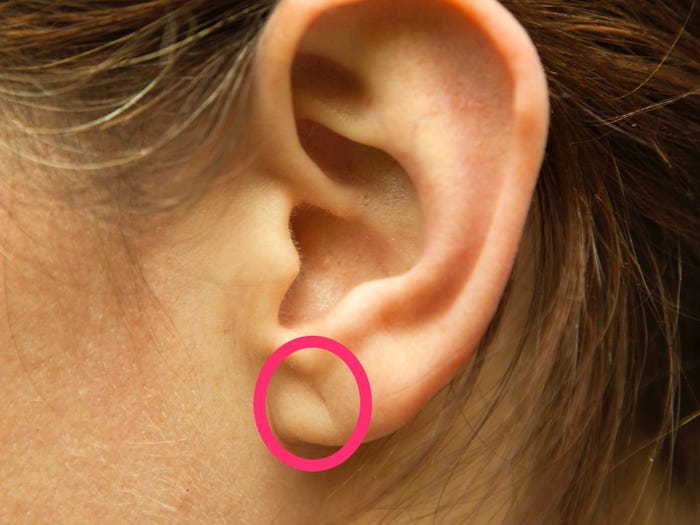
2. Hearing Loss
Hearing loss has been linked to a variety of physical and cognitive health conditions, including Dementia, Type 2 Diabetes, and kidney disease.
Researchers at Johns Hopkins University found that individuals with moderate hearing loss were three times more likely to develop dementia compared with those with normal hearing.
In diabetes, prolonged high or low blood sugar levels may damage the blood vessels and nerves of the inner ear, increasing the risk of hearing impairment.
Kidney disease may also lead to the buildup of toxins in the body, which can damage the auditory system.
3. Hearing Loss in One Ear
Sudden or progressive hearing loss affecting only one ear may result from injury, infection, or fluid buildup.
In some cases, it may be caused by an Acoustic Neuroma, a benign tumor that can compress the hearing nerve and lead to dizziness, ringing in the ears, and facial weakness.
4. Tinnitus
Tinnitus is characterized by sounds such as ringing, buzzing, or humming in the absence of external noise.
This condition can significantly affect quality of life and may be associated with:
- High blood pressure
- Cardiovascular disease
- Hormonal changes
- Ménière's Disease
- Tumors
If tinnitus occurs alongside headaches, chest pain, blurred vision, or dizziness, medical evaluation is recommended.
5. Itchy Ears
Persistent itching inside the ears is often caused by eczema or fungal infections rather than serious illness.
A fungal infection may produce white discharge, while eczema can lead to flaky skin and redness in the ear canal. Scratching should be avoided, as it may worsen the condition or spread infection.
6. Ear Pain
Ear pain can result from many causes, including frequent headphone use, injury, dental problems, temporomandibular joint (TMJ) disorders, throat infections, cellulitis, and, in rare cases, tumors.
If ear pain persists or worsens, it is advisable to seek medical attention.
7. Red Ears
Red ears are commonly caused by sun exposure, embarrassment, or emotional stress. They may also occur due to hormonal changes during menopause or a rare condition known as Red Ear Syndrome.
This syndrome is characterized by burning pain and redness of the ears and is sometimes associated with migraines or cluster headaches.
8. Ear Numbness
Numbness in or around the ear may be a sign of a stroke, particularly when accompanied by:
- Facial drooping
- Weakness in the arms or legs
- Severe headache
- Sudden vision changes
- Difficulty speaking
This requires immediate emergency medical attention.
Ear numbness with dizziness, hearing loss, or tinnitus may also suggest Ménière’s disease. If numbness spreads to the limbs, Peripheral Neuropathy may be the cause, especially in people with diabetes.
9. Small Skin Tags or Congenital Ear Growths
Small flesh-colored growths on or near the ear present from birth may sometimes be associated with kidney abnormalities.
Pediatricians may recommend further kidney evaluation in newborns with these congenital ear findings.
The Bottom Line
Your ears can reveal much more than hearing problems. Visible changes such as earlobe creases, redness, numbness, or unexplained hearing loss may occasionally point to deeper health issues involving the heart, brain, kidneys, or nervous system.
While these signs do not confirm a diagnosis, they can serve as valuable reminders to pay closer attention to your health and seek professional evaluation when symptoms persist.