A professional should examine the grading, gutters, downspouts, drainage channels, and any retaining walls.
This is particularly important before investing in expensive landscaping.
There is little value in creating a beautiful garden if water management problems remain unresolved underneath it.
What Makes This Architectural Style So Fascinating?
The house also raises a broader question about why unconventional architecture attracts so much attention.
Most residential buildings are designed to satisfy practical requirements.
They need bedrooms, bathrooms, kitchens, living areas, storage, and efficient circulation.
Developers often favor familiar shapes because they are easier to construct, easier to price, and generally easier to sell.
But some architects approach residential design differently.
They see a house as an opportunity to explore proportion, light, geometry, and the relationship between a building and its surroundings.
This approach can produce structures that look unusual even when they serve ordinary residential purposes.
The Influence of Art Deco
Art Deco emerged as an influential design movement during the early twentieth century.
It became associated with geometric decoration, carefully balanced proportions, stylized forms, and a fascination with modern technology.
Buildings influenced by Art Deco often feature strong horizontal or vertical elements, symmetrical compositions, decorative detailing, and distinctive entrances.
The house in the photograph is not enough to establish its architectural history, but its rounded forms and dramatic silhouette may remind viewers of some of these design traditions.
Streamline Moderne and the Inspiration of Ships
Another interesting comparison is Streamline Moderne.
This architectural style became particularly recognizable during the 1930s.
It favored smooth surfaces, rounded corners, horizontal lines, and forms that suggested movement.
Some buildings appeared to resemble ocean liners, trains, or aircraft.
This explains why people sometimes describe curved residential buildings as looking like ships.
The resemblance is not accidental in a broader design sense.
Architects and designers during this period were fascinated by transportation, engineering, and the visual language of speed.
Rounded corners and flowing lines helped communicate modernity.
The property in the photograph has a similar visual quality, particularly in the way its curved central section and balcony interrupt the otherwise conventional exterior.
However, without original architectural documentation, it would be premature to identify the house as a genuine historical example of either movement.
Why Unusual Houses Can Be Difficult to Sell
An unconventional house may attract enormous attention online but still have a smaller pool of potential buyers.
Some people love unusual architecture.
Others prefer predictable layouts, standard furniture dimensions, and familiar exterior appearances.
A distinctive property can therefore become difficult to market if its unusual features are not accompanied by practical living spaces.
This is one reason renovation decisions matter so much.
The goal should be to preserve what makes the building special while making it comfortable enough for everyday life.
A beautiful house that is inconvenient to use may become a difficult long-term investment.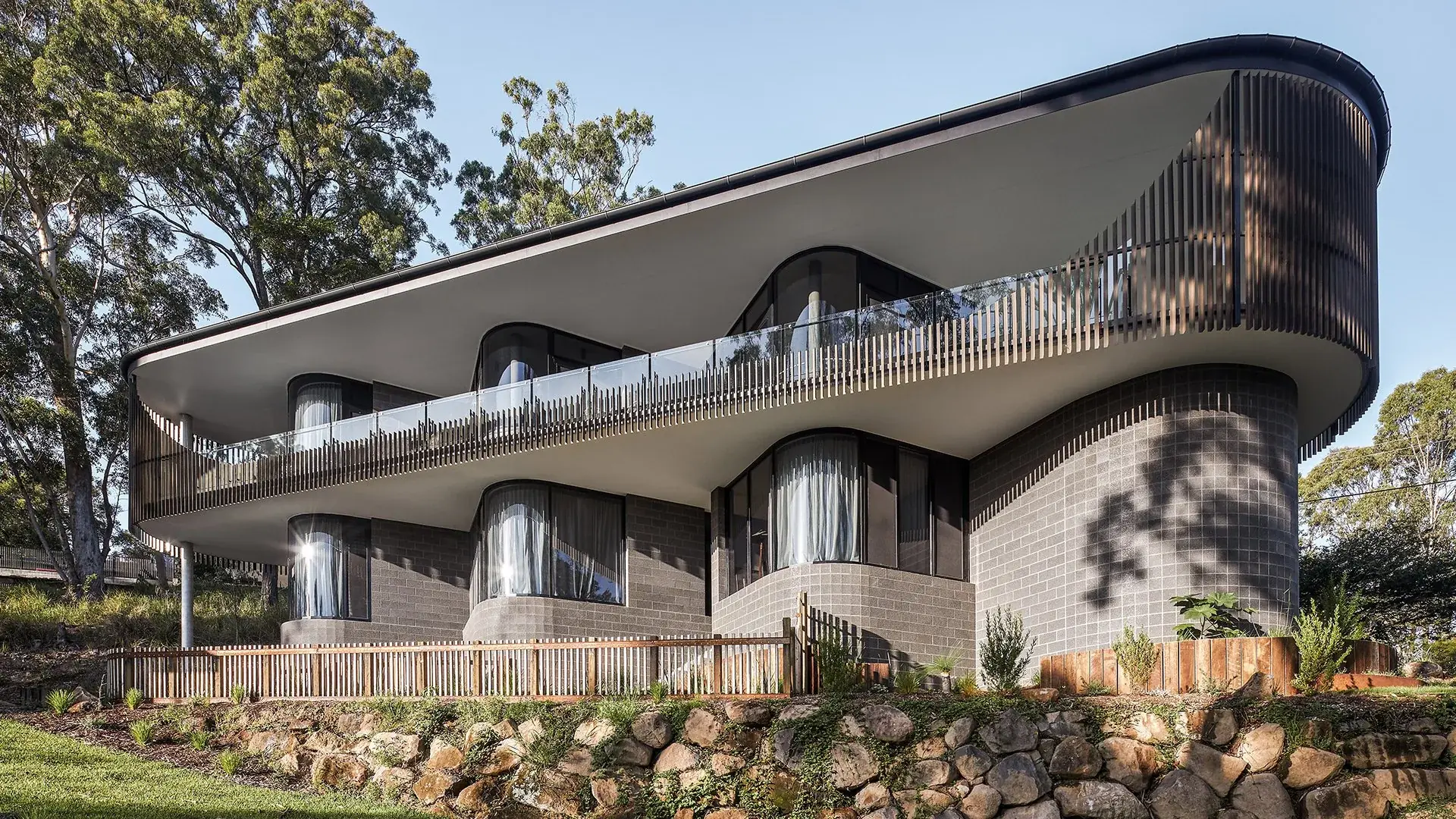
The Biggest Risks Buyers Should Investigate Before Starting
Although the architectural possibilities are exciting, an unfinished house should never be viewed only through its most attractive photographs.
There are several important risks that could influence the final decision.
1. Foundation Movement
A property with unusual shapes may have a foundation system that differs from conventional residential construction.
That does not automatically make it problematic.
However, a structural engineer should investigate any signs of movement, cracking, uneven floors, or water infiltration.
Repairs involving foundations can be expensive, particularly if the building requires specialized engineering solutions.
2. Roof Condition
The curved and unusual roofline makes roofing another important inspection area.
The owner would need to determine whether the roof has adequate waterproofing, insulation, drainage, and structural support.
Poorly maintained roof connections can allow water to enter concealed areas.
Damage may remain unnoticed until it affects interior surfaces.
3. Moisture and Mold
An unfinished building that has remained exposed to weather may have moisture-related problems.
The inspection should examine exterior walls, window openings, basements, ceilings, and areas around plumbing.
Visible stains are not the only warning signs.
Musty odors, peeling materials, warped flooring, and unusual humidity may also indicate problems.
4. Electrical and Fire Safety
Older or incomplete wiring should be evaluated by a licensed electrician.
The renovation may require an updated electrical panel, additional circuits, modern safety protection, and compliant installations.
Fire safety systems should also be reviewed.
Smoke alarms, carbon monoxide detectors, appropriate escape routes, and other required protections are essential.
5. Permits and Building Regulations
The owner should determine whether previous construction work was properly approved.
If some architectural elements were added without the necessary permits, resolving the issue could delay renovation.
Changes to structural walls, windows, balconies, plumbing, and electrical systems may require approvals depending on local regulations.
A professional should review the property's documentation before major work begins.
6. Insurance and Financing
Unfinished or unusual properties may be more difficult to insure or finance than conventional homes.
Some lenders may require evidence that the building is habitable or structurally sound.
Insurance companies may also impose additional requirements.
Potential buyers should speak with financial institutions and insurers before assuming that a low asking price automatically makes the property accessible.
7. Future Maintenance
The building's distinctive shape could influence long-term maintenance.
Custom windows, unusual roof sections, specialized exterior finishes, and curved architectural details may require contractors with specific experience.
This does not make the house a bad investment.
But buyers should understand that owning an unusual property may involve maintenance costs that are different from those of a conventional home.
Could a $65,000 Renovation Budget Be Enough?
This is perhaps the most important financial question.
If someone interprets the reported figure as the entire amount available for renovation, the answer would depend heavily on the building's actual condition and the scope of the work.
A limited cosmetic renovation is very different from completing an entire unfinished residence.
For example, repainting rooms, replacing selected flooring, updating lighting, and improving landscaping may be achievable with a relatively modest budget in some markets.
But a project involving structural repairs, complete electrical replacement, new plumbing, roofing, insulation, heating, bathrooms, and a kitchen could require far more money.
The distinction is critical.
A Cosmetic Renovation
A cosmetic project focuses mainly on visible improvements.
It may include:
-
Interior painting.
-
Basic flooring improvements.
-
New light fixtures.
-
Minor decorative repairs.
-
Furniture installation.
-
Simple landscaping.
-
Updating selected surfaces.
This approach works best when the building's essential systems are already functional and safe.
A Major Renovation
A major renovation involves the underlying structure and systems.
It may include:
-
Structural reinforcement.
-
Roof replacement.
-
Electrical upgrades.
-
New plumbing.
-
Insulation improvements.
-
Heating and cooling installation.
-
Window replacement.
-
Bathroom construction.
-
Kitchen installation.
-
Extensive interior finishing.
The financial difference between these two approaches can be enormous.
A buyer should obtain detailed contractor estimates rather than rely on an attractive headline or a rough online calculation.
Why a Contingency Fund Matters
Renovation projects frequently uncover unexpected problems.
A wall may conceal damaged wiring.
A floor may reveal moisture damage.