If symptoms are persistent, severe, or unusual, a professional examination can help determine the cause.
Tonsil Stones Are Not the Same as Tonsillitis
The two conditions are often confused because they involve the same area of the throat.
Tonsil stones are hardened deposits that develop inside the natural pockets of the tonsils.
Tonsillitis is inflammation of the tonsils, often caused by a viral or bacterial infection.
A person with tonsillitis may have swollen, red tonsils, throat pain, fever, difficulty swallowing, or swollen lymph nodes.
A person with tonsil stones may have little or no inflammation. The main problem may simply be a small deposit that causes irritation or bad breath.
The conditions can sometimes occur together, but one does not automatically mean the other.
For example, a person may notice white material on the tonsils and assume that antibiotics are needed. Yet if the material is a tonsil stone, antibiotics may not help.
Likewise, a person who sees a white spot should not assume it is harmless merely because tonsil stones are common.
The safest approach is to consider the whole picture: the appearance of the tonsils, the presence of fever, the severity of pain, how long symptoms have lasted, and whether swallowing or breathing is affected.
A clinician can distinguish between these possibilities when the diagnosis is uncertain.
healthdirect+1
Can Tonsil Stones Be Dangerous?
Most tonsil stones are not dangerous.
Small deposits frequently fall out on their own, and many people never need medical treatment.
The main problems are usually discomfort, unpleasant breath, or the inconvenience of repeated stone formation.
However, larger or persistent stones may cause more significant symptoms.
A large deposit can irritate surrounding tissue, create a persistent foreign-body sensation, or make swallowing uncomfortable.
In uncommon cases, a person may experience inflammation or complications that require medical attention.
The greater concern is often not the stone itself but the possibility that another condition is being mistaken for one.
A persistent lump, unexplained swelling, ongoing pain, or difficulty swallowing should not be ignored simply because tonsil stones are a familiar explanation.
Seek urgent medical attention if there is severe difficulty breathing, inability to swallow saliva, rapidly increasing throat swelling, or other symptoms that suggest an airway problem.
A high fever, severe throat pain, or significant swelling also deserves prompt medical assessment.
The reassuring message is that ordinary tonsil stones are usually manageable. The important qualification is that persistent or severe symptoms need proper evaluation rather than guesswork.
What Should You Do If You Notice a Tonsil Stone?
The first reaction may be to remove the stone immediately.
But in many cases, there is no need to rush.
If the deposit is small, painless, and not causing significant symptoms, it may be reasonable to leave it alone. Tonsil stones often loosen naturally and can disappear during ordinary swallowing or coughing.
If the stone is causing mild irritation, gentle measures may help.
Gargle with warm salt water
A warm saltwater gargle is one of the simplest approaches.
Mix approximately one teaspoon of salt into a glass of warm water, gargle gently, and spit it out.
The solution may help loosen debris and soothe mild irritation.
It is not necessary to gargle aggressively. A comfortable, gentle gargle is preferable to repeatedly forcing the throat.
Children should only gargle if they can do so safely without swallowing the solution.
Drink enough water
Water helps keep the mouth moist and supports normal saliva production.
Staying hydrated may reduce dryness and help clear loose material from the mouth and throat.
It is a simple habit that supports general oral health, even though it cannot prevent every tonsil stone.
Maintain regular oral hygiene
Brush your teeth regularly, clean between them, and gently clean your tongue.
The tongue can retain bacteria and food debris, so cleaning it may help reduce unpleasant breath.
Regular dental care is also important because gum disease and tooth problems can contribute to bad breath independently of tonsil stones.
Allow loose stones to come out naturally
A stone that is already loose may come out during coughing or gargling.
If it does, there is usually no need to continue searching for additional deposits.
Repeatedly inspecting or manipulating the tonsils can irritate the tissue and make the area feel more uncomfortable.
The safest approach is to avoid unnecessary pressure and allow the throat to recover.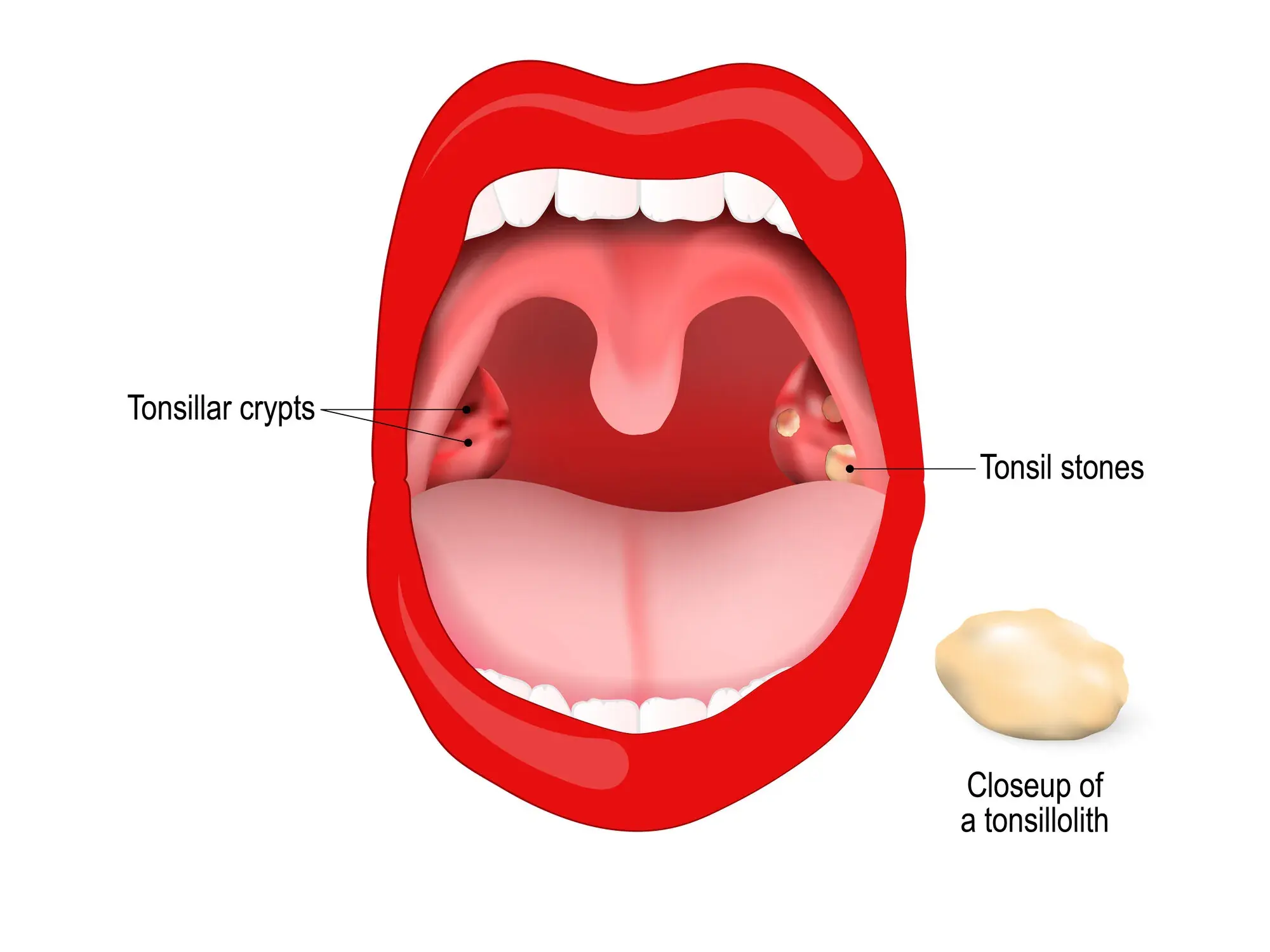
Avoid aggressive removal attempts
The tonsils are delicate tissue with a rich blood supply.
Using sharp objects, fingernails, toothpicks, or other hard tools to dig into the tonsils can cause cuts, bleeding, and infection.
Even a cotton swab can cause injury if used forcefully or pushed into a deep pocket.
If a stone is difficult to remove, painful, or located deep inside the tonsil, it is better to seek professional advice.
A healthcare professional can examine the area and determine whether removal is necessary.
Why You Should Never Dig Into Your Tonsils
The temptation to remove a visible white lump can be strong, especially when it seems to be causing bad breath or discomfort.
However, the tonsils are not a hard surface like a tooth.
They are soft, sensitive tissue that can be injured easily.
A sharp object may puncture the tonsil or damage the surrounding lining. Even if the stone comes out, the injury may create more discomfort than the original deposit.
Bleeding can also make it difficult to see the area clearly, increasing the risk of further injury.
Another problem is that the stone may not be the only material inside the pocket. Trying to force it out can push debris deeper or irritate the surrounding tissue.
If a deposit cannot be removed with gentle measures, do not keep trying.
A doctor or ear, nose, and throat specialist can assess whether the stone needs to be removed and choose an appropriate method.
The same caution applies to high-pressure water devices. Strong water pressure directed at the tonsils may damage delicate tissue. If a clinician recommends an oral irrigator, it should be used cautiously and at a low setting.
The objective is to relieve discomfort without creating a new injury.
How Doctors Diagnose Tonsil Stones
In many cases, tonsil stones can be diagnosed through a simple examination.