These conditions require different approaches, so it is important not to assume that every throat symptom is caused by a tonsil stone.
If the symptoms are mild and temporary, observation may be reasonable.
If they persist, worsen, or are accompanied by other concerning signs, a medical examination can help identify the cause.
A visible deposit that resembles a tonsil stone is useful information, but it is not a substitute for a diagnosis.
The Bottom Line: A Small Lump May Have a Simple Explanation
Finding a tiny white or yellow lump after coughing or clearing the throat can be surprising.
The discovery may lead to questions about infection, oral hygiene, or whether something more serious is happening.
In many cases, the explanation is a tonsil stone: a small deposit of trapped debris that has gradually hardened inside the natural pockets of the tonsils.
These stones are usually harmless. They may cause bad breath, an unpleasant taste, mild irritation, or the sensation that something is stuck in the throat.
Many disappear naturally, and gentle measures such as warm saltwater gargling, adequate hydration, and regular oral hygiene may help.
The most important thing is to avoid aggressive attempts to remove them and to seek medical advice when symptoms are persistent, painful, or unusual.
A small lump does not automatically mean a serious problem. But understanding what it might be—and recognizing when it needs professional attention—can help turn an alarming discovery into a manageable concern.
Frequently Asked Questions About Tonsil Stones
Can tonsil stones come out while sleeping?
Yes. A loose tonsil stone may dislodge during normal swallowing, coughing, or movement of the throat.
Some people notice a small lump in their mouth when they wake up, while others may swallow a loose stone without realizing it.
Swallowing a tonsil stone is generally not harmful. These deposits are small, and they commonly loosen and pass naturally.
Are tonsil stones contagious?
No. Tonsil stones themselves are not contagious.
They form from material that collects inside a person's own tonsils. They are not passed from one person to another through ordinary contact.
However, an infection that causes throat symptoms may be contagious, depending on the underlying cause.
This is another reason to distinguish tonsil stones from tonsillitis or other infections.
Do tonsil stones mean I have poor oral hygiene?
Not necessarily.
Good oral hygiene can help reduce the amount of debris and bacteria in the mouth, but tonsil stones can still form in people who brush and floss regularly.
The structure of the tonsils plays an important role. People with deeper crypts may be more likely to develop stones because particles can become trapped more easily.
The condition should not be viewed as a sign that someone is dirty or neglecting their health.
Can tonsil stones cause ear pain?
Sometimes.
The throat and ear share certain nerve pathways. Irritation in the tonsil area may occasionally be felt as discomfort near the ear.
However, ear pain has many possible causes, including ear infections and dental problems.
If ear pain is persistent, severe, or accompanied by other symptoms, it should be evaluated rather than automatically blamed on tonsil stones.
Do tonsil stones need antibiotics?
Usually not.
Tonsil stones are hardened deposits, not bacterial infections that automatically require antibiotic treatment.
Antibiotics may be prescribed if a clinician identifies a separate bacterial infection, but they are not a routine treatment for ordinary tonsilloliths.
Taking antibiotics without a medical reason can cause side effects and contribute to antibiotic resistance.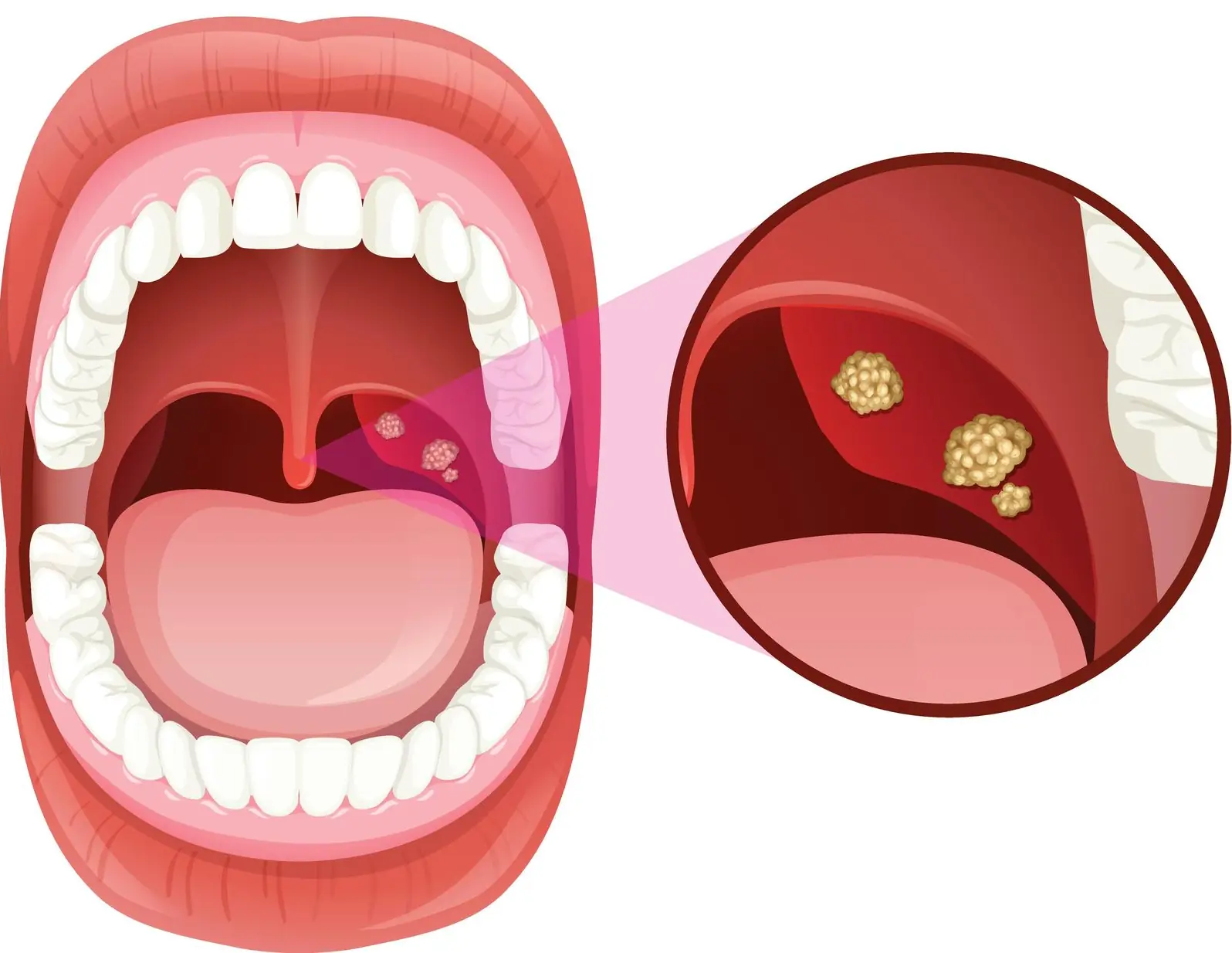
Can tonsil stones grow larger?
Yes.
Most tonsil stones are small, but some may become larger if material continues to accumulate.
A larger stone may cause more noticeable irritation, discomfort, or difficulty swallowing.
If a deposit seems unusually large or causes persistent symptoms, it should be examined by a healthcare professional.
Will tonsil stones disappear permanently?
Not always.
A stone may come out and never return, but another may form later if the conditions that allowed it to develop remain present.
People with deep tonsillar crypts or a history of repeated tonsil inflammation may be more prone to recurrence.
Good oral hygiene and hydration can help reduce contributing factors, but they cannot guarantee permanent prevention.
Should I be worried if I see a white spot on one tonsil?
A white spot may be a tonsil stone, but it can also have other explanations.
The appearance of the spot alone is not enough to determine the cause.
If it is accompanied by fever, severe pain, swelling, difficulty swallowing, or persistent symptoms, seek medical advice.
If the spot remains in place or you are unsure what it is, a clinician can examine it and provide a more reliable diagnosis.
Is a tonsil stone the same as a cyst?
No.
A tonsil stone is a hardened deposit formed from trapped debris and minerals.
A cyst is a different type of structure that may contain fluid or other material.
Although both can sometimes appear as a lump, they are not the same condition and may require different evaluation.
A persistent or unusual lump should be assessed by a healthcare professional rather than identified by appearance alone.
Can children develop tonsil stones?
Yes. Tonsil stones can occur in children as well as adults.
However, a child who has throat discomfort, white patches, fever, or difficulty swallowing should be assessed carefully because infections and other conditions may produce similar symptoms.
Children should not attempt to remove tonsil stones themselves, and adults should avoid using tools to dig into a child's tonsils.
If a child has recurring symptoms, a pediatrician or ear, nose, and throat specialist can provide guidance.
What is the safest first step when a stone appears?
If the person feels well and the stone is small, the safest first step is usually to avoid disturbing it.
A gentle warm saltwater gargle may help loosen debris. Drinking water and maintaining regular oral hygiene can also support comfort.
Do not use sharp objects or forceful pressure.
If the stone causes significant discomfort, keeps returning, or is accompanied by other symptoms, seek professional advice.
The goal is not simply to remove a visible lump. It is to make sure the throat remains healthy and that the cause of the symptoms is correctly understood.