Nonclassic Congenital Adrenal Hyperplasia
One possible cause is nonclassic congenital adrenal hyperplasia, a genetic condition affecting adrenal steroid production.
It is often associated with reduced activity of an enzyme called 21-hydroxylase.
Because the normal hormone-production pathway is disrupted, the adrenal glands may produce increased amounts of androgen precursors.
Some affected women develop excessive facial hair, acne, or irregular menstrual cycles.
Symptoms may become noticeable during adolescence or adulthood.
The condition can resemble PCOS, so laboratory testing may be necessary to distinguish between them.
Cushing Syndrome
Cushing syndrome occurs when the body is exposed to excessive cortisol over a prolonged period.
It can develop because of certain medications containing corticosteroids or because the body produces too much cortisol.
Possible symptoms include:
-
Increased abdominal fat.
-
A rounded facial appearance.
-
Easy bruising.
-
Purple stretch marks.
-
Muscle weakness.
-
High blood pressure.
-
Elevated blood sugar.
-
Menstrual irregularities.
Some women may also experience increased facial hair.
However, chin hair alone is not a typical reason to assume someone has Cushing syndrome.
Doctors look for a broader pattern of symptoms and may recommend specific hormone tests when the condition is suspected.
Why the Source of Excess Androgens Matters
Ovarian and adrenal conditions can produce similar external symptoms.
However, their treatment may be different.
For this reason, doctors sometimes measure testosterone and DHEA-S to help identify where excess androgen activity may originate.
The results are interpreted alongside the patient's symptoms, medical history, and other findings.
A woman should not attempt to diagnose an adrenal disorder based on facial hair or an online symptom checklist.
Most cases of unwanted chin hair are not caused by a serious adrenal condition.
Nevertheless, a sudden and dramatic change deserves professional evaluation.
6. Certain Medications Can Trigger Unwanted Facial Hair Growth
Another possible explanation for new chin hair is medication use.
Some prescription drugs can influence hormone activity or stimulate hair growth in ways that become noticeable on the face and body.
This is an important possibility because medication-related hair growth may occur even when a woman does not have PCOS or another underlying endocrine condition.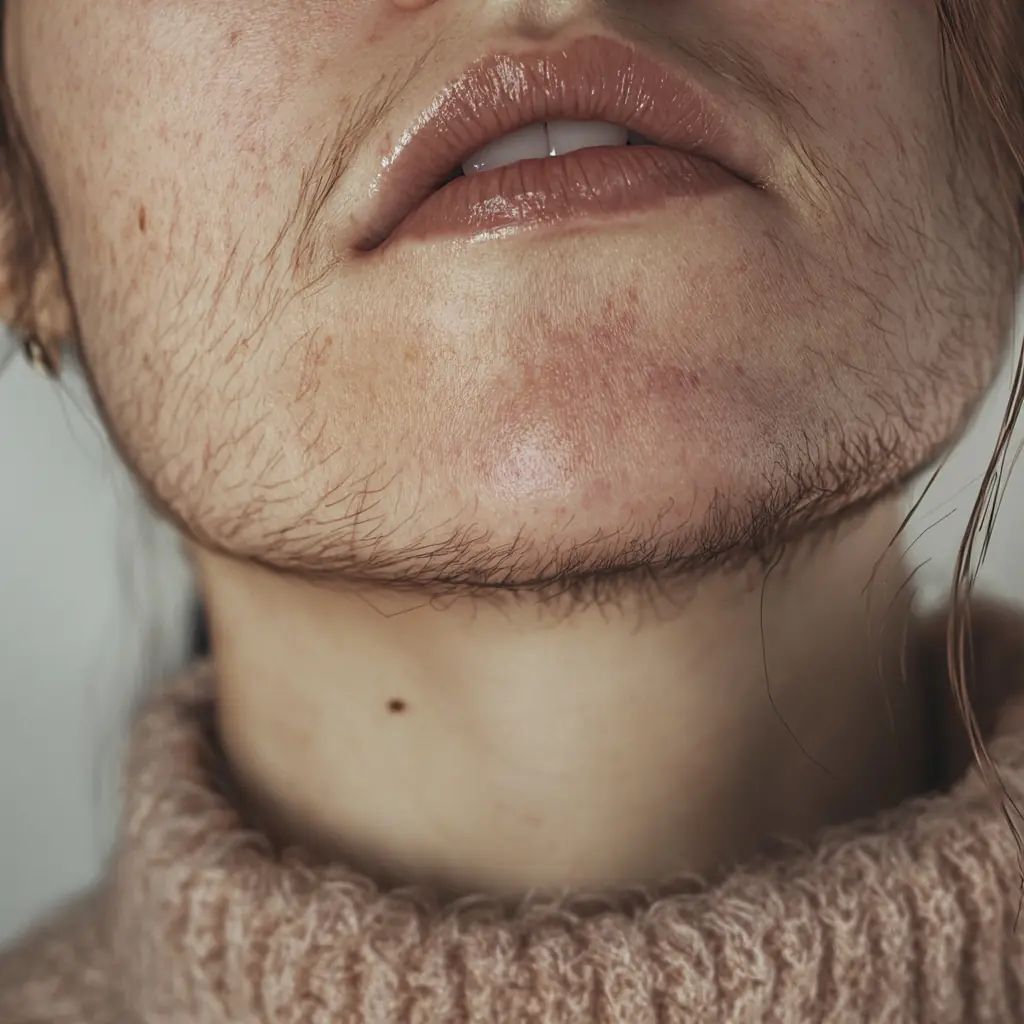
Medications That May Influence Hair Growth
Certain medications have been associated with increased hair growth.
Examples include:
Testosterone and androgen-containing medications: Exposure to testosterone or other androgenic substances can stimulate coarse hair growth in androgen-sensitive areas.
Anabolic steroids: These substances can increase androgen activity and may cause unwanted facial hair, acne, and scalp hair loss in women.
Danazol: This medication has androgen-like effects and can produce changes in hair growth.
Minoxidil: Although commonly used to encourage scalp hair growth, minoxidil can sometimes cause unwanted hair growth elsewhere, particularly if the medication is transferred to other skin areas or absorbed more extensively.
Certain immunosuppressive medications: Drugs such as cyclosporine can cause increased hair growth, although the pattern is not necessarily the same as androgen-related hirsutism.
Some other prescription treatments: Certain medications may contribute to generalized excess hair growth or alter hormonal balance.
Why Medication History Matters
When a woman reports new facial hair, doctors may ask whether she has recently started a medication, changed a dose, or begun using a hormonal product.
They may also ask about supplements.
Some products marketed for muscle building, hormone balance, or energy enhancement may contain ingredients that influence androgen activity.
Even creams and gels can matter.
For example, testosterone gel used by another household member may accidentally transfer through skin contact if appropriate precautions are not followed.
This is a potential source of unintended androgen exposure.
Should Women Stop Taking a Medication If Chin Hair Appears?
No medication should be stopped without consulting the prescribing healthcare professional.
A drug may be treating an important medical condition, and suddenly discontinuing it could create other health risks.
Instead, women should discuss the timing of the hair growth and their medication history with their doctor.
If a medication is suspected, the clinician can determine whether an alternative treatment or dose adjustment is appropriate.
7. When Chin Hair Appears Suddenly, Doctors Pay Attention to the Speed of Change
One of the most important details in evaluating facial hair is how quickly it develops.
A few isolated hairs that appear gradually over many years are generally less concerning than a sudden increase in thick, dark hair over a relatively short period.
This is because the speed of development can help distinguish ordinary follicle sensitivity from more significant changes in hormone production.
Gradual Hair Growth Over Several Years
A woman who discovers one or two coarse hairs beneath her chin during her forties may simply be experiencing a common age-related change.
The follicles may have become more responsive to normal androgen activity.
Genetic factors may also contribute.
If the growth remains limited and there are no other symptoms, the situation may not require extensive investigation.
However, women who are concerned can still discuss it with a dermatologist or primary care professional.
There is no medical requirement to tolerate unwanted facial hair simply because it is common.
Rapid Development Over Several Months
A noticeable increase in coarse hair over a few months deserves more attention.
The concern becomes greater if the changes involve several areas of the body.
For example, a woman may suddenly notice:
-
Thick hair developing along the jawline.
-
Increased hair on the chest or abdomen.
-
Persistent acne.
-
Thinning scalp hair.
-
Changes in menstrual cycles.
This combination may suggest increased androgen activity.
A healthcare professional may recommend hormone testing and additional investigations.
Signs of Virilization Should Not Be Ignored
Virilization refers to the development of physical characteristics associated with high androgen exposure.
In women, possible signs include:
-
A noticeably deeper voice.
-
Increased muscle mass without an obvious explanation.
-
Enlargement of the clitoris.
-
Rapid development of severe facial or body hair.
-
Significant scalp hair loss in a male-pattern distribution.
-
Severe or sudden acne.
These symptoms are not typical consequences of ordinary aging.
When they appear, particularly over a short period, prompt medical assessment is important.
Rarely, the cause may involve an androgen-producing ovarian or adrenal tumor.
Most women with chin hair do not have such a tumor.
However, doctors need to identify or exclude uncommon but potentially serious causes when the symptom pattern raises concern.
Why Waiting Too Long Can Be a Problem
Many women spend years removing unwanted facial hair without investigating why it is increasing.
There is nothing wrong with removing facial hair for cosmetic reasons.
The problem arises when significant changes are repeatedly dismissed despite the presence of other symptoms.
If an underlying hormonal condition is responsible, identifying it can help address more than the appearance of the face.
It may also help manage menstrual problems, metabolic risks, fertility concerns, or other health issues.
8. What Other Symptoms Should Women Look for Alongside Chin Hair?
Chin hair rarely tells the entire story.
When doctors investigate possible hormonal problems, they look at the wider pattern of symptoms.
Several changes can provide useful clues.
Irregular or Missing Periods
Menstrual irregularity can be associated with PCOS, thyroid disorders, elevated prolactin, perimenopause, and other conditions.
Women who experience long gaps between periods or repeated missed periods should discuss the pattern with a healthcare professional.
This is particularly important when irregular menstruation occurs alongside increasing facial hair.
Persistent Acne Around the Chin and Jaw
Acne can be influenced by androgen activity.
Some women develop persistent breakouts around the lower face, especially near the chin and jawline.
However, acne has many possible causes.
Skincare products, genetics, inflammation, and other factors can also contribute.
The combination of acne, coarse facial hair, and irregular periods is more informative than any one symptom alone.
Thinning Hair on the Scalp
Some women experience thinning at the crown or widening of the hair part while simultaneously noticing increased facial hair.
This can occur in conditions involving androgen sensitivity.
The scalp follicles may respond to androgen activity differently from facial follicles.
Female-pattern hair loss can also occur independently of hirsutism.
A dermatologist can help determine whether the hair changes are related.
Unexplained Changes in Weight
Weight changes can occur for many reasons, including lifestyle, aging, medication use, thyroid problems, and metabolic conditions.
In some women, weight gain occurs alongside PCOS and insulin resistance.
However, weight alone cannot diagnose a hormonal disorder.
A clinician may consider the overall symptom pattern and relevant laboratory results.
Darkened Skin Around the Neck or Armpits
Dark, thickened skin in certain body folds may be associated with acanthosis nigricans.
This condition is sometimes linked to insulin resistance.
It may appear around the neck, underarms, or groin.