38. Don't Let Convenience Destroy Your Favorite Clothes
One of the biggest advantages of a washing machine is convenience.
But convenience should not mean treating every garment identically.
A pair of durable cotton towels, a delicate blouse, a knitted sweater, and athletic clothing may all require different treatment.
Once you start thinking of clothing according to its fabric and construction, laundry becomes much easier.
You don't need dozens of complicated rules.
You simply need to understand that different garments have different tolerances for heat, friction, water, detergent, and mechanical movement.
A Simple Laundry Routine to Protect Your Clothes
If you don't want to remember all of these suggestions, start with a simple routine.
Before washing
-
Check all pockets.
-
Sort clothing by color and fabric.
-
Close appropriate zippers and fasteners.
-
Turn printed and dark garments inside out.
-
Put delicate items in mesh bags.
-
Pre-treat serious stains.
-
Avoid overloading the machine.
During washing
-
Choose the correct cycle.
-
Use an appropriate water temperature.
-
Measure detergent instead of guessing.
-
Use a lower spin speed for delicate clothing.
-
If trying the two-bottle method, first confirm that your washing machine allows loose objects in the drum and use only sturdy, clean bottles with tightly secured caps.
After washing
-
Remove clothes promptly.
-
Shake them out.
-
Reshape delicate garments.
-
Air-dry when appropriate.
-
Avoid excessive heat.
-
Keep adequate space between hanging garments.
After laundry
-
Leave the washing machine open to dry.
-
Clean the detergent drawer when necessary.
-
Check the door seal.
-
Clean the filter according to the manufacturer's instructions.
-
Address unpleasant odors rather than masking them with more detergent or fragrance.
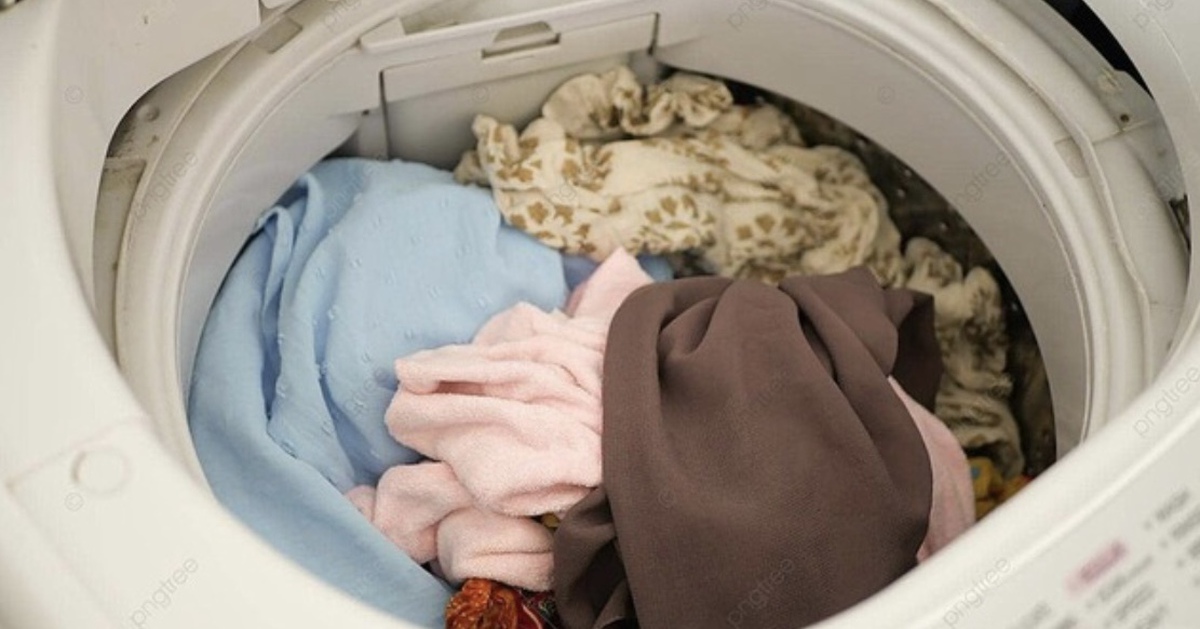
The Biggest Laundry Mistakes Are Often the Simplest Ones
Most clothing damage doesn't happen because someone made one dramatic mistake.
It usually happens gradually.
A machine is overloaded again and again.
A delicate shirt is repeatedly washed on a heavy cycle.
A sweater is dried at high heat.
A zipper catches another garment.
Too much detergent leaves residue.
A small tear is ignored until it becomes a large hole.
Over months and years, these small stresses accumulate.
That's why protecting clothes isn't necessarily about finding one magical laundry trick.
It's about making small improvements consistently.
The two-water-bottle idea is one household method some people use to help reduce tangling, but it should not be treated as a universal solution. The more reliable approach is to follow the washing machine's instructions, avoid overloading, sort laundry properly, choose suitable cycles, and protect delicate fabrics from unnecessary friction.
And perhaps the most important lesson is this:
Cleaner clothes don't have to mean harsher washing.
In many cases, the best laundry routine is not the most aggressive one. It is the one that gives each garment the right amount of water, detergent, movement, and drying time.
A little extra attention before pressing the Start button can help prevent stretched seams, faded colors, tangled clothing, and unnecessary fabric damage.
Your washing machine is designed to save you time and effort. With the right habits, it can also help your clothes stay clean, fresh, and wearable for much longer.