A station may have guidelines about clothing colors, patterns, or accessories because certain materials can interfere with studio lighting or digital graphics. Presenters may also work with wardrobe and production teams to ensure that their appearance fits the program.
The outfit in the photograph is noticeable, particularly against the bright weather map. That may be one reason the image attracts attention when it circulates online.
However, appearance alone says nothing about a presenter's professional ability or career outcome. The main purpose of a weather broadcast is to communicate useful information. A presenter's clothing should not become a substitute for evidence about what happened afterward.
Online discussions sometimes focus heavily on what a television personality was wearing, especially when the image is paired with a sensational caption. This can shift attention away from the actual subject of the broadcast.
In this case, the more meaningful questions concern the presenter's identity, the program, and the claim that this was her final appearance.
What Would Prove That This Was Her Final Television Broadcast?
If viewers want to establish whether the photograph really shows a presenter's last television appearance, several pieces of information would be helpful.
The first is the presenter's full name. Without it, there is no reliable way to trace a career history or distinguish one person from another. Many broadcasters work in similar studios and wear similar professional clothing. A photograph by itself may not be enough to identify someone accurately.
The second is the name of the television station or program. Weather presenters may work for local affiliates, national networks, cable channels, or regional broadcasters. Identifying the correct station would help narrow down the relevant broadcast records.
The third is the date. A photograph without a date can be difficult to place in context. It may be recent, several years old, or taken from an archive. The date matters because a presenter may have moved to another role long before the image began circulating online.
The fourth is a reliable account of what happened after the broadcast. This could include an official station announcement, a statement from the presenter, a professional biography, or a credible interview discussing a career change.
Finally, the word “final” needs to be defined. Was it the last forecast on one program? The last broadcast at one station? The last appearance in a particular market? Or the last time the presenter appeared on television at all?
These distinctions are not minor details. They determine whether the headline is accurate.
Why an Official Announcement Matters
Television stations sometimes announce presenter departures through their websites or social media accounts. They may thank a colleague for their work, explain a new schedule, or introduce a replacement.
Presenters may also share their own news. Some write farewell messages to viewers, while others announce new positions or explain that they are taking a break.
Not every career change receives a public announcement. A person may leave a role quietly, and a station may simply update its schedule. Nevertheless, a credible announcement or direct statement provides a stronger basis for understanding the change than a reposted photograph.
In the absence of such evidence, it is best to avoid claiming that the presenter was dismissed, forced out, involved in a dispute, or prevented from appearing on television.
A responsible account should not turn missing information into a dramatic story.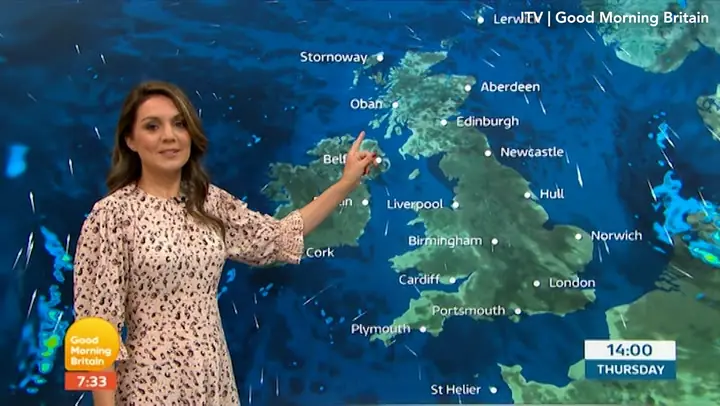
The Changing World of Television Weather Reporting
The television industry has changed considerably as audiences have moved between traditional broadcasts, websites, mobile applications, and social media.
Weather information is now available through many channels. Viewers can check a phone application, visit a forecasting website, watch a live television bulletin, or follow a meteorologist who publishes updates online.
This has changed the way presenters and broadcasters reach audiences.
Some television personalities now appear across multiple platforms. A presenter may deliver a traditional forecast and also produce short digital videos, explain weather developments on social media, or participate in online discussions.
Others may move away from regular television work while continuing to use their communication skills in another setting.
The result is that a person can become less visible on one channel without leaving the media world entirely.
From Television Screens to Digital Platforms
Digital media gives presenters more ways to communicate with viewers. A short video can explain a weather warning, while a longer online segment can explore a developing system in greater detail.
Some broadcasters use social platforms to maintain contact with their audiences outside scheduled programming. Others publish written updates, behind-the-scenes material, or educational content.
This flexibility can make a career less dependent on one television program.
For viewers, however, it can create the impression that a presenter has disappeared. Someone who once appeared at the same time every evening may now be working in a format that their regular audience does not follow.
That possibility is one reason the viral caption should be treated carefully. The absence of a familiar face from a particular television screen does not automatically mean the person has vanished from public life or ended a broadcasting career.
Stations Also Change Their Presentation Style
Broadcasters regularly review how their programs look and sound. They may introduce new graphics, replace older studio equipment, change the length of weather segments, or reorganize the team.
A new program format may require different presenters or a different style of delivery. A station may choose to emphasize meteorological expertise, local reporting, digital content, or a more conversational approach.
Such changes can affect the visibility of individual presenters.
A person who was once central to a daily forecast may be assigned to a different part of the operation. Another may take on a role that involves preparing content rather than appearing on camera.
Again, none of these possibilities can be confirmed for the woman in the photograph. They simply demonstrate why a presenter’s absence should not be interpreted as proof of a dramatic incident.
The Human Side of Leaving a Familiar Job
Behind every television appearance is a person with a professional life that may be more complicated than viewers can see.
A presenter may spend years building experience, developing a recognizable style, and becoming familiar to an audience. Leaving a regular program can therefore represent a significant transition.
For some people, the change may be exciting. A new position can offer opportunities to learn, work in a different market, or take on greater responsibilities.
For others, leaving a familiar role may involve uncertainty. A presenter may need to adapt to a new schedule, relocate, pursue additional training, or decide what kind of work they want to do next.