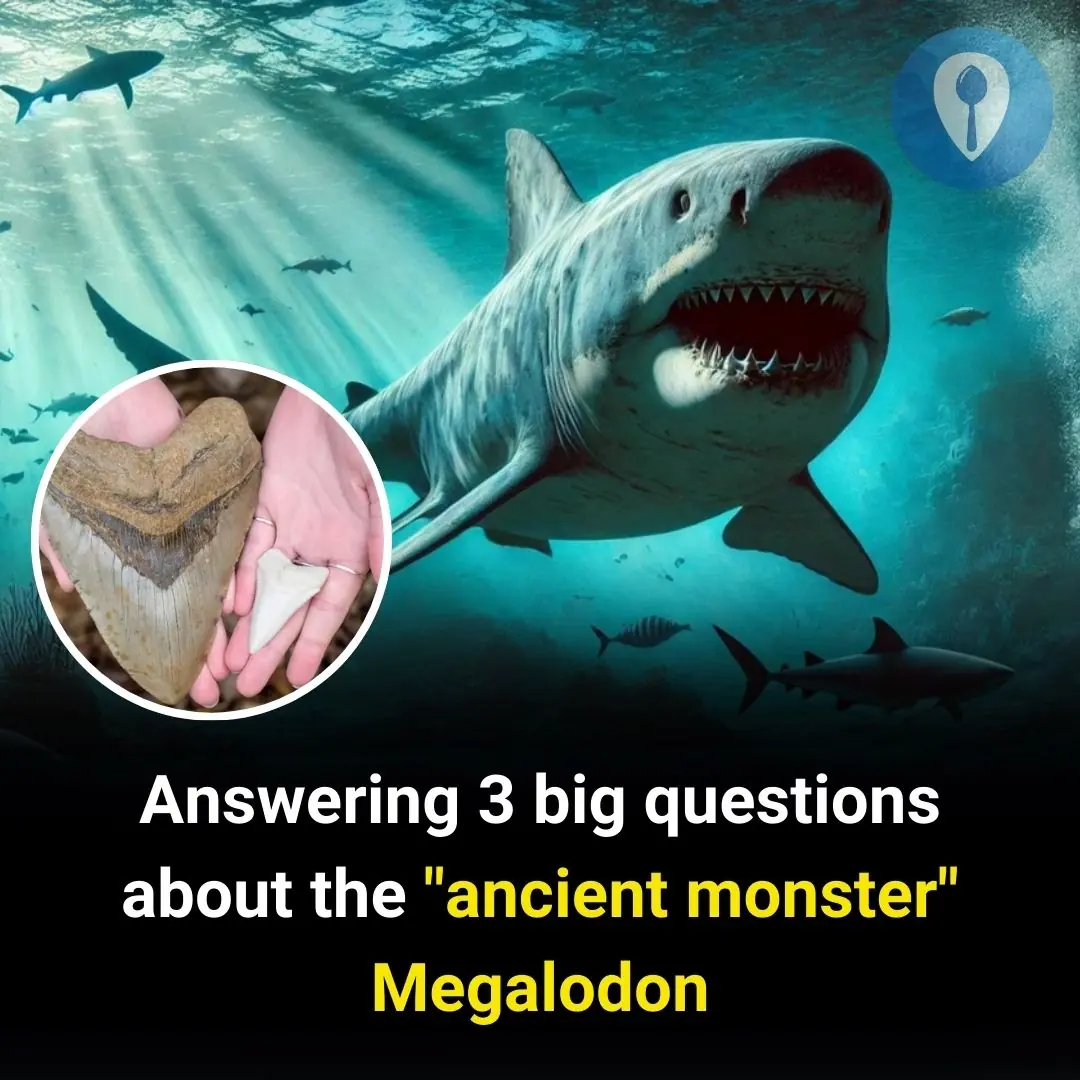
Megalodon was an ancient apex predator, but was outclassed by the great white shark, and became extinct about 3.6 million years ago.
The Megalodon was a giant shark, once known as one of the largest animals to have ever existed in the history of the oceans. A new study has provided important evidence to help explain the size, shape, and reproduction of this ancient animal.
1. Megalodon size and shape
Megalodon (Otodus megalodon) first appeared in the Miocene, about 23 million years ago, and dominated the oceans until its extinction at the end of the Pliocene, about 3.6 million years ago.
Megalodon was a member of the Otodontidae family, a group of prehistoric sharks that included many large predators. It should be noted that they are distantly related to the modern great white shark (scientific name: Carcharodon carcharias), but are not direct ancestors of this species.
Megalodon once lived in many areas of the world's oceans, from tropical to temperate waters. Their fossils have been found on all continents, from North America, South America, Europe, Africa to Oceania.
These fossils, mainly giant teeth up to 18 cm long, are clear evidence of their presence in ancient oceans.
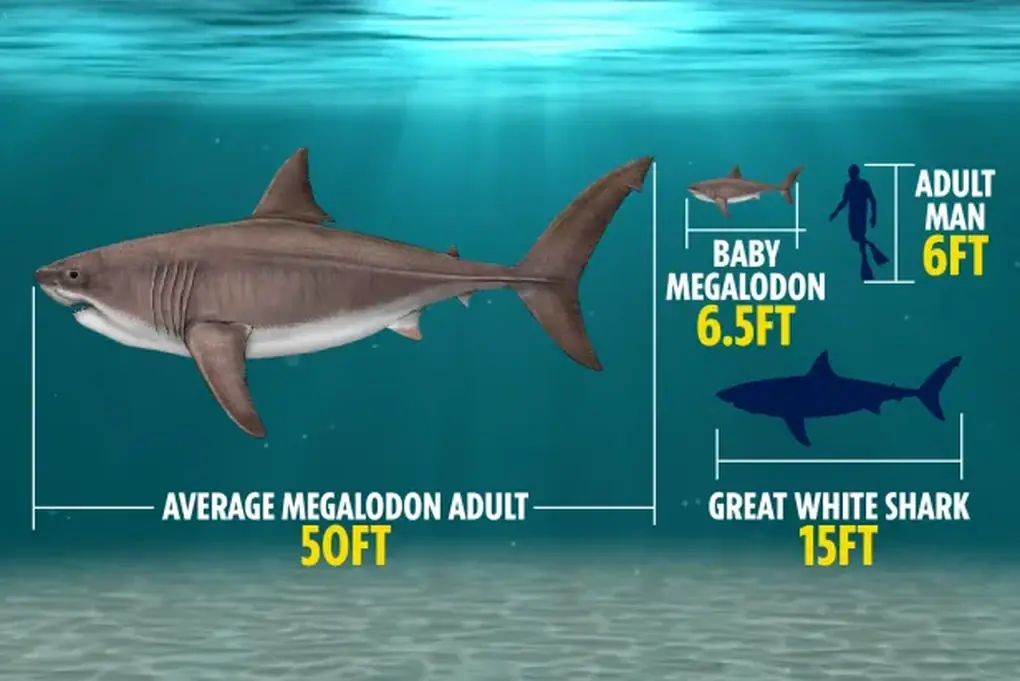
Research published in the journal Palaeontologia Electronica said that Megalodon could reach a maximum length of up to 24.3 meters, far exceeding the size of modern great white sharks.
To reach this conclusion, a team of 29 experts on sharks, fossils and vertebrates led by Professor Kenshu Shimada analyzed the nearly complete spine of the Megalodon species, found in Belgium.
After comparing the specimen with 145 modern shark species and 20 extinct species, the team found that Megalodon had a long and thin body, similar to the lemon shark (scientific name: Negaprion brevirostris), instead of the stocky shape of the great white shark.
2. The reproductive process of Megalodon
The study revealed that for the Megalodon species, the young individuals were already huge in size, up to 3.6 - 3.9 meters when born. However, they were not immediately released into the wild, but were nurtured for a period of time inside the mother's womb.
However, to achieve rapid growth, they engaged in "intrauterine cannibalism" (oophagy). This is when newly hatched Megalodon individuals actively eat unhatched eggs to grow faster and increase their chances of survival when they go out.
This helps them reach giant sizes as soon as they enter the natural environment, and is a factor that makes them less likely to become prey for other predators.
3. Causes of Megalodon's extinction
Megalodon was an apex predator in the ancient marine food chain. They mainly hunted marine mammals such as whales, seals and dolphins, as well as large fish.
Fossils of many whale species have traces of giant bite marks, showing the strength of Megalodon's teeth. Some studies suggest that they could attack their prey from below with a bite force stronger than any animal that has ever lived, possibly reaching 108,500 to 182,200 Newtons.
Megalodon was powerful and enormous, but it eventually went extinct. Data suggests that competition with the Great White Shark was one of the main reasons.
Although it was smaller in size and could not defeat Megalodon, it developed effective hunting skills, allowing it to take most of the food from its rival.
Eventually, Megalodon died out due to lack of food resources. Along with that, climate change and the decline of marine mammal populations - the main food source of Megalodon - also contributed to the species' extinction.