Their preferred posture may change as they grow, and the position they use at the beginning of the night may not remain the same.
During adolescence, changes in body proportions and sleeping routines can also influence comfort.
Adulthood
Many adults develop a familiar bedtime routine and a preferred position.
Some people always begin the night on their side. Others prefer lying on their backs or hugging a pillow.
The preference may remain stable for years, but it can still change depending on the mattress, stress, physical activity, or health.
Older Age
As people age, joint flexibility and muscle strength may change.
A posture that once felt comfortable may begin to create pressure around the shoulders, hips, knees, or back.
Some older adults may prefer side sleeping because it feels more supportive. Others may choose a different position because of arthritis, respiratory symptoms, or medical advice.
The important point is that the best position is not necessarily the one someone used when they were younger.
Comfort and health needs can change over time.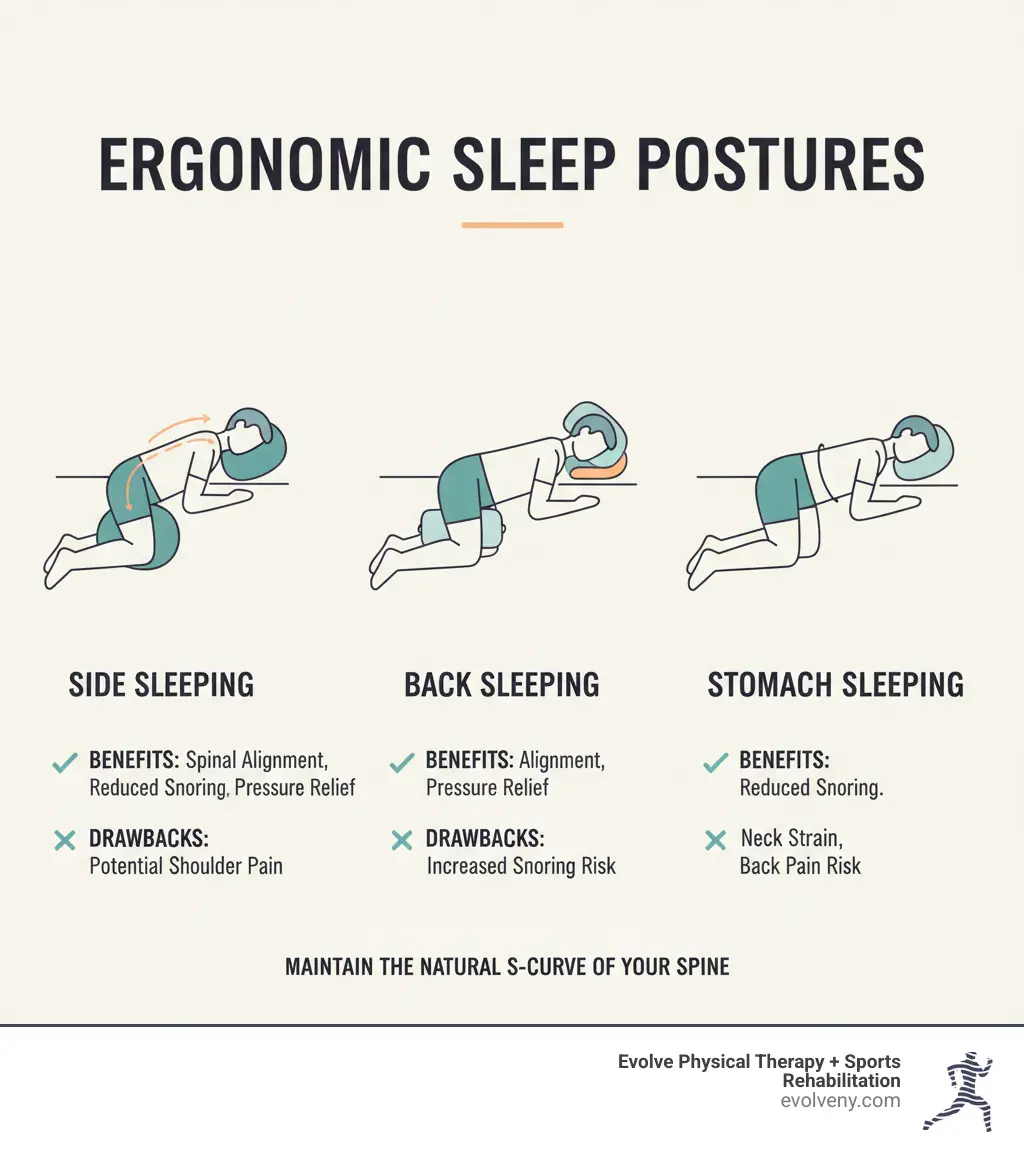
Chapter 9: Your Bedtime Routine May Matter More Than Your Position
It is easy to become fascinated by the shape of the body in the sleeping-position illustration.
However, the habits surrounding sleep can have a much greater influence on how rested someone feels.
A person who sleeps in a theoretically ideal position but goes to bed at inconsistent hours, drinks caffeine late in the evening, and spends the night checking their phone may still experience poor sleep.
Meanwhile, someone who sleeps on their side or in a slightly unusual posture may wake up refreshed because their sleep is regular and uninterrupted.
Keep a Consistent Sleep Schedule
Going to bed and waking up at roughly the same time each day can help establish a regular sleep rhythm.
This routine allows the body to anticipate periods of activity and rest.
It may be difficult to maintain the same schedule every day, especially for people who work shifts or have family responsibilities. Still, consistency where possible can be helpful.
Create a Comfortable Bedroom
A bedroom should be suitable for rest.
Some people sleep better in a cool, dark, and quiet environment. Others may prefer a little background noise or a small amount of light.
The most important thing is to create surroundings that make it easier to relax.
Comfortable bedding, an appropriate mattress, and a pillow that supports the neck can all contribute to better sleep.
Reduce Stimulation Before Bed
Bright screens, stressful conversations, and demanding work can make it harder for some people to unwind.
A quiet evening routine may help signal that the day is ending.
This could involve reading, listening to calm music, taking a warm shower, or preparing clothes for the following morning.
The goal is not to follow a perfect routine but to find habits that help the mind settle.
Be Careful With Caffeine and Alcohol
Caffeine can interfere with sleep, especially when consumed later in the day.
Alcohol may make someone feel sleepy initially, but it can disrupt sleep quality later in the night.
People who regularly struggle with sleep may find it useful to review their consumption habits and discuss persistent problems with a healthcare professional.
Chapter 10: What If You Do Not Have Just One Sleeping Position?
Many people cannot identify a single position that describes their entire night.
They may begin on their side, turn onto their back, stretch out, and then return to their side.
This is normal.
Sleep is not a completely motionless state. The body makes adjustments during the night, and changing positions can help relieve pressure.
Some people are known as combination sleepers because they regularly use more than one position.
For these individuals, the eight categories in the viral image may be entertaining, but none can fully describe their sleeping habits.
Combination Sleepers
A combination sleeper may use different positions depending on the time of night.
For example, someone may begin in the fetal position because it feels comfortable, then move onto their back after becoming more relaxed.
Another person may sleep on their side for most of the night but briefly turn onto their stomach.
These movements do not indicate inconsistency in personality. They simply reflect the body's natural adjustments.
Couples May Have Different Sleeping Habits
Sharing a bed introduces another factor.
One partner may prefer a starfish position, while the other curls up near the edge. One may need a quiet, cool room, while the other prefers warmth and background noise.
Differences like these can affect sleep quality.
A larger mattress, separate blankets, and a discussion about temperature or personal space may help.
Some couples also find that different sleep schedules work better for them.
The important thing is not to force both people into the same sleeping routine but to create conditions in which both can rest comfortably.
Chapter 11: The Most Important Question Is Not Whether You Are Lazy
The image invites readers to choose a number and decide whether their sleeping position makes them a 3/10, 4/10, 5/10, 6/10, or 7/10 on the laziness scale.
That can be a fun conversation starter.
You might discover that your partner sleeps like a starfish, your friend curls into a ball, or someone in your family always hugs a pillow.
But the ranking should not become a reason to judge yourself.
Rest is not a weakness. Sleep is essential for physical and mental functioning, and the body needs time to recover.
A person who enjoys a slow morning may still be ambitious. Someone who sleeps in a compact position may be outgoing. A starfish sleeper may be thoughtful and considerate despite taking up half the bed.
The position itself does not reveal the full person.
A more useful way to approach the image is to treat it as a reminder to notice your own habits.
Do you wake up feeling comfortable? Does your neck hurt? Do you snore heavily? Do you feel rested, or are you tired throughout the day?
Those questions are more valuable than a personality score.
Chapter 12: The Final Verdict—What Does Your Sleeping Position Really Say About You?
The viral image turns eight familiar sleeping poses into a playful ranking of laziness and personality.
The arms-up sleeper receives a low score and is described as alert and independent. The straight sleeper receives a middle score and is portrayed as practical and dependable. The curled-up sleeper is described as thoughtful and careful with energy. The casual side sleeper is presented as someone who balances effort and ease. The starfish sleeper receives a higher score and is portrayed as relaxed, generous, and perhaps a little too comfortable.
The other poses—hugging a pillow, reaching forward, or sleeping face down—offer further opportunities for readers to recognize their own bedtime habits.
These descriptions can be entertaining, but they are not scientifically established personality assessments.
Research has found little convincing evidence that a person's preferred sleeping position can reliably identify their character. Physical comfort, health, age, body proportions, and personal habits are all possible influences.
What sleep science does tell us is that posture can affect comfort, spinal alignment, breathing, and certain symptoms.
Side sleeping may help some people reduce snoring. Back sleeping can be comfortable for people who benefit from even weight distribution, but it may worsen sleep apnea in some cases. Stomach sleeping can place extra strain on the neck and lower back. A gentle fetal position may feel comfortable, while an excessively tight curl can create stiffness.
There is no single sleeping position that is perfect for everyone.
So, if you recognize yourself in one of the eight illustrations, enjoy the result—but do not let a number define you.
You are not lazy because you stretch across the mattress, and you are not cautious simply because you curl into a ball.
The best sleeping position is the one that allows you to rest comfortably, breathe well, and wake up feeling refreshed.
And perhaps the most accurate personality test is not the position you choose when you fall asleep, but what you do after the alarm rings in the morning.