Chapter 1: The Hidden Risks Behind an Everyday Vegetable
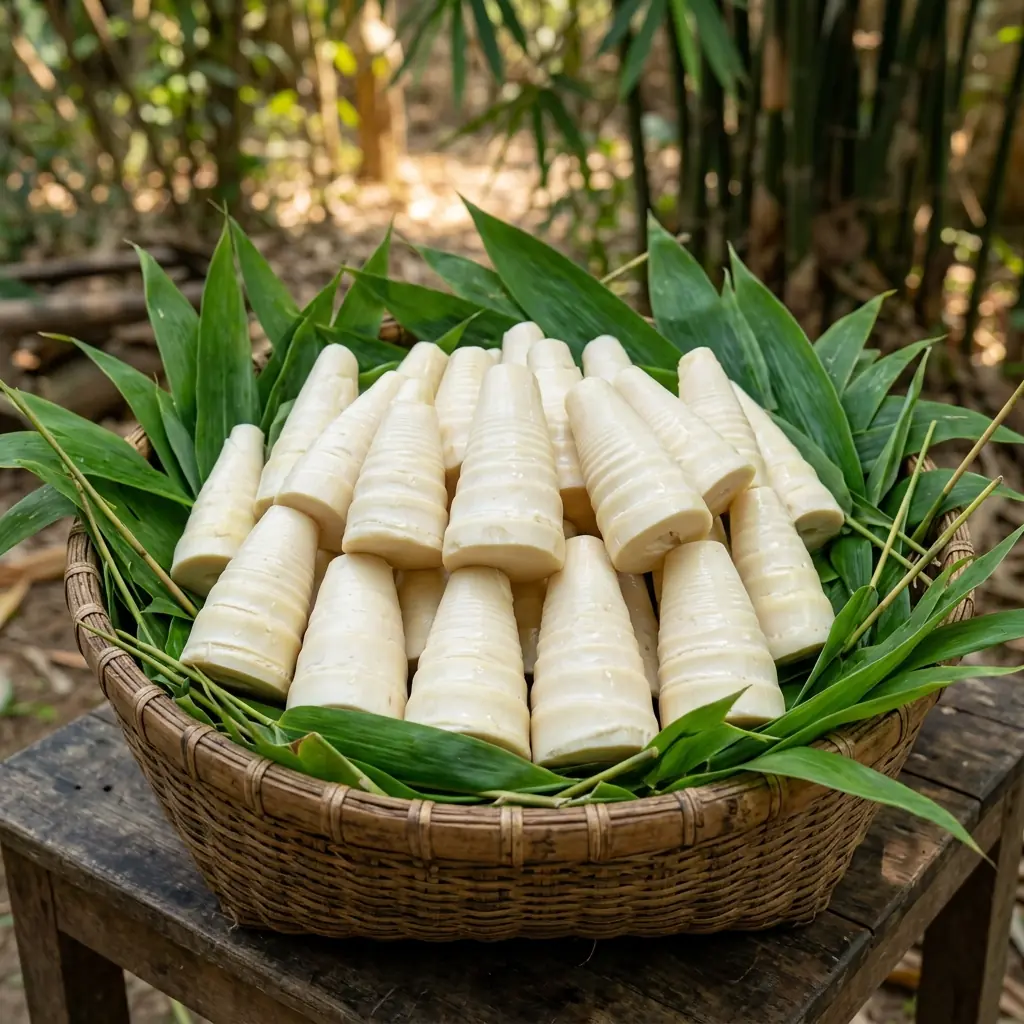
Bamboo shoots are widely enjoyed across Asia and have gradually become popular in kitchens around the world. They appear in soups, stir-fries, salads, hot pots, and traditional family recipes. Their crisp texture and mild flavor make them a versatile ingredient that can complement vegetables, meat, seafood, and rice dishes.
However, behind their simple appearance is an important food-safety issue that many consumers overlook.
Fresh bamboo shoots are not necessarily ready to eat immediately after harvesting, peeling, or washing. Unlike some vegetables that can be safely consumed raw after thorough cleaning, fresh bamboo shoots contain naturally occurring compounds known as cyanogenic glycosides. Under certain conditions, these substances can break down and release hydrogen cyanide, a toxic chemical.
This is one of the main reasons proper preparation is essential.
The compound of particular concern in bamboo shoots is taxiphyllin. It belongs to a group of naturally occurring plant chemicals that can produce cyanide when broken down.
The concentration of these compounds varies depending on the bamboo species, the age of the shoot, growing conditions, and other environmental factors. Consequently, it is not possible to assume that every fresh bamboo shoot contains the same amount.
Some people mistakenly believe that washing fresh bamboo shoots several times is enough to make them safe. Although washing is important for removing soil and surface contamination, it does not reliably eliminate naturally occurring cyanogenic compounds inside the plant.
Proper cooking and processing are therefore essential.
The risks associated with raw bamboo shoots should not be confused with the claim that the vegetable is naturally full of parasites. There is no scientific basis for describing all bamboo shoots as parasite-loaded. Like other vegetables grown close to the soil, however, they may become contaminated through unsafe water, soil, handling, or storage.
This means consumers should pay attention to two separate issues: natural plant toxins and ordinary food contamination.
Foodborne microorganisms can reach vegetables at different stages of production. Contaminated irrigation water, unclean harvesting equipment, dirty containers, and improper storage may all contribute to the problem.
Even vegetables that look fresh and attractive can carry microorganisms that cannot be seen with the naked eye.
Bamboo shoots also have a relatively short period of peak freshness after harvesting. As they age, their texture and flavor can change, and improper storage can accelerate deterioration.
For this reason, consumers should purchase bamboo shoots from reliable sellers, avoid products with unpleasant odors or unusual discoloration, and follow appropriate preparation instructions.
The good news is that bamboo shoots can remain a valuable part of a balanced diet when handled correctly.
They provide dietary fiber and contain several nutrients that contribute to a varied diet. Their nutritional value, however, does not remove the need for proper food-safety practices.
Understanding the difference between fresh, processed, dried, fermented, and canned bamboo shoots is particularly important.
Commercially processed products generally undergo procedures designed to reduce naturally occurring toxins. Fresh, unprocessed shoots require additional attention before consumption.
The lesson is simple: a vegetable does not have to look dangerous to require careful preparation. Sometimes, the most important safety measures happen before the food ever reaches the cooking pot.
Chapter 2: Why Eating Fresh Bamboo Shoots Raw Can Be Dangerous
One of the most important food-safety concerns surrounding fresh bamboo shoots is their natural cyanogenic glycoside content.
These compounds are produced by certain plants as part of their natural chemical defense systems. They are not necessarily dangerous simply because they exist in a plant, but they can become hazardous when consumed in sufficient quantities and processed improperly.
When plant tissue is cut, crushed, or damaged, enzymes can come into contact with cyanogenic glycosides. This interaction may contribute to the release of hydrogen cyanide.
Cyanide interferes with the body's ability to use oxygen at the cellular level. In significant exposures, this can become a medical emergency.
Symptoms of cyanide poisoning may include headache, dizziness, nausea, vomiting, abdominal discomfort, confusion, difficulty breathing, and, in severe cases, seizures or loss of consciousness.
The severity depends on the amount consumed and the individual's exposure.
This is why eating raw or inadequately processed fresh bamboo shoots is not recommended.
A common misunderstanding is that young bamboo shoots are automatically safe because they are tender and have a mild flavor.
Unfortunately, tenderness and taste are not reliable indicators of cyanogenic glycoside levels.