Both situations can leave residents unable to return safely.
A family may lose beds, clothing, kitchen equipment, school supplies, important documents, and the small possessions accumulated over many years.
Some households may also lose tools or equipment used to earn a living.
The emotional impact can be just as serious as the physical damage.
People who have lived in the same neighborhood for years may suddenly find themselves without a place to sleep, without privacy, and without knowing when they will be able to return.
For children, the loss can mean separation from familiar surroundings, interruption of school routines, and uncertainty about where the family will live next.
For older residents, the disruption may be particularly difficult if they depend on regular medication, accessible facilities, or assistance from neighbors.
The fire therefore affected far more than buildings. It disrupted the everyday stability of an entire community.
The First Night After the Fire
When the fire was brought under control, many families faced a new problem: finding somewhere safe to spend the night.
For residents whose homes had been destroyed or severely damaged, returning immediately was not an option.
Some structures could still contain unstable walls, damaged roofing, exposed electrical wiring, or smoldering materials.
Authorities began organizing temporary accommodation for affected residents.
INDECI reported that temporary shelters were established to assist families displaced by the fire. The Municipality of Metropolitan Lima coordinated the installation of accommodation facilities, while emergency agencies provided technical support.
The Estadio 28 de Mayo was used as a location for temporary assistance and shelter arrangements.
Emergency shelters provide more than a roof.
They can offer a safe place to sleep, access to basic necessities, information about assistance programs, and a location where authorities can identify vulnerable residents.
However, temporary accommodation also presents challenges.
Families may need to share crowded spaces. Parents must find ways to care for children while dealing with uncertainty. Older people may struggle with unfamiliar sleeping arrangements.
People who have lost their homes may also feel uncomfortable discussing their needs or asking for help.
The first night after a disaster is often filled with practical questions.
Where will the family sleep? How will they obtain food? Where can they charge a phone? How can they replace identification documents? What happens if a child needs medical attention?
These questions become especially urgent when a large number of households are displaced at the same time.
The response in Pamplona Alta included efforts to provide shelter and organize assistance, but the experience of displacement remained a difficult reality for affected families.
Medical Assistance and the Injured
The fire also required medical assistance for people who suffered injuries or were affected by smoke.
During a residential fire, injuries can occur in several ways.
People may suffer burns while escaping. Others may inhale smoke or experience breathing difficulties.
Some residents may also be injured while attempting to rescue family members or carry belongings from their homes.
Emergency medical teams must assess people quickly and determine whether they need treatment at the scene or transportation to a hospital.
INDECI reported that medical personnel from the Emergency Medical Attention Service, known as SAMU, attended injured residents during the response.
An official report dated October 12 described medical attention for 13 injured people who were discharged, while three others were transferred to María Auxiliadora Hospital.
Subsequent reports provided additional information about the number of people injured as assessments continued.
The figures varied between early reports, which is another reason not to rely on a single preliminary number without checking the date and source.
The available information did not establish that the fire caused a large number of fatalities. Early official reports stated that no deaths had been recorded at the time of those assessments.
That distinction matters.
A disaster can be extremely serious even when it does not result in a confirmed death toll. The loss of homes, injuries, displacement, and damage to livelihoods can have lasting consequences.
Medical teams also need to consider people who may not have visible injuries.
Smoke exposure can cause coughing, irritation, and breathing difficulties. People with existing respiratory conditions may be especially vulnerable.
After a fire, residents should avoid entering damaged buildings until authorities have confirmed that they are safe.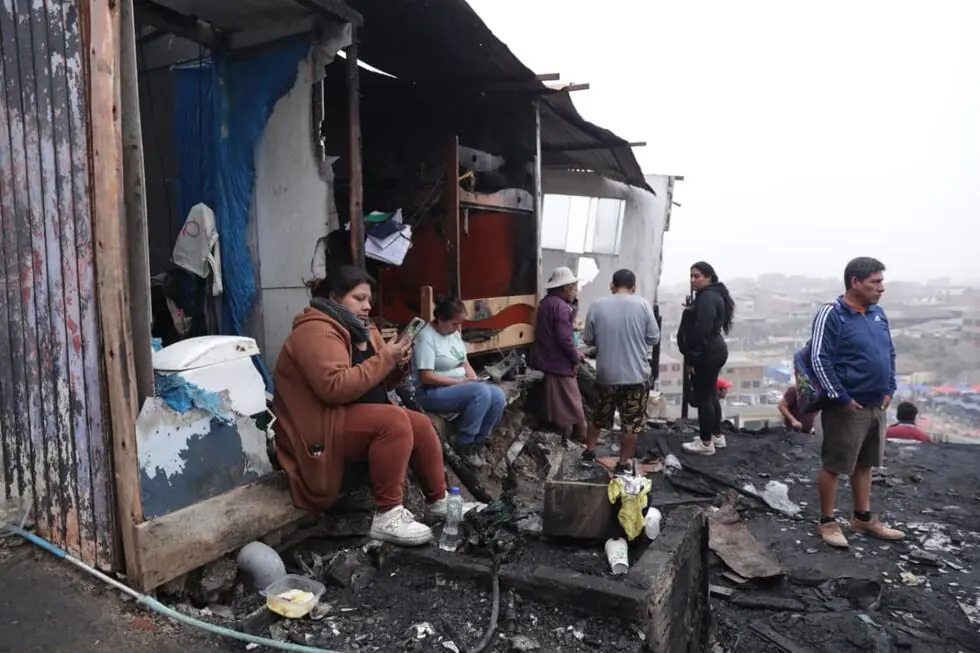
Emergency Shelters and Government Assistance
Following the fire, several government agencies became involved in the response.
INDECI coordinated with local authorities and provided technical assistance. The Ministry of Defense and other government departments also participated in support efforts.
Temporary shelters were established, and affected families were registered so that assistance could be distributed more systematically.
Registration is an important part of disaster response.
Authorities need to know which households have been displaced, how many people are involved, and what types of assistance they require.
Without accurate information, some families may receive repeated aid while others are overlooked.
Registration can also help identify residents who need special support, including children, older adults, and people with disabilities.
The Ministry of Defense reported that personnel from the Peruvian Army were deployed to support security and coordination in the affected area.
The Ministry of the Interior also described humanitarian assistance provided to families.
According to its October 13 report, police personnel delivered blankets, mattresses, tents, clothing, footwear, and essential supplies.
Food and drinking water were also distributed.
These efforts were intended to help residents meet immediate needs while authorities continued evaluating the damage.
However, emergency assistance is only the beginning of recovery.