Families who have lost their homes may need help with temporary accommodation, rebuilding, replacement documents, school arrangements, and access to employment.
The recovery process can take much longer than the firefighting operation itself.
For many residents, the most difficult part of the disaster may begin after the smoke has disappeared.
The Importance of Community Support
In the aftermath of the fire, residents needed help from both official agencies and the wider community.
Neighbors often play a crucial role during the first hours of a disaster.
They may help people escape, provide transportation, offer temporary accommodation, or share food and water.
Community members can also assist with locating missing belongings, contacting relatives, and identifying families who require urgent medical attention.
The importance of this support becomes especially clear when a large number of homes are affected at once.
Emergency agencies have limited personnel and equipment. Even a substantial response may not be able to meet every need immediately.
Local organizations, volunteers, and community groups can help bridge the gap.
However, donations need to be coordinated carefully.
Unrequested clothing, damaged goods, or unsuitable food can create additional problems for emergency shelters.
Useful donations are generally those requested by the agencies coordinating the response.
These may include drinking water, hygiene supplies, blankets, clean clothing, food, and other essential items.
Financial assistance can also be useful when distributed through reputable organizations that understand the needs of affected families.
The Pamplona Alta fire showed how a disaster can bring a neighborhood together while also exposing the limits of informal support.
Community solidarity can help families endure the first difficult days, but long-term recovery requires reliable housing, public services, and sustained assistance.
Why the Number of Damaged Homes Was Reported Differently
One of the most confusing aspects of the circulating headline is its claim that at least 300 homes were estimated to have been damaged or destroyed.
The number appears in some reporting about the 2025 fire, but official and media estimates were not identical.
The Peruvian Fire Service reported approximately 100 precarious homes affected.
Other news reports described 80 to 100 homes damaged during the initial stages of the emergency.
A report from La República cited an estimate of approximately 300 affected homes, while other coverage referred to hundreds of people or families displaced.
These figures should not be treated as interchangeable.
A home is not the same as a person, a family, or a household.
For example, 300 people affected could represent dozens of households. Likewise, 300 families displaced would imply a much larger number of residents than 300 individual people.
Early disaster reporting sometimes uses different terms before a complete assessment is available.
The final count may also change as officials inspect homes that were not immediately accessible.
A structure may appear intact from the outside but later be classified as unsafe. Another may have suffered limited damage and remain repairable.
For these reasons, the headline's wording should be understood as an early estimate rather than a definitive final count.
A careful article should explain that the reported figures varied and identify which organization provided each estimate.
That approach gives readers a clearer understanding of the disaster without exaggerating its scale.
What Happened to the Homes That Remained Standing?
A fire can damage a building even when it does not completely destroy it.
Heat may weaken structural components. Smoke can contaminate interior surfaces. Water used during firefighting may damage walls, electrical systems, furniture, and household equipment.
After a large fire, residents should not assume that a standing home is safe to occupy.
Authorities may need to inspect the structure for signs of instability.
Electrical systems can be particularly dangerous after a fire. Damaged wiring, exposed connections, and water infiltration may create a risk of electric shock or another fire.
Gas cylinders and fuel containers also require careful inspection.
A building may contain hidden hotspots that continue burning after the visible flames have been extinguished.
Emergency crews generally inspect the affected area and identify locations where residents should not enter.
The cleanup process must also be handled carefully.
Burned materials can contain sharp metal, broken glass, damaged roofing sheets, and other hazards.
Residents who attempt to recover belongings without protective equipment may be injured.
The authorities involved in the Pamplona Alta response carried out damage assessments and coordinated cleanup work.
For families whose homes remained standing, the next steps depended on the extent of the damage and whether the buildings could be repaired safely.
For those whose houses were destroyed, recovery required a more difficult process involving temporary housing and the possibility of rebuilding.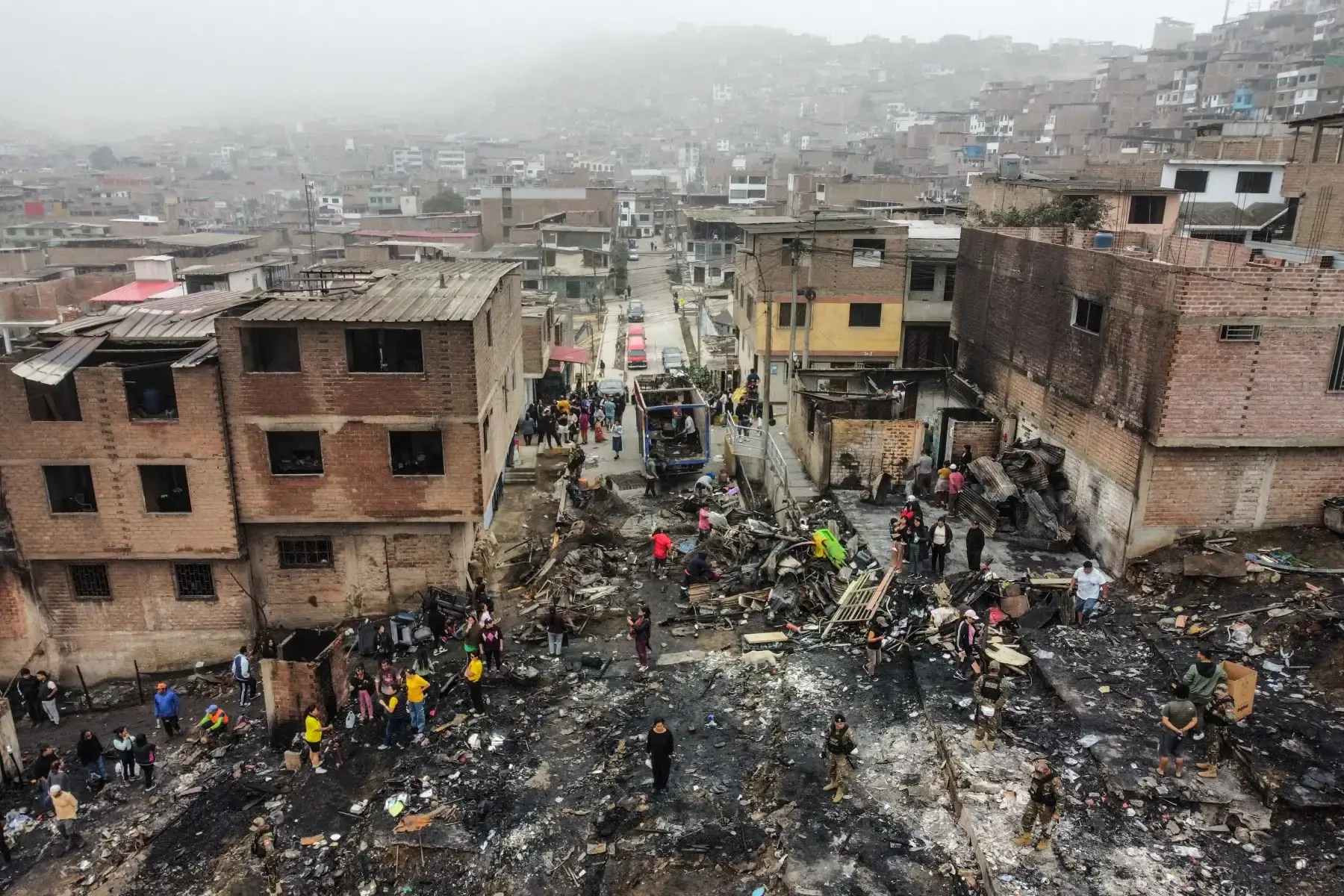
The Emotional Impact of Losing a Home
The loss of a home is not measured only by its financial value.
A house contains memories, family photographs, personal documents, furniture, and objects that may have been passed down through generations.
A kitchen may represent years of family meals. A bedroom may contain the belongings of children who grew up there. A small collection of photographs may be the only record of relatives who have passed away.
When a fire destroys these objects, families can experience a profound sense of loss.
The emotional effects may continue long after the immediate emergency.
Some residents may struggle with sleep, anxiety, or fear of another fire. Others may feel overwhelmed by the practical work of rebuilding their lives.
Children may need reassurance and support to understand what happened.
Older adults may be especially affected if the disaster disrupts their routines or separates them from familiar neighbors.