A cloud of thick smoke rising above Glasgow’s city centre turned an ordinary Sunday afternoon into a scene of alarm and confusion. Near one of Scotland’s busiest railway stations, flames tore through a historic commercial building, emergency crews rushed into the area, and streets that are usually crowded with commuters and shoppers were suddenly sealed off.
For people nearby, the first signs were difficult to ignore: smoke, flashing emergency lights, and the growing realization that this was no ordinary building fire. As the blaze spread through the property on Union Street, the danger extended beyond the building itself. Glasgow Central Station stood close by, thousands of passengers depended on its services, and nearby businesses and residents faced an uncertain situation.
The fire broke out on Sunday, March 8, 2026, at a commercial building on Union Street, close to Glasgow Central Station. What followed was a major operation involving firefighters, police, railway staff, and other emergency partners. The building suffered extensive damage and partially collapsed. Yet one detail brought enormous relief amid the destruction: authorities reported no casualties.
The story did not end when the flames were brought under control. The incident disrupted rail services, damaged historic parts of the city centre, forced businesses to confront devastating losses, and raised difficult questions about how a fire could spread so rapidly through an old urban building. The full picture becomes clearer when we look at how the emergency unfolded, why the railway station had to close, and what happened during the long recovery that followed.
The First Reports: Smoke Near One of Scotland’s Busiest Railway Stations
The emergency began at approximately 3:46 p.m. on Sunday, March 8, when the Scottish Fire and Rescue Service received reports of a fire affecting the ground floor of a four-storey commercial building on Union Street. At first, it was a building fire requiring an urgent response. Within a short time, however, the scale of the incident became clear.
Union Street is part of Glasgow’s busy central district. It sits beside Glasgow Central Station, a major transport hub used by commuters, visitors, tourists, and people travelling across Scotland and beyond. The location meant that a fire could affect far more than the property in which it began. Smoke, falling debris, damaged structures, and the possibility of flames spreading to neighbouring buildings all created risks that emergency crews had to consider.
As firefighters arrived, the situation developed rapidly. More appliances and specialist resources were sent to the scene. By the early evening, reports described more than 60 firefighters working to tackle the blaze. The Scottish Fire and Rescue Service later confirmed that the operation grew considerably: at its height, 18 fire appliances and specialist resources were mobilised.
The difference between those figures reflects how the response expanded as the incident became more serious. The first reports captured the emergency as it was unfolding; later figures described the full scale of the operation.
People in the surrounding streets were urged to keep away. Residents nearby were advised to keep windows closed as a precaution, while road closures and diversions were introduced. Police officers helped maintain the cordon, preventing pedestrians and vehicles from entering areas where firefighters were working or where debris could fall.
For anyone watching from a safe distance, the scene was frightening. Smoke rose above the buildings, emergency vehicles filled the streets, and firefighters worked to contain a blaze in a densely built part of the city. The presence of Glasgow Central Station made the situation especially concerning. A fire in an isolated building might have caused serious damage to one property; a fire beside a major railway station could interrupt the movement of thousands of people and place important infrastructure at risk.
The emergency services had to act on several fronts at once: fight the flames, protect nearby buildings, keep the public away from danger, and assess whether the railway station could safely continue operating. Each decision depended on information that was changing by the minute.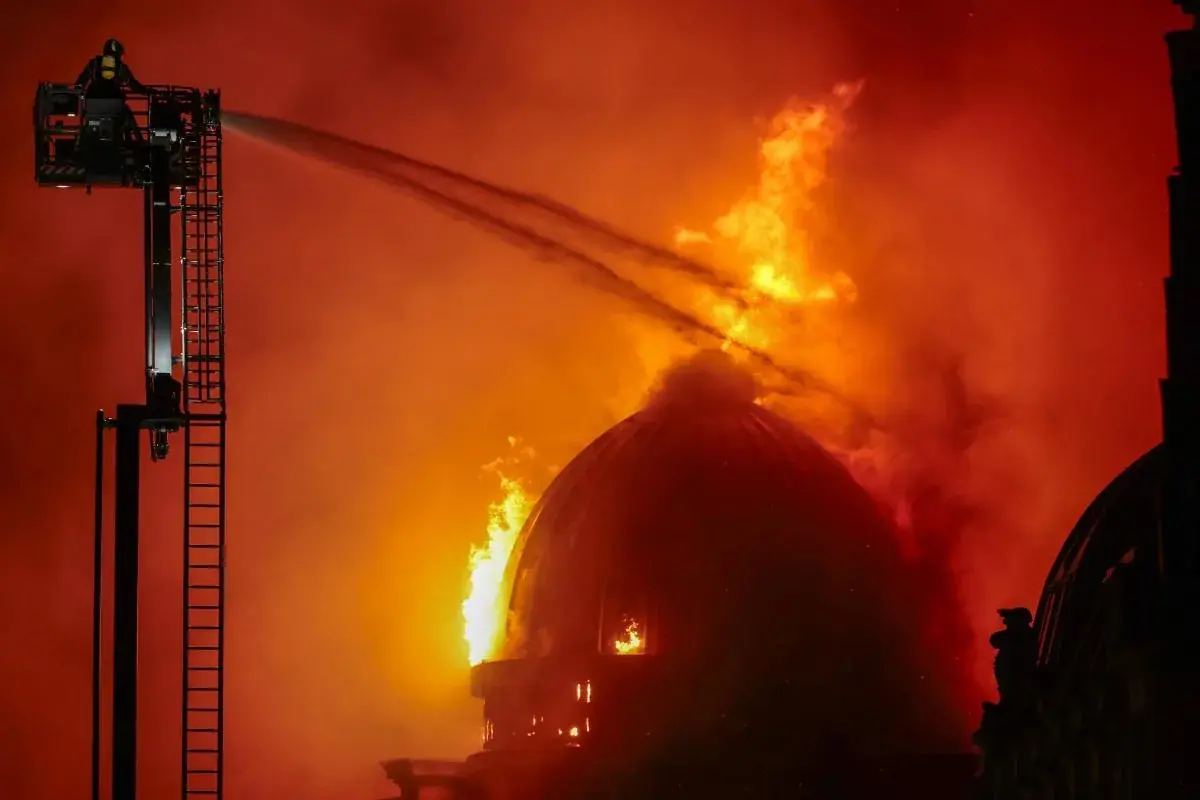
How the Fire Spread Through the Historic Building
The affected property was not an ordinary modern commercial unit. It was part of Glasgow’s historic city-centre streetscape, a Victorian-era building dating from the nineteenth century. The structure was associated with the Union Corner area, close to the junction of Union Street and Gordon Street. It had contained a number of commercial premises over the years.
Early reporting identified a vape shop on the ground floor as the place where the fire was believed to have started. That detail attracted attention because electronic cigarettes and related devices can contain lithium-ion batteries, which can present particular fire risks when damaged, defective, improperly stored, or involved in a thermal runaway event.
However, it is important to distinguish between a reported point of origin and a confirmed technical cause. The Scottish Fire and Rescue Service said a multi-agency investigation would examine how the fire began. Officials did not immediately establish a definitive explanation, and it would be inaccurate to claim that a particular battery, device, or product had been proven responsible.
What was clear was the speed and severity of the fire. Flames spread through the building and affected upper floors. The structure suffered extensive damage, and part of it eventually collapsed. The building’s historic dome was also lost.
Older buildings can present complex challenges during a fire. Their layouts may have been altered over many decades. Different businesses may occupy connected spaces, and renovations can leave hidden voids, service routes, or concealed materials behind walls and ceilings. Once fire enters such spaces, it can travel in ways that are difficult to see from outside.
The age of a building does not automatically make it unsafe, and a historic structure should not be treated as though it must inevitably burn quickly. Fire behaviour depends on many factors, including the building’s construction, maintenance, internal layout, contents, fire protection systems, and the circumstances of the incident.
Nevertheless, a major fire in a tightly packed city-centre property can be especially difficult to control. Nearby buildings may share walls or stand close together. Narrow streets and surrounding structures can limit access. Firefighters must also consider the possibility that weakened floors, walls, roofs, or decorative features could collapse while crews are working.
At Union Street, the challenge was not simply to put water on visible flames. Crews had to assess the building as a changing structure, protect neighbouring properties, and avoid exposing firefighters or members of the public to unnecessary danger.
The dramatic photographs of the blaze showed how far the emergency had progressed. Bright flames could be seen through parts of the building, while thick smoke spread above the surrounding streets. As the structure deteriorated, the operation shifted from a straightforward firefighting response into a complex incident involving structural safety and the protection of critical infrastructure.
The Moment the Building Partially Collapsed
One of the most distressing developments was the partial collapse of the building. As the fire continued, sections of the structure were lost, and the historic dome came down. The collapse transformed the appearance of the street and made the site even more dangerous.
A building affected by intense heat can become unstable even after the most visible flames have been reduced. Steel components may lose strength, masonry can crack, timber can burn away, and floors or roof structures can fail. Firefighters cannot safely assume that a structure is stable simply because flames are no longer visible from the street.
That is why structural assessment became a central part of the response. Crews worked alongside specialists to understand which areas remained dangerous and where hotspots might still be hidden within the damaged stonework.
The risk of further collapse also influenced decisions about access. Emergency workers needed room to operate equipment, move hoses, and assess the site. At the same time, police had to prevent members of the public from approaching the damaged building. A loose section of masonry or an unstable façade can remain hazardous long after a fire appears to be under control.