Second, the building itself had historic significance. The partial collapse of a nineteenth-century structure, including the loss of its dome, gave the incident an additional emotional dimension. People were not only watching a commercial property burn; they were seeing part of the city’s architectural heritage suffer extensive damage.
Third, the consequences were immediate and widespread. Railway services were disrupted, roads were closed, nearby businesses were affected, and the emergency response continued for days. The incident was therefore relevant to people who lived in Glasgow, people who worked there, and travellers who depended on the station.
Finally, the absence of reported casualties was an important part of the story. Images of a building engulfed in flames can lead viewers to fear the worst. The confirmation that no casualties had been reported brought relief, even as the scale of the material damage became clearer.
Online photographs and videos helped the story spread beyond Scotland. Images of the fire showed the intensity of the blaze, the work of firefighters using elevated platforms, and the damage left behind. But dramatic footage does not always explain what happened before or after the moment captured.
That is why the timeline matters. The fire began on March 8, emergency crews worked through the following days, the site was handed over for recovery on March 12, and the surrounding area eventually reopened in July. Without that wider context, readers may assume that the emergency ended when the flames disappeared.
What This Incident Reveals About Urban Fire Preparedness
The Glasgow fire offers several important lessons about emergency planning in busy city centres.
One lesson is the importance of early reporting. When smoke or flames are noticed, a prompt call to emergency services can help crews begin their response before a fire becomes more difficult to control. People should not attempt to investigate a suspected fire themselves if doing so would put them at risk.
Another lesson is the value of clear evacuation procedures. Commercial buildings may contain employees, customers, visitors, and people who are unfamiliar with the layout. Fire alarms, marked escape routes, emergency lighting, and staff training can all help people leave safely.
Building owners and businesses also need to consider how changes to a property affect fire safety. New equipment, electrical installations, storage arrangements, and internal alterations should be assessed properly. Keeping escape routes clear and maintaining fire doors and detection systems are practical steps that can make a difference.
The risks associated with lithium-ion batteries also deserve attention, although the exact cause of the Glasgow fire should not be assumed. These batteries are widely used, and most function safely when manufactured, stored, charged, and handled appropriately. Problems can arise when devices are damaged, incompatible chargers are used, batteries are poorly stored, or defective products are allowed to remain in service.
Businesses that sell or store battery-powered products should follow relevant safety guidance, use appropriate charging and storage arrangements, and ensure staff understand what to do if a battery becomes unusually hot, swollen, damaged, or begins producing smoke. A damaged battery should not be treated as an ordinary piece of rubbish.
For the public, basic awareness is also useful. People should use suitable chargers, avoid charging damaged devices, follow manufacturer instructions, and stop using a product that shows signs of battery failure. These general precautions are sensible regardless of the investigation into the Glasgow incident.
The fire also highlights the importance of protecting neighbouring buildings and essential infrastructure. City-centre emergency planning must account for the fact that a single incident can affect roads, railways, businesses, hotels, public spaces, and nearby residents.
Emergency services need access routes, reliable water supplies, specialist equipment, and coordination with other agencies. Railway operators need plans for closing stations safely and informing passengers. Local authorities need arrangements for road closures, public communication, structural assessments, and recovery.
The use of water drawn from the River Clyde during the Glasgow operation illustrated the importance of having options when a large fire requires sustained water supplies. Specialist pumps and equipment can support firefighting when the scale of an incident exceeds what ordinary arrangements can comfortably provide.
Equally important is the work that happens after the fire. Structural engineers, demolition specialists, council teams, and railway authorities may all be needed before a damaged area can safely reopen. Recovery planning should begin while the emergency response is still under way, with responsibilities clearly coordinated.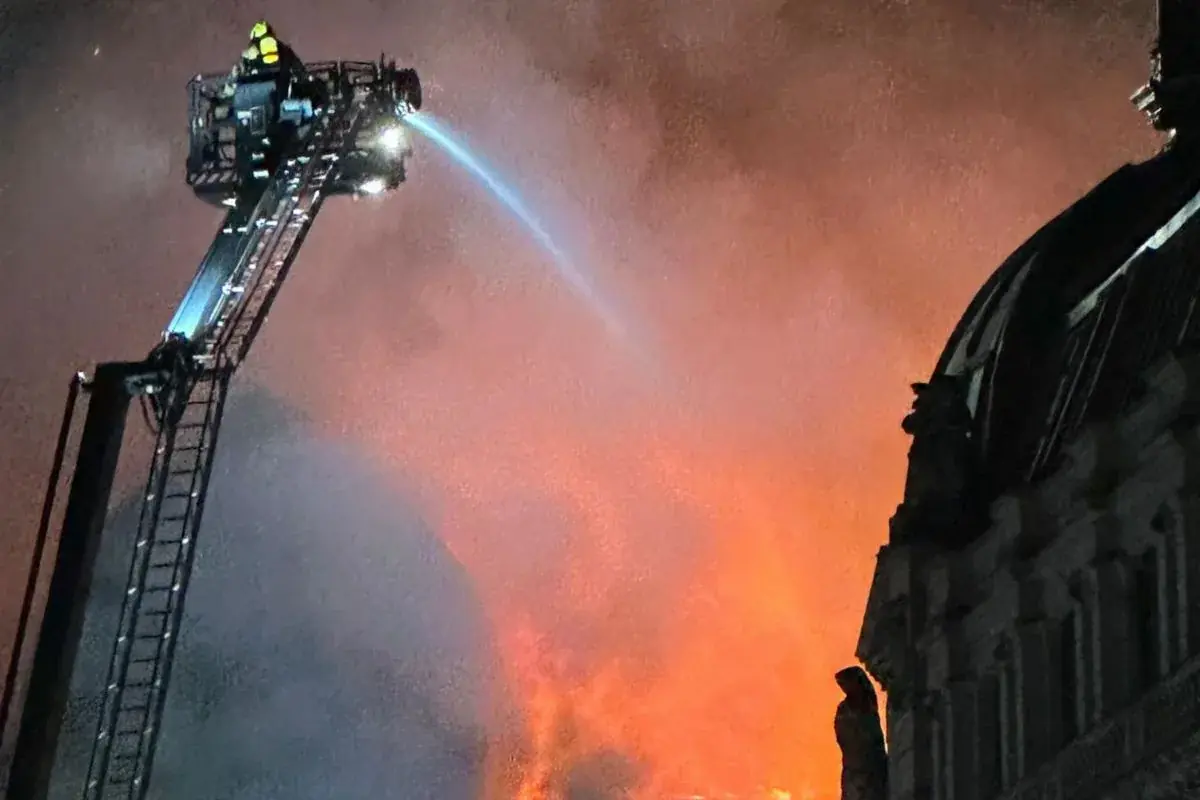
The Importance of Accurate Reporting During a Breaking Emergency
The original headline describes a major fire breaking out in Glasgow and refers to the emergency near Central Station. That broad description reflects the event, but the details matter when turning a short social-media post into a full news article.
Breaking news often develops in stages. Early reports may describe the number of firefighters at the scene, while later statements provide a more complete account of the resources deployed. Initial information may identify where a fire was first reported, but investigators may not yet know what caused it.
In this incident, the Scottish Fire and Rescue Service provided updates as the operation progressed. Its statements confirmed the time of the initial alert, the number of appliances deployed at different stages, the structural damage, the absence of reported casualties, and the eventual handover of the site.
The figures should be presented with their context. More than 60 firefighters were reported at the scene during the early response. The service later confirmed that 18 appliances and specialist resources were deployed at the height of the incident, while more than 200 firefighters were involved in the wider effort to make the area safe.
These numbers describe different aspects of the response and should not be treated as contradictory. One refers to the firefighters reported at the scene at a particular stage; another describes the total personnel involved over the course of the operation.
The same care is needed when discussing the cause. Reports identified a vape shop as the likely area where the fire began, but the fire service said a multi-agency investigation would examine what happened. A responsible account should not turn an early report into a proven explanation.
Accuracy is especially important in stories involving public safety. Unverified claims can create unnecessary fear, damage reputations, or distract from the practical information people need. Readers deserve to know what authorities have confirmed, what remains uncertain, and what happened after the initial emergency.
A City Moves Forward After a Devastating Fire
The fire on Union Street was a major emergency for Glasgow. It destroyed or severely damaged commercial premises, caused part of a historic building to collapse, disrupted Scotland’s busiest railway station, and required a sustained response from firefighters and partner agencies.
Yet the story also contains a significant measure of relief. Authorities reported no casualties, despite the scale of the blaze and the difficult conditions faced by emergency crews. The response involved hundreds of firefighters over several days, specialist equipment, structural assessments, and coordination across public services.
The eventual reopening of the area in July showed how recovery can take months after the flames have been extinguished. Streets had to be made safe, damaged structures dealt with, and railway access restored. Businesses and workers affected by the incident faced their own challenges as they considered what came next.
For Glasgow, the fire was a reminder of the vulnerability of historic city-centre buildings and the importance of preparing for emergencies in places where transport, commerce, and daily life meet. It also demonstrated the value of a coordinated response, careful structural assessment, and clear public communication.
The images of smoke and flames captured the most dramatic moments. The full story, however, is about much more: the people who responded, the businesses that suffered losses, the passengers whose journeys were disrupted, and the months of work required to restore the area.
The most important confirmed detail remains that no casualties were reported. The building suffered enormous damage, but the emergency response helped prevent an already devastating incident from becoming a tragedy involving loss of life.
Glasgow Central and the surrounding streets have since reopened. The work of rebuilding and recovering from the fire continues in a different form, but the city has taken an important step toward normal life again.