For example, if investigators suspect a mechanical failure, they may need to inspect the braking system, tires, steering components and other vehicle parts.
If road conditions are being examined, investigators may document the width of the road, the presence or absence of protective barriers, the condition of the surface and the visibility around the relevant section.
Witness accounts may also be important.
People who were traveling in the bus, residents living nearby and other motorists may provide information about what happened immediately before the vehicle left the roadway.
The bus itself can provide additional evidence.
Damage patterns may help investigators understand how the vehicle moved after leaving the road, while the final position of the wreckage can provide clues about the sequence of events.
Nevertheless, conclusions should not be drawn simply by looking at photographs.
A severely damaged bus does not automatically reveal whether the accident resulted from driver error, mechanical failure or road conditions.
The investigation must consider the available evidence as a whole.
This distinction matters because public discussion following a major accident can quickly become emotional.
People naturally want an explanation. They want to know whether the disaster could have been prevented and whether anyone should be held responsible.
Those are legitimate questions.
But the answers must come from a proper investigation rather than speculation.
Questions About Passenger Transport Safety
The Cajamarca tragedy renewed attention to the challenges of passenger transportation in mountainous regions of Peru.
Public buses play an essential role in connecting communities.
In rural areas, residents may depend on buses to reach schools, workplaces, hospitals, markets and government services.
For many people, there is no convenient alternative.
Private vehicles may be expensive, while other forms of transportation may be unavailable or operate only on limited schedules.
As a result, passenger buses are an important part of everyday life.
However, the safety of these journeys depends on several factors working together.
The condition of the vehicle matters. So does the experience of the driver, the quality of the road and the effectiveness of transport regulations.
A bus that is mechanically sound can still be involved in a serious accident if it travels too quickly for the road conditions.
Similarly, a careful driver may face additional risks when a route contains dangerous curves, poor visibility or inadequate roadside protection.
Safety therefore cannot depend on one individual alone.
It requires a system in which vehicles are properly maintained, drivers are appropriately trained, operators follow passenger limits and roads are designed and maintained with realistic risks in mind.
The accident also raises an important question about the safety of vehicles traveling on remote routes.
Passengers often have little information about the maintenance history of the bus they are boarding.
They may not know whether the vehicle has recently undergone a technical inspection or whether the operator has addressed previously identified problems.
Transport authorities and companies have a responsibility to ensure that passenger vehicles meet applicable safety requirements.
These responsibilities become particularly important on routes where an accident could result in a vehicle falling down a steep slope.
A roadside barrier cannot prevent every possible disaster, but properly designed protective infrastructure can reduce the risk of vehicles leaving the road in certain circumstances.
Better warning signs, road maintenance and appropriate speed controls can also help.
The tragedy demonstrates why investment in rural transportation infrastructure should be considered a matter of public safety rather than simply a matter of convenience.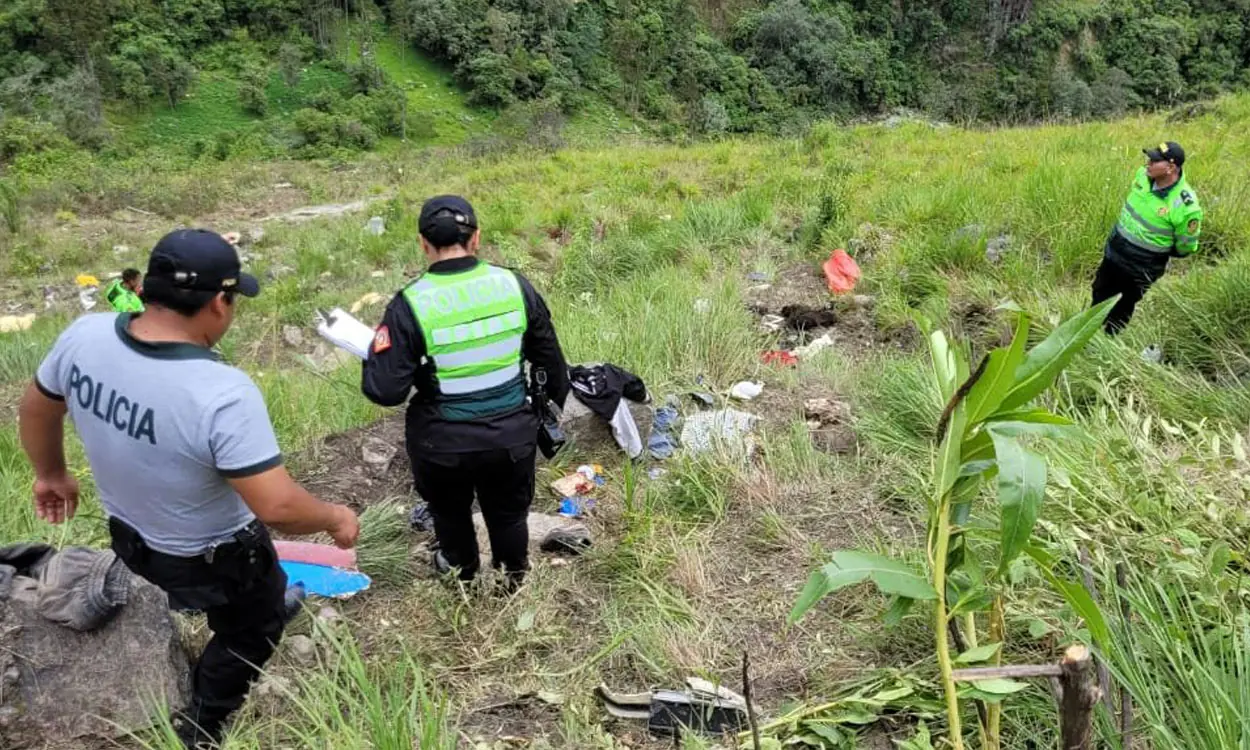
Why Mountain Roads Can Become So Dangerous
Mountain roads have characteristics that make driving especially demanding.
Unlike long, straight highways, they frequently follow the natural shape of the landscape.
A road may curve around a hillside, cross a narrow ridge or descend toward a river before climbing again.
These changes can create blind corners and sudden differences in elevation.
Drivers may encounter sections where the available space is limited and where there is little room to correct an error.
In some locations, the edge of the road may be separated from a steep drop by only a small shoulder.
If the vehicle loses traction, the driver may have very little time to respond.
Several conditions can increase these risks.
Road surfaces: Loose gravel, potholes and uneven surfaces can affect tire grip and vehicle stability.
Visibility: Fog, darkness, rain and dust can make it difficult to identify hazards ahead.
Curves and slopes: Sharp bends and steep descents require careful speed control, particularly for large vehicles carrying passengers.
Vehicle condition: Tires, brakes and steering components must be suitable for the demands of the route.
Driver fatigue: Long journeys and inadequate rest can reduce concentration and reaction time.
These factors can interact.
A road that is manageable in daylight may become significantly more challenging at night, particularly when its surface is uneven.
A driver approaching a curve on a steep descent must account for the vehicle's weight, speed and braking distance.
The consequences of a mistake may be much more serious than they would be on a flat urban road.
This is why transportation safety specialists emphasize that drivers should adjust their speed to the actual conditions rather than relying solely on posted limits.
Passengers can also take sensible precautions.
Wearing seat belts where available, avoiding unnecessary movement inside the vehicle and choosing reputable transport operators are useful measures.
No precaution can eliminate every risk, but safety practices can reduce the likelihood of preventable injuries.
The Importance of Seat Belts on Passenger Buses
One issue that deserves particular attention after a severe bus accident is the use of seat belts.
Many passengers do not think about seat belts when boarding a bus.
They may assume that because they are traveling in a large vehicle, they are automatically protected.
However, the size of a bus does not eliminate the risk of injury during a collision or rollover.
Passengers who are not restrained may be thrown from their seats or collide with other passengers and interior structures.
In some accidents, the force of the impact can cause severe injuries even when the vehicle itself remains largely intact.
Seat belts are designed to help keep occupants in their seats and reduce the likelihood of certain types of injury.
Their effectiveness depends on proper installation, availability and correct use.
For transport operators, ensuring that safety equipment is present and maintained is an important responsibility.
For passengers, using available restraints is a simple precaution that can make a difference.
The Cajamarca accident should not be used to make unsupported claims about whether seat belts were available or used on the particular bus.
That information needs to be established through reliable reporting or official investigation records.
Nevertheless, the broader safety lesson remains relevant.
Passenger protection must be considered before a journey begins, not only after an emergency occurs.
The Role of Emergency Services in Remote Communities
The images of rescuers working near the damaged bus also highlight the importance of emergency services outside major cities.
Large urban areas may have hospitals, ambulances and specialized rescue units located relatively close together.
Remote mountain communities often face different conditions.
An emergency team may need to travel a considerable distance before reaching an accident site.
Once there, workers may discover that the terrain prevents ordinary vehicles from approaching the injured passengers.
This means rescue operations must be adapted to the landscape.
Teams may need ropes, specialist equipment, stretchers and additional personnel capable of operating on steep or unstable ground.
Communication is another important factor.
When several organizations are involved, information must be shared clearly so that personnel understand which areas have been searched and which tasks remain outstanding.
A coordinated response can help reduce duplication and prevent unnecessary delays.
Local residents can also play an important role in the earliest stages of an emergency.
People living near a crash site may be able to alert authorities, identify the location and provide information about accessible routes.
However, untrained volunteers should not put themselves in danger by entering unstable wreckage or attempting complicated rescues without appropriate equipment.
The safest contribution is often to provide accurate information and allow trained personnel to carry out dangerous operations.
The Cajamarca incident demonstrates how important local knowledge can be when an accident occurs in an isolated area.