A photograph is evidence of what is visible in the frame. It is not automatically evidence of everything a headline claims happened before or after the picture was taken.
11. The public safety value of accurate updates
Although the screenshot does not identify a specific emergency, breaking news can have a genuine public safety purpose.
When an event affects a road, accurate updates may help people avoid a dangerous area. When severe weather disrupts transport, timely warnings can prevent unnecessary journeys. When authorities issue an evacuation instruction, clear communication can help residents understand what action is required.
For information to be useful, however, it must be specific.
A good public safety update should tell people what has happened, where it is happening, who is issuing the information and what action is recommended. If a detail is not yet confirmed, that uncertainty should be stated rather than hidden.
For example, there is a major difference between saying that a road is closed and saying that officials are investigating a possible obstruction. The first statement describes a confirmed restriction. The second describes an ongoing assessment.
Readers need to know which situation applies.
Official channels can be especially important when a story involves an immediate risk. Police departments, fire services, transport authorities and local government agencies may publish updates about closures, emergency operations and public instructions. Reputable news organizations can help explain those updates and place them in context.
People should be cautious about sharing unverified warnings. A false claim about a road closure can send drivers towards unnecessary detours. An incorrect description of an emergency can cause panic. A fabricated casualty figure can cause distress to people who fear that relatives may be involved.
Accurate information is not simply a matter of good journalism. It can influence real decisions.
12. What readers should do when a headline offers no clear explanation
When a headline promises breaking news but the article does not identify the event, readers do not need to guess.
The first step is to look for the original source. If the post appears on a news website, check whether the publisher has provided a reporter's name, a publication time or a link to an official statement. If the article is shared on social media, look for the original post rather than relying on a screenshot of a repost.
The second step is to search for independent confirmation. If a serious event has taken place in a particular area, other reliable news organizations or the relevant authorities may also report it. The reports should be genuinely independent rather than copies of the same unverified claim.
The third step is to separate facts from questions. It is reasonable to say that a headline has attracted attention. It is not reasonable to claim that a major accident has happened if the available material does not establish that fact.
The fourth step is to avoid spreading the claim as though it has been confirmed. People can share an article while making clear that details remain unknown, but even that may amplify a misleading headline. In some cases, waiting for a reliable update is the better choice.
Finally, readers should remember that an incomplete report is not necessarily the final account. A story may become clearer over time. If the publisher updates the article with a location, official statement or verified explanation, readers can reassess it using the new information.
The purpose of caution is not to dismiss every breaking-news headline. It is to make sure that curiosity does not become certainty before the facts are available.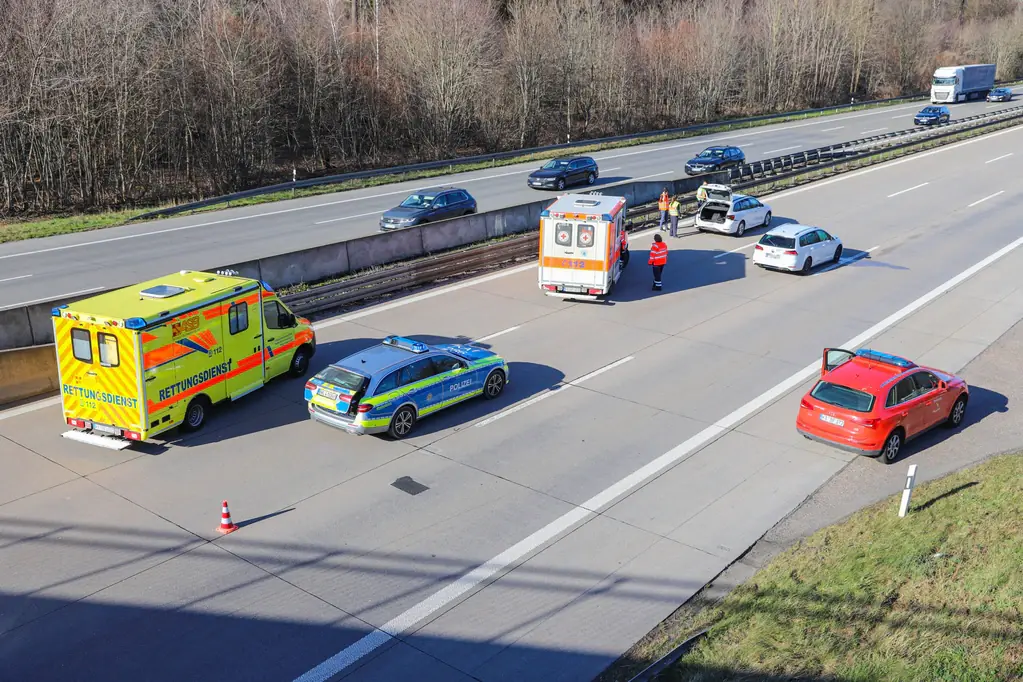
13. Why an unexpected development can affect an entire community
Even when an event appears to involve only one road or a small area, its consequences can extend much further. Transport networks are connected. A disruption at one point may affect other streets, nearby businesses, public transport services and people travelling to work or school.
Consider a busy road that connects residential neighborhoods with a city center. If an unexpected obstruction occurs, drivers may be redirected onto smaller streets. Those streets may not have enough capacity to handle the additional traffic, creating congestion in places that were not directly involved in the original event.
Public transport can also be affected. Buses may need to change routes, delivery vehicles may arrive late and emergency services may have to adjust their journeys. For people who depend on a particular road to reach a hospital, workplace or school, even a temporary disruption can create serious inconvenience.
The effects can be especially significant when an incident occurs near a bridge, tunnel, major intersection or highway entrance. These locations often have fewer practical alternatives than ordinary streets. A closure at one point may therefore create delays across a much larger area.
This is one reason road-related breaking news attracts attention. People are not necessarily interested only in the event itself. They want to know whether it could affect their plans, their families or their communities.
However, a report must provide enough information for readers to understand the scale of the impact. A headline saying that an unexpected development has captured everyone's attention does not explain whether the event is local, regional or national. It does not establish whether traffic is affected or whether anyone needs to take action.
The public should not have to guess.
A useful update would explain which routes are affected, whether alternative roads are available and whether authorities have issued instructions. If the event has no wider transport impact, the article should say so rather than allowing readers to assume that a major disruption is taking place.
The same principle applies to other kinds of unexpected developments. A sudden announcement from a public institution may affect a particular group without changing anything for the wider population. A local incident may be important to the people directly involved but have no broader consequences. Good reporting explains the scale rather than relying on dramatic language.
14. The role of witnesses—and why their accounts need context
Witnesses can play an important role when a story is developing. People who are close to an event may be able to describe what they saw, when they noticed something unusual and how the situation appeared to unfold.
Their observations can help journalists understand the early stages of an incident, especially when official information is not yet available.
But a witness can only describe what they personally experienced. Someone who saw vehicles stopping on a road may not know why traffic stopped. A person who heard a loud sound may not know what caused it. Someone who arrived after an event may see the aftermath without knowing what happened beforehand.
This is not a criticism of witnesses. It is simply a reminder that every account has limits.
A reliable report should distinguish between direct observation and interpretation. If a witness says that they saw emergency vehicles arriving, that may be a useful description. If the same person concludes that a particular individual was seriously injured without having reliable information, that conclusion should not be repeated as fact.
Journalists also need to consider whether a witness is in a position to know the details being discussed. A person standing at one end of a road may not have seen what happened around a corner. A driver may have a clear view of the vehicles in front but no knowledge of the wider situation.