When breathing feels heavy, sleep can quickly turn into a nightly struggle. Whether it’s a lingering cold, allergies, or a chronic lung condition, finding the right position can make all the difference.
According to sleep medicine specialist Dr. Nancy Foldvary-Schaefer, DO, MS, the best sleep position depends on your body and your specific condition — but some setups tend to help most people breathe more easily.

💨 Why Breathing Gets Harder When You Lie Down
Several factors can make nighttime breathing difficult, such as:
-
Colds, flu, or respiratory infections
-
Allergies or sinus issues
-
Sleep apnea
-
Heart failure or fluid buildup
-
Asthma, COPD, or other lung conditions
When you lie flat, gravity allows mucus or fluid to settle in your chest and nasal passages, compressing airways and making each breath harder.
💤 Best Sleep Positions for Easier Breathing
1️⃣ Sleep on Your Side
Side-sleeping helps open your airways, reduces snoring, and keeps your spine in a neutral position — easing strain on your back and neck.
If one nostril is clogged, sleep with the blocked side facing up (for example, if your left nostril feels congested, lie on your right side).
This position can also benefit those with mild sleep apnea. By preventing your tongue and soft palate from collapsing backward, it keeps airflow steady through the night.
🪶 Pro tip: Place a pillow between your knees to align your hips and relieve pressure.
2️⃣ Sleep Propped Up
For people with heart or lung problems, sleeping flat often worsens shortness of breath because fluid shifts upward and presses on the lungs.
Raising your upper body allows gravity to help — easing lung pressure and making breathing smoother.
Try:
-
Stacking a few firm pillows behind your shoulders
-
Sleeping in a recliner (with your doctor’s approval)
-
Using an adjustable bed
To reduce back strain, slip a pillow under your knees for extra support.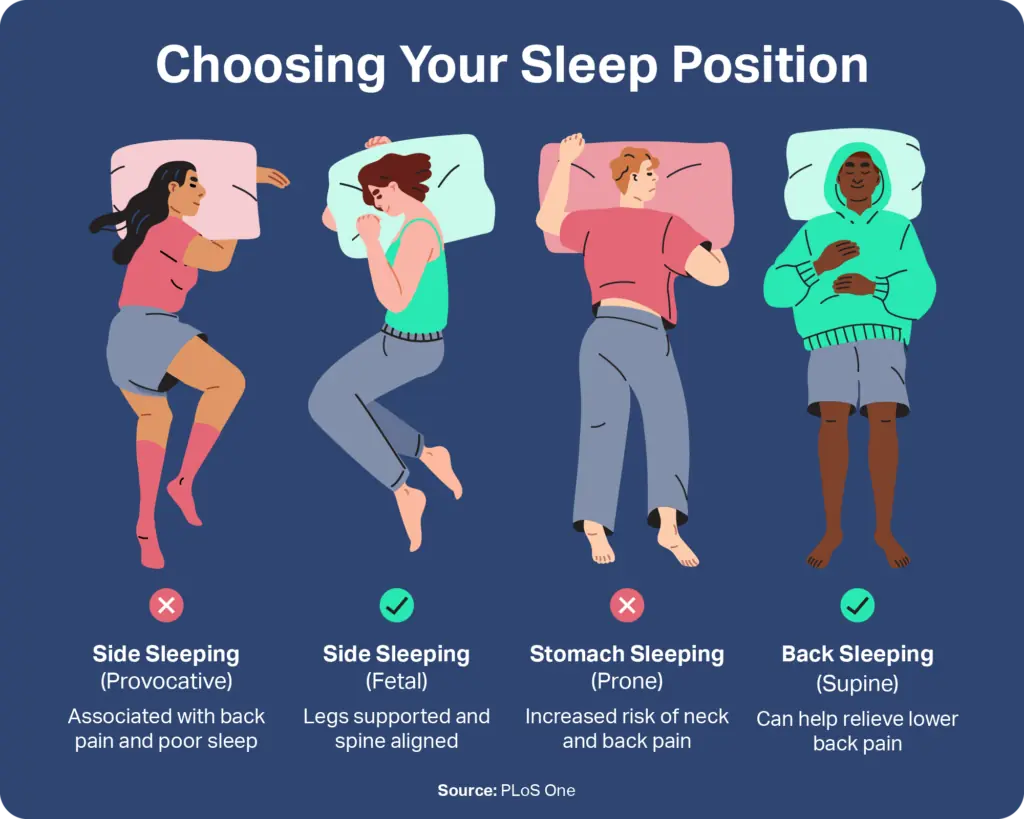
🌬️ Extra Tips for Better Breathing
If shortness of breath bothers you beyond bedtime, it’s important to address it during the day too. Here’s what can help:
-
Practice breathing exercises: Try pursed-lip breathing or diaphragmatic breathing.
-
Use seated positions: Sit upright, lean slightly forward, and rest your arms on your knees or a table.
-
Try assisted standing: Rest your elbows on a surface just below shoulder height to relax chest muscles and open airways.
And always check in with your healthcare provider to identify the root cause and find long-term solutions.
🌟 The Takeaway
The right sleep position can mean the difference between restless nights and refreshing sleep.
Start with side-sleeping or slight elevation, listen to your body, and adjust as needed — because breathing easier means sleeping better.