Brittle nails can be surprisingly frustrating.
You may notice that your nails split when they grow past your fingertips, peel in thin layers, develop rough edges, or break while doing everyday activities. Sometimes the problem seems cosmetic, but persistent changes in the nails can also reflect repeated exposure to water and chemicals, physical trauma, certain skin conditions, or—in some cases—an underlying health problem.
A simple nail soak may help soften dry skin around the nails and make the nails feel more conditioned, but it is important to keep expectations realistic. No home soak can permanently repair a damaged nail plate or guarantee that vertical ridges and peeling will disappear.
The good news is that many common causes of brittle nails can be addressed with relatively simple changes in your daily routine.
Here's what may be happening—and how you can take better care of your nails.
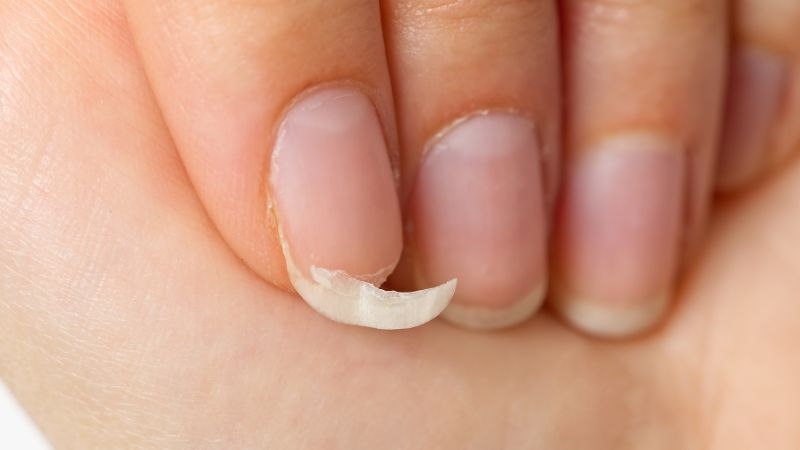
Why Do Nails Become Brittle and Peel?
Before reaching for a homemade nail soak, it helps to understand why nails become weak.
Your fingernails are primarily made of a protein called keratin. The nail plate isn't living tissue, so once a section of nail has already been damaged, you cannot simply "heal" that portion overnight.
Instead, improvement generally comes as a healthier nail grows from the nail matrix.
Several everyday factors can contribute to brittle or peeling nails.
Frequent exposure to water
Repeatedly soaking your hands in water can cause the nail plate to repeatedly absorb and lose moisture.
This constant expansion and contraction may contribute to splitting and peeling over time.
People who frequently wash dishes, clean, work with water, or wash their hands very often may notice this more than others.
Household chemicals
Cleaning products, detergents, solvents, and other chemicals can irritate the skin around the nails and contribute to dryness.
Nail polish and removers
Frequent manicures, particularly aggressive filing, buffing, scraping, or repeated use of certain nail-polish removers, can leave nails more fragile.
Picking or biting
Picking at peeling nail layers may make the damage worse.
Once one layer begins separating, pulling it off can remove additional layers of the nail plate.
Aging
Nails can become thinner, drier, or more fragile with age.
Skin conditions
Conditions such as eczema, psoriasis, or other dermatological disorders can affect the nails.
Nutritional or medical factors
In some people, persistent nail changes can be associated with nutritional deficiencies, thyroid disorders, anemia, or other health conditions.
That doesn't mean brittle nails automatically indicate a deficiency.
Most cases are not a sign of a serious disease, but persistent or unusual changes deserve attention.
What Can a Simple Nail Soak Actually Do?
A warm, gentle soak can make the nails and surrounding skin feel softer temporarily.
Depending on the ingredients, it may also provide a soothing or moisturizing effect.
But there is an important distinction:
A nail soak can improve the condition and appearance of dry nails, but it cannot permanently repair structural damage that has already occurred.
If your nails are peeling because of repeated chemical exposure, aggressive manicures, or excessive wet-dry cycles, changing those habits is likely to matter more than any particular soaking mixture.
For that reason, think of a nail soak as part of a broader nail-care routine rather than a miracle treatment.
A Gentle Oil-Based Nail Soak
If your primary problem is dryness and brittle-feeling nails, a simple oil-based treatment can be a reasonable option.
You can use a small amount of a gentle cosmetic oil, such as jojoba oil, warmed slightly or used at room temperature.
How to do it
-
Place a small amount of jojoba oil in a clean container.
-
If desired, warm it slightly—but it should never be hot.
-
Soak your fingertips for approximately 5–10 minutes.
-
Remove your hands and gently massage the remaining oil into your nails and cuticles.
-
Wipe away excess oil with a clean towel.
-
Repeat a few times per week if your nails and surrounding skin tolerate it well.
You don't need to soak your nails for a long time.
In fact, prolonged water exposure can work against your goal if your nails are already prone to splitting.
Why jojoba oil?
Jojoba oil is commonly used in cosmetic skin and nail-care products because it provides emollient properties and can help reduce the feeling of dryness.
It isn't a proven cure for brittle nails, but it can be useful as part of a moisturizing routine.
You May Not Even Need to Soak Your Nails
Interestingly, you may get similar—or potentially better—results simply by applying a moisturizer or cuticle oil directly to the nails and surrounding skin.
For very dry nails, consistency is more important than creating an elaborate recipe.
After washing your hands:
-
Dry them thoroughly.
-
Apply a fragrance-free hand cream.
-
Massage a small amount around the nails and cuticles.
-
Reapply after washing when needed.
-
Use a thicker ointment or moisturizer before bed if your hands are particularly dry.
This approach also avoids prolonged exposure to water.
What About Olive Oil?
Olive oil is another commonly used home nail-care ingredient.
It contains fatty acids and other compounds that can help condition dry skin.
You can apply a small amount directly to your nails and cuticles or use it as a short conditioning treatment.
However, there is limited evidence that olive oil can actually strengthen structurally damaged nails.
Its primary benefit is better understood as moisturization and conditioning rather than a medical treatment.
Be Careful With Lemon Juice
Many homemade nail-care recipes recommend soaking nails in lemon juice.
The reasoning usually involves the acidity of lemon juice and its ability to make nails appear cleaner or brighter.
However, frequent exposure to acidic substances can irritate the surrounding skin, particularly if you already have dry or cracked hands.
Lemon juice can also make skin more sensitive to sunlight in certain circumstances.
If your goal is stronger, healthier nails, aggressive acidic treatments aren't necessary.
A gentle moisturizing approach is usually more appropriate.
What About Baking Soda?
Baking soda is sometimes promoted online as a nail-cleaning or whitening treatment.
But it isn't a proven treatment for brittle nails.
Repeated use may also contribute to dryness or irritation, especially when combined with other harsh ingredients.
If your nails are already peeling, adding more potentially irritating substances may not be helpful.
What About Garlic?
Garlic is another ingredient frequently promoted as a natural nail-strengthening remedy.
While garlic contains biologically active sulfur compounds and has antimicrobial properties in laboratory settings, that doesn't mean rubbing or soaking nails in raw garlic will treat brittle nails or nail disease.
Raw garlic can also irritate or even cause a skin reaction in some people.
There is no need to use harsh homemade treatments simply because they are described as "natural."
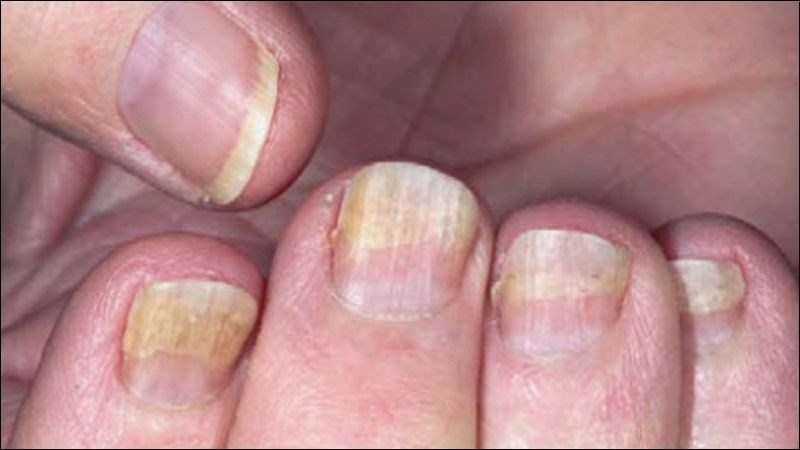
Vertical Ridges: Should You Be Worried?
Vertical ridges are lines that run from the base of the nail toward the tip.
They are extremely common, particularly as people get older.
In many cases, they are simply a normal variation in nail texture.
Dryness can also make ridges appear more prominent.
However, not every nail ridge is the same.
A new or unusual change affecting one nail, a deep groove, a change in nail color, or a ridge accompanied by other symptoms may deserve professional evaluation.
Don't confuse vertical and horizontal grooves
Vertical ridges run from the cuticle toward the fingertip.
Horizontal grooves or indentations that cross the nail can sometimes develop after illness, significant physical stress, injury, or disruption of nail growth.
Their significance depends on the pattern and the individual's overall health.
Peeling Nails May Have a Different Cause
If your nail is separating into thin layers at the tip, you may be experiencing a form of nail splitting called onychoschizia.
This can be associated with repeated wetting and drying, chemical exposure, trauma, and other environmental factors.
For example, someone who washes dishes without gloves every day may repeatedly expose the nails to water and detergents.
Over time, the outer layers can become more fragile.
A simple solution may be surprisingly practical:
Wear gloves.
When washing dishes or cleaning with chemicals, use waterproof household gloves.