This reduces direct exposure to water and detergents and may be more beneficial over time than any nail soak.
Your Manicure Routine Could Be the Problem
If your nails have recently become brittle, consider taking a break from aggressive nail treatments.
Potential sources of damage include:
-
Aggressive buffing
-
Repeated filing
-
Cutting or pushing cuticles excessively
-
Picking off gel polish
-
Peeling off artificial nails
-
Frequent acetone exposure
-
Using nails as tools
-
Scraping underneath the nail
Removing gel polish by peeling it off can take layers of the natural nail with it.
If you use gel or acrylic products regularly, proper removal is important.
Don't Use Your Nails as Tools
This sounds simple, but it can make a surprisingly large difference.
Using your fingernails to:
-
Open packages
-
Scratch labels
-
Pry objects
-
Remove stickers
-
Scrape surfaces
-
Open cans
puts mechanical stress on the nail plate.
If your nails are already brittle, these small actions can create cracks that gradually become larger.
Use the appropriate tool instead.
Keep Nails at a Manageable Length
Longer nails have more leverage.
That means they can bend and catch on objects more easily.
If your nails are currently peeling or splitting, keeping them slightly shorter can reduce mechanical stress while they grow out.
File them gently in one direction rather than repeatedly sawing back and forth.
A smooth edge is less likely to catch on clothing or other objects.
Moisturize the Cuticles—But Don't Cut Them Aggressively
The cuticle helps protect the area where the nail begins to grow.
Aggressively cutting or damaging the cuticle can increase irritation and potentially make it easier for microorganisms to enter the surrounding tissue.
Instead:
-
Keep the area moisturized.
-
Avoid picking.
-
Don't tear hangnails.
-
Use clean nail tools.
-
Avoid cutting living tissue around the nail.
If you have a hangnail, carefully trim the loose piece with clean clippers rather than pulling it.
Nutrition Matters, But More Isn't Always Better
Healthy nails require adequate nutrition because your body needs nutrients to produce keratin and maintain normal tissue growth.
A balanced diet should provide:
-
Protein
-
Iron
-
Zinc
-
Vitamin B12
-
Folate
-
Other vitamins and minerals
Good food sources include eggs, poultry, meat, beans, lentils, nuts, seeds, dairy products, vegetables, fruits, and whole grains.
However, brittle nails don't automatically mean you're deficient in one of these nutrients.
Taking high-dose supplements without knowing whether you need them isn't necessarily beneficial.
For example, excessive intake of certain nutrients can itself cause problems.
If nail changes are persistent and you're concerned about a nutritional deficiency, it's better to discuss the issue with a healthcare professional than to start multiple supplements blindly.
Biotin Supplements: Do They Really Work?
Biotin is frequently marketed as a nail-strengthening supplement.
Some studies have suggested that high-dose biotin may help certain people with brittle nails, but the evidence is not strong enough to assume that everyone with splitting nails needs biotin.
More importantly, high doses of biotin can interfere with certain laboratory tests.
This is particularly important because it can potentially affect test results for some medical conditions.
If you're taking a biotin supplement, tell your healthcare professional before having blood tests.
A balanced diet is generally a better foundation than automatically taking a high-dose supplement.
Give Your Nails Time to Grow Out
One of the biggest mistakes people make is expecting damaged nails to look healthy after a few days.
Fingernails grow slowly.
The visible portion of the nail plate is already formed tissue. If it has been damaged, the healthier replacement has to grow from the nail matrix.
This means improvements can take weeks to months, depending on the extent of damage and how quickly your nails grow.
Toenails grow even more slowly.
Consistency therefore matters much more than performing an intensive treatment once or twice.
A Simple Weekly Nail-Care Routine
If your nails are brittle and peeling, you can keep your routine very simple.
Every day
Apply hand cream after washing your hands and massage a small amount around the nails and cuticles.
Several times per week
Apply a small amount of jojoba oil or another gentle nail/cuticle oil.
You can leave it on rather than soaking your hands for a long time.
During household chores
Wear gloves when washing dishes or using cleaning products.
When trimming
Keep nails at a manageable length and file gently.
When using polish
Give your nails occasional breaks if you notice that repeated polish or gel treatments make them weaker.
At night
Apply a thicker moisturizer to your hands and nails before bed.
This routine may be less exciting than a viral "miracle nail soak," but it is much more sustainable.
When Brittle Nails Could Signal Something Else
Most brittle nails aren't a sign of a serious medical condition.
However, persistent or unusual changes can occasionally occur alongside certain health problems.
You should consider speaking with a healthcare professional if your nails:
-
Suddenly become very fragile
-
Change dramatically in color
-
Become unusually thick
-
Separate from the nail bed
-
Develop deep grooves
-
Develop significant deformities
-
Become painful or swollen
-
Repeatedly develop infections
-
Have changes affecting only one nail
-
Show a dark streak that is new or changing
Other symptoms also matter.
For example, persistent fatigue, weakness, unexplained weight changes, changes in temperature tolerance, or other systemic symptoms may provide additional clues about an underlying condition.
Don't Ignore Signs of Nail Infection
Brittle nails can sometimes be confused with fungal infections.
A fungal nail infection may cause the nail to become:
-
Thickened
-
Discolored
-
Brittle
-
Crumbly
-
Distorted
-
Separated from the nail bed
However, many other conditions can produce similar appearances.
If you suspect a fungal infection, repeatedly soaking the nail in household ingredients may not solve the underlying problem.
Proper diagnosis matters because treatment depends on the cause.
What Not to Do If Your Nails Are Peeling
If your goal is stronger, healthier nails, avoid making the situation worse.
Try not to:
-
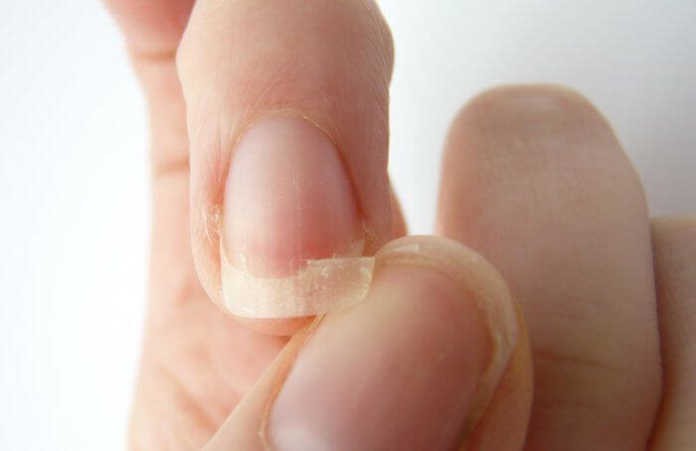
Peel off layers of the nail
-
Bite your nails
-
Tear hangnails
-
Over-buff the nail surface
-
Constantly soak your hands
-
Use harsh chemicals unnecessarily
-
Remove gel polish aggressively
-
Apply multiple irritating homemade treatments
-
Take high-dose supplements without a reason
Sometimes less treatment is better treatment.
The Bottom Line
A gentle nail soak or conditioning treatment may make brittle nails feel softer and better moisturized, particularly when dryness is contributing to the problem.
But there is no single homemade mixture that can guarantee the removal of brittleness, vertical ridges, or peeling edges.
For healthier nails, the bigger picture matters more:
Protect them from excessive water and chemicals. Moisturize regularly. Avoid aggressive manicures. Keep them at a manageable length. Eat a balanced diet. And give damaged nails enough time to grow out.
If your nail changes are sudden, severe, persistent, painful, or accompanied by changes in color, shape, or the surrounding skin, don't assume the problem is simply dryness.
Sometimes your nails are just responding to everyday wear and tear.
Other times, they can provide a clue that something else deserves attention.
Healthy-looking nails usually come from consistent care - not a single miracle soak.