From a scientific perspective, bats do not appear around a house because they are trying to communicate a message about the homeowner's future.
Their movements are shaped by factors such as food availability, shelter, reproduction, weather, and the surrounding environment.
There is no established biological mechanism by which a bat's appearance predicts a person's financial success, relationship problems, illness, or misfortune.
From a cultural perspective, however, interpretations differ.
In some traditions, bats have positive associations with prosperity, longevity, or good fortune. In other traditions, they have been portrayed as frightening or unlucky.
Neither interpretation should be confused with a demonstrated prediction about future events.
If seeing a bat reminds you of a positive family tradition, you may appreciate that association as a personal or cultural meaning.
If bats make you uncomfortable because of frightening stories you have heard, learning about their behavior may help reduce unnecessary fear.
The most useful approach is to separate symbolism from evidence.
You do not need to dismiss cultural traditions to understand that the bat outside your window is probably searching for food, moving toward a roost, or following a familiar flight path.
And you do not need to fear an animal simply because its habits are different from your own.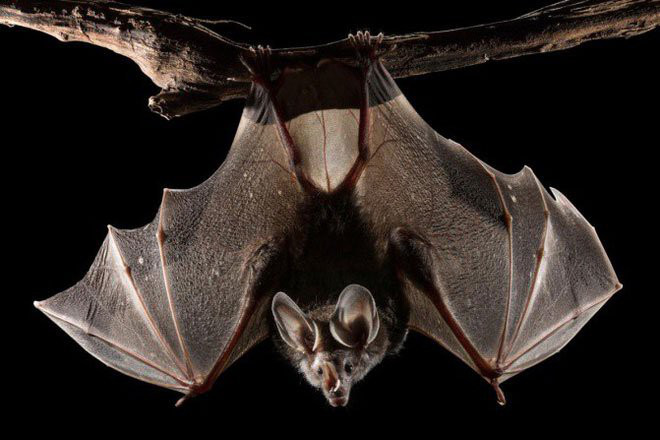
8. Are Bats Dangerous to Humans?
Bats generally avoid direct contact with people. Most healthy bats are not interested in approaching humans, and a bat flying through a garden is not automatically a threat.
Nevertheless, bats are wild mammals, and sensible precautions are important.
One of the most significant health concerns is rabies, which can be transmitted through the bite or scratch of an infected mammal. In some regions, other bat-associated lyssaviruses are also a concern.
A bat bite can be difficult to notice because the animal's teeth are small. Therefore, direct contact should never be dismissed simply because there is no obvious wound.
Never handle a bat with bare hands, even if it appears calm, weak, or harmless.
If a bat has bitten or scratched you, or if its saliva may have contacted broken skin or the eyes, nose, or mouth, wash the affected area thoroughly with soap and running water and seek urgent medical advice. A healthcare professional or local public-health authority can assess whether rabies post-exposure treatment is necessary.
Do not wait for symptoms to appear before seeking advice.
If you find a bat in a bedroom where a sleeping person, young child, or someone unable to reliably report contact may have been present, contact local public-health authorities for guidance. The appropriate response depends on the circumstances and local public-health recommendations.
Keep children and pets away from bats found on the ground or inside buildings. If a pet has caught or mouthed a bat, contact a veterinarian promptly.
Avoid touching bat droppings, known as guano, with bare hands. Large or accumulated quantities can create sanitation concerns, and disturbing contaminated material can expose people to airborne particles. If a substantial roost is discovered in an enclosed area, professional assessment and appropriate protective measures may be needed.
These precautions are not reasons to panic whenever you see bats outdoors.
They are simply sensible ways to reduce risk while respecting wildlife.
9. What Should You Do If Bats Keep Appearing Around Your House?
Your response should depend on what the bats are doing.
If they are simply flying through your garden at night, you may not need to do anything at all.
However, if you suspect that they are roosting in the building or creating a sanitation concern, there are practical steps you can take.
Observe their activity from a safe distance
Pay attention to where the bats fly, when they appear, and whether they repeatedly emerge from a particular opening.
Do not approach, touch, chase, or attempt to capture them.
Observing from a distance may help you determine whether they are passing through the yard or using a specific part of the building.
Inspect the exterior of your house
From a safe location, look for visible gaps around roof edges, fascia boards, vents, exterior cladding, and other structural features.
Do not climb onto an unsafe roof or reach into enclosed spaces to investigate.
A professional wildlife inspection can help identify possible entry points and determine whether bats are actually present.
Avoid sealing openings immediately
This is one of the most important precautions.
If bats are inside a roof space or wall cavity, closing an opening without a proper plan may trap them inside. Depending on the season, young bats that cannot yet fly may also be present.
Trapped animals may die within the structure, creating sanitation problems and potentially leaving other bats unable to exit.
Bat exclusion should be planned around the species, the location of the roost, local laws, and the presence of dependent young.
In some places, bats and their roosts receive legal protection, and certain exclusion methods or times of year may be prohibited.
A qualified local professional can advise on a humane, lawful approach.
Reduce unnecessary insect attraction
If bats gather around outdoor lights, consider whether you need those lights to remain on throughout the night.
Use lighting only where necessary, direct it toward the areas that need illumination, and consider motion-activated fixtures where appropriate.
Reducing excessive outdoor lighting may also benefit other nocturnal wildlife.
However, do not expect lighting changes to eliminate every bat sighting. Bats may still visit because of natural insect populations, nearby trees, or established feeding routes.
Protect pets and children
Teach children not to touch bats, including animals that appear dead or unable to move.
Keep pets away from bats on the ground, and make sure their rabies vaccinations are current where recommended by local veterinary authorities.
If contact occurs, seek appropriate medical or veterinary advice.
Seek professional help when necessary
If bats are entering living areas, accumulating in a building, or creating a substantial guano problem, consult a qualified wildlife professional or relevant local authority.
Avoid poisons, glue traps, and other methods that can injure wildlife or create additional hazards.
The aim is to address the problem safely without causing unnecessary harm.
10. Could Bats Be Helping Your Garden?
Although people sometimes view bats as unwanted visitors, they can provide important ecological benefits.
Insect-eating bats consume a wide variety of insects, including agricultural pests and other species that may be inconvenient around homes.