Why Does Your Dog Sniff Your Private Parts? The Surprising Science Behind This Awkward Behavior
A dog's nose can detect scents humans barely notice. But why does your pet sometimes sniff your private areas, and what is it really trying to discover?
Imagine inviting friends over for dinner. Everyone is chatting, the atmosphere is relaxed, and your dog wanders into the room to greet a guest. Instead of sitting politely beside them or offering a friendly paw, the dog walks directly toward their body and begins sniffing an area most people consider deeply private.
The room suddenly becomes uncomfortable.
Someone laughs nervously. Another person steps backward. The dog's owner quickly calls its name, apologizing while trying to understand what just happened.
But from the dog's perspective, nothing unusual has occurred.
It has not necessarily been trying to embarrass anyone. It has not been making a sexual statement. And it certainly does not understand human social etiquette in the same way that people do.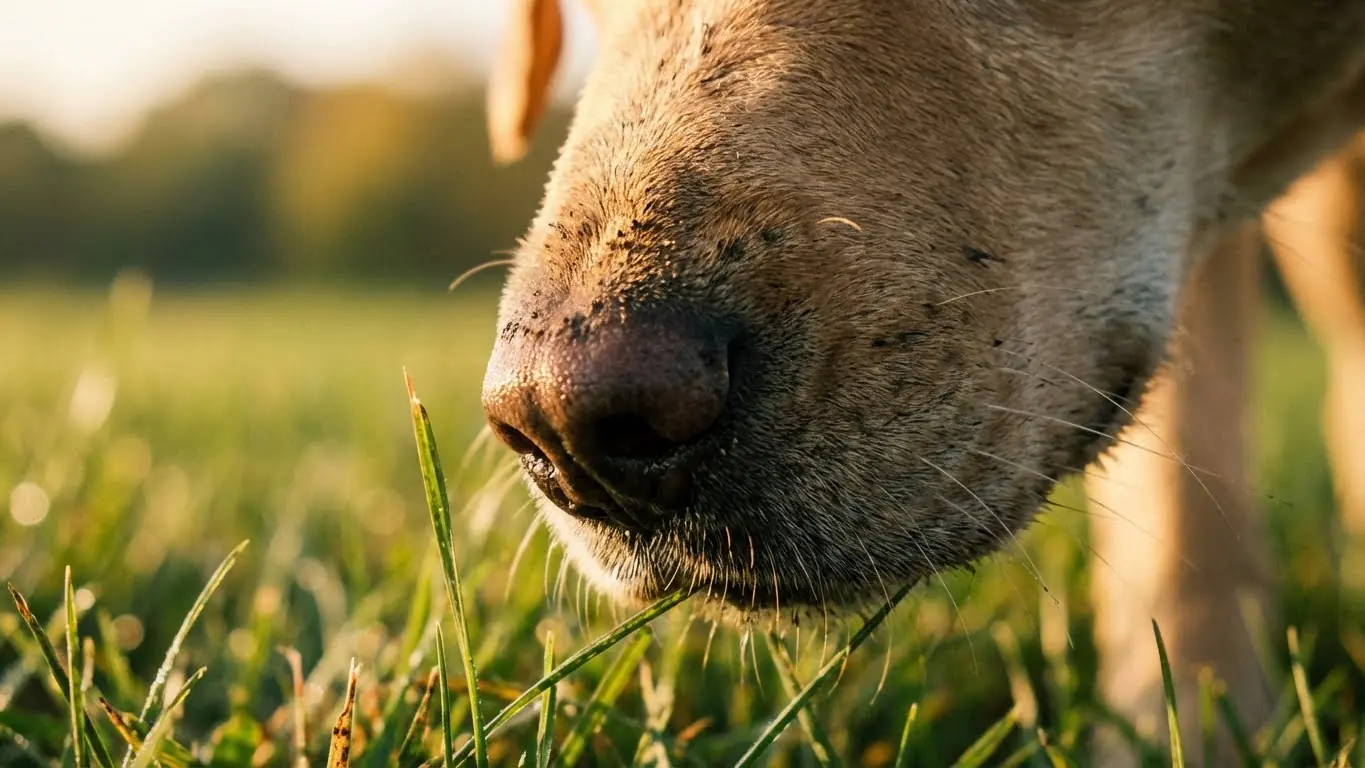
The real explanation begins with the extraordinary power of a dog's nose.
Dogs experience the world through scent in a way that is difficult for humans to imagine. A smell that seems insignificant to us may contain an enormous amount of information for them. Body odor, sweat, natural chemical compounds, and changes in scent can all attract a dog's attention.
The groin area can be particularly interesting because it contains concentrated personal odors. These scents may help a dog investigate who someone is, whether they are familiar, and what has changed since the last time the dog encountered them.
Yet there is an important distinction that many viral posts overlook.
A dog sniffing someone's private areas does not mean it has detected a particular illness, pregnancy, or hormonal condition. Although dogs have demonstrated remarkable scent-detection abilities in specialized settings, an ordinary sniffing episode is not a medical diagnosis.
To understand what your dog may actually be doing, we need to look beyond the awkward moment itself.
In Chapter One, we explore how a dog's nose turns ordinary body odors into a complex source of information. In Chapter Two, we examine why dogs often choose the groin area, why they may behave differently around certain people, and what their actions can—and cannot—tell us.
Finally, Chapter Three explains how to respond calmly, protect personal boundaries, and teach a dog to greet people politely without frightening or confusing it.
The behavior may seem embarrassing.
But the science behind it reveals something fascinating about the way dogs understand the world.
Chapter One: A Dog's Nose Is Its Main Tool for Exploring the World
A sense of smell that changes everything
To understand why a dog sniffs human private areas, it helps to understand how differently dogs experience their surroundings.
People tend to rely heavily on vision. We recognize faces, read expressions, notice clothing, and identify familiar places by what we see.
Dogs also use their eyes, but smell plays a much larger role in their everyday lives.
A dog walking through a neighborhood is not simply seeing houses, trees, and people. It is also investigating a constantly changing landscape of odors. Every passing animal, every discarded food wrapper, every patch of grass, and every person who walks by may leave a scent worth examining.
Veterinary sources describe the canine olfactory system as extraordinarily sensitive. Dogs possess far more olfactory receptor cells than humans, and a much larger portion of their brain is devoted to processing scent. Estimates of how much better dogs smell than humans vary depending on the odor and testing method, so there is no single number that accurately describes every situation.
What matters is that a dog's nose can detect and distinguish odors at concentrations that may be far below the level humans can perceive.
A familiar person may have a recognizable scent profile.
A visitor may carry odors from another household.
Someone who has recently exercised may smell different from someone who has spent the afternoon indoors.
A dog can investigate these differences without needing to see what happened.
For the animal, sniffing is not merely a pleasant activity. It is a way of collecting information about the environment.
The nose is not just for finding food
Many people associate a dog's sense of smell with tracking, hunting, or searching for treats.
But scent also plays an important role in social communication.
Dogs use odor to investigate other dogs and distinguish familiar individuals from strangers. They may show interest in scent marks left in the environment, and they can use those marks to learn about animals that are no longer physically present.
A scent can provide clues about the identity of the animal that left it.
It may also communicate information about recent activity, reproductive status, or other biological characteristics.
This is one reason dogs spend so much time sniffing when they meet another dog.
A brief greeting may involve circling, observing body language, and investigating scent-producing areas. What looks like an unusual or impolite interaction to a human may be a normal part of canine communication.
When a dog approaches a person, it may use some of the same investigative instincts.
The dog does not automatically understand that human social rules are different.
It simply recognizes an opportunity to gather information through its most powerful sense.