If it begins moving toward the person's private area, redirect it gently.
This approach protects the visitor's personal space while allowing the dog to learn.
Give the dog another way to use its nose
Dogs need opportunities to investigate scents.
A dog that spends most of the day indoors with little mental stimulation may become especially enthusiastic when an interesting smell appears.
Providing regular scent-based activities can help satisfy that natural need.
For example:
-
Hide small treats around a room and encourage the dog to find them.
-
Use a snuffle mat designed for dogs.
-
Scatter a few pieces of kibble in a safe grassy area.
-
Allow the dog to take its time during walks.
-
Introduce simple scent games with toys.
These activities give the dog a constructive way to use its nose.
They can also provide mental enrichment and help make daily life more interesting.
A dog that has opportunities to sniff and explore may be easier to redirect during social situations.
Respect the visitor's boundaries
Not everyone enjoys being approached by a dog.
Some people are afraid of dogs.
Others may have allergies, mobility difficulties, or simply prefer not to interact with animals.
A responsible owner should never insist that a guest tolerate unwanted sniffing.
The visitor does not need to explain why they are uncomfortable.
The owner can simply guide the dog away.
It is also important not to force a dog to greet someone.
A dog that appears nervous may need space.
The best greetings are voluntary and controlled.
Allowing both the person and the dog to feel comfortable creates a safer interaction.
Avoid punishment that creates fear
Punishing a dog for sniffing may stop the behavior temporarily, but harsh punishment can create confusion or fear.
A dog may not understand why its natural investigative behavior suddenly causes anger.
Instead of using physical punishment, focus on prevention and reinforcement.
Reward the behavior you want to see.
Interrupt the behavior you do not want.
Provide a clear alternative.
Consistency is important.
If the dog is allowed to sniff guests sometimes but shouted at other times, it may struggle to understand what is expected.
Everyone in the household should use similar rules.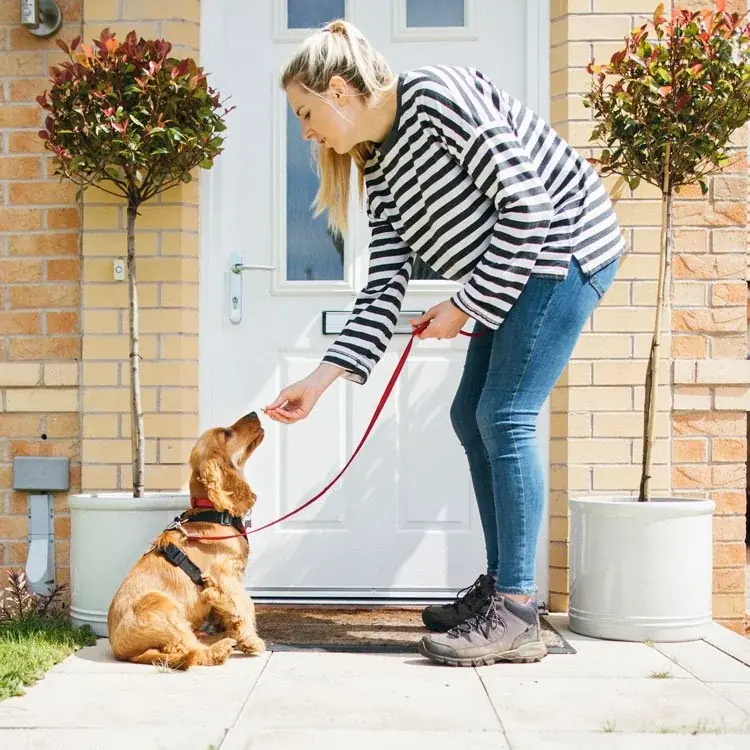
When professional help may be useful
If the behavior is persistent or difficult to manage, a qualified dog trainer or veterinary behavior professional can help.
They can assess the dog's behavior and develop a plan based on its individual needs.
Professional support may be particularly useful if the dog also jumps, mouths, guards people, or becomes highly anxious during greetings.
A veterinarian should be consulted if the behavior changes suddenly or appears alongside other unusual symptoms.
The goal is not to eliminate a dog's natural sense of smell.
The goal is to teach the dog how to use that sense appropriately around people.
The surprising truth behind the awkward moment
A dog sniffing someone's private area may seem like a strange or embarrassing behavior.
But it is usually much simpler than the viral headline suggests.
The dog is using its nose to investigate the world.
It may be collecting scent information.
It may be greeting someone.
It may be responding to an odor that is unfamiliar.
It may even have learned that the behavior gets attention.
What it is not doing is providing a reliable medical diagnosis.
The behavior does not prove that someone is pregnant.
It does not prove that someone has a disease.
And it does not reveal a person's private life with certainty.
The best response is to understand the dog's natural instincts while teaching it to respect human boundaries.
A dog can be curious without being allowed to invade someone's personal space.
A person can appreciate a dog's remarkable nose without accepting an uncomfortable greeting.
And an owner can guide the behavior without punishing the animal for being a dog.
That is the real lesson behind this surprisingly common situation.
Dogs experience the world through scent.
Humans experience it through a different set of social expectations.
When those two worlds meet, a little patience, training, and understanding can make the encounter much more comfortable for everyone.
A few myths worth correcting
Because this behavior is often discussed in humorous or sensational posts, several misconceptions deserve a clear answer.
Myth: A dog sniffing someone means that person has a medical condition.
Fact: Dogs can be trained to detect certain odors associated with medical conditions, but an ordinary greeting is not a diagnostic test.
Myth: The dog is trying to embarrass its owner.
Fact: Dogs do not understand human embarrassment in the same way people do. The behavior is usually driven by scent investigation, curiosity, or learned attention.
Myth: Only male dogs do this.
Fact: Both male and female dogs may investigate human scent. Individual temperament, training, and circumstances influence the behavior.
Myth: The dog is being aggressive or dominant.
Fact: Sniffing alone is not evidence of aggression or dominance. It is generally a normal exploratory behavior.
Myth: The dog should be allowed to sniff because it is natural.
Fact: Natural behavior does not mean people must tolerate unwanted contact. Owners can redirect their dogs and teach polite greetings.
Understanding these distinctions helps prevent unnecessary embarrassment and protects both the dog and the people around it.
The behavior may be natural, but good manners can still be learned.