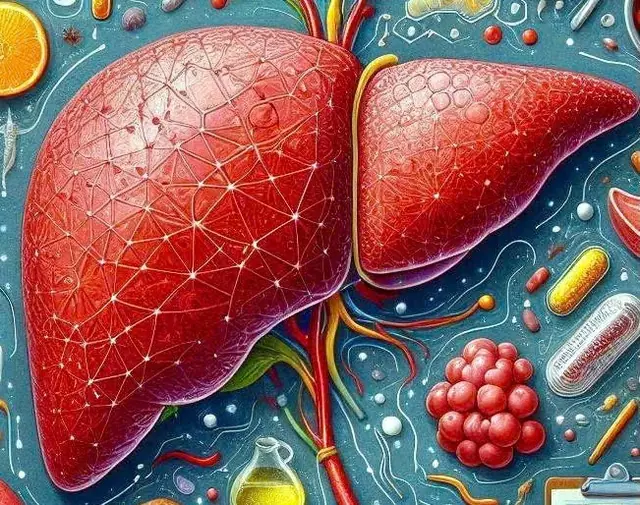
Here’s an informative summary about the discovery of a vitamin considered a “savior” for liver disease:
Discovery of a Vitamin as a “Savior” for Liver Disease
Recent scientific studies have highlighted the critical role of Vitamin E as a beneficial nutrient for patients with certain types of liver disease, especially non-alcoholic fatty liver disease (NAFLD) and non-alcoholic steatohepatitis (NASH).
Why Vitamin E?
-
Antioxidant Power: Vitamin E is a potent antioxidant that helps reduce oxidative stress in liver cells, which is a key factor in liver inflammation and damage.
-
Anti-inflammatory Effects: It modulates inflammatory pathways, reducing liver inflammation and slowing disease progression.
-
Improvement in Liver Function: Clinical trials have shown Vitamin E supplementation can improve liver enzyme levels and reduce fat accumulation in the liver.
-
Safety Profile: When taken at recommended doses, Vitamin E is generally safe and well-tolerated.
Clinical Evidence
-
Multiple randomized controlled trials support Vitamin E’s efficacy in improving liver histology and biochemical markers in patients with NAFLD and NASH.
-
Guidelines from some hepatology associations suggest considering Vitamin E therapy for non-diabetic adults with biopsy-proven NASH.
Important Considerations
-
Vitamin E should be used under medical supervision, especially in patients with other health conditions.
-
High doses may have risks, including potential bleeding complications.
-
It is not a cure but a supportive therapy alongside lifestyle changes like diet and exercise.
If you want, I can provide detailed scientific references or information about dosage, contraindications, and other vitamins related to liver health.