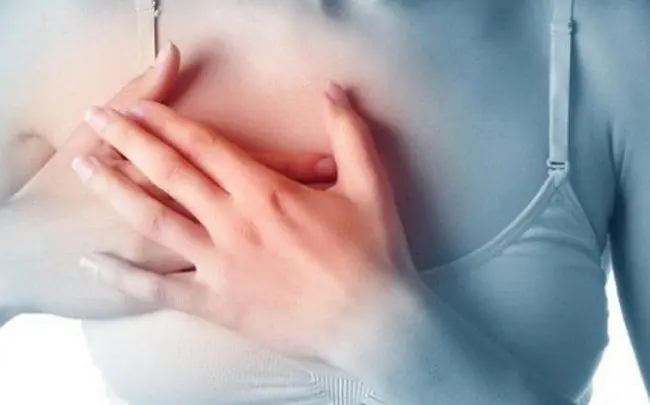
If you have any level of health anxiety, you’ll know three things for certain. One, every symptom means cancer. Two, stabbing pains in your chest means an imminent heart attack. Three, Dr. Google diagnoses everything as cancer or heart disease. More often than not, it’s something much less serious, especially if it’s one symptom on its own. For example, stabbing chest pains can signify a cardiovascular event, but if it goes away after a few minutes and there’s no shortness of breath or shooting pain down the left arm, it’s probably just a minor ailment like precordial catch syndrome.
What is Precordial Catch Syndrome?

Also called chest wall twinge syndrome and Texidor’s twinge, precordial catch syndrome can feel like sharp, stabbing pain in the chest while taking a breath. And unlike heart disease, it’s completely harmless and comes with no other symptoms and doesn’t radiate pain to other parts of the body. It may occur occasionally or only once a lifetime.
“Precordial catch syndrome is not well understood, but it is believed to be related to irritation or inflammation of the nerves in the chest wall,” said Dr. Joe Whittington, a board-certified emergency physician, to HuffPost. “The pain may result from the pinching or trapping of nerves, especially the intercostal nerves that run between the ribs. The condition may also be associated with muscle spasms or tension in the chest muscles.” However, it has no association with heart or lung disease.
It usually happens during poor posture, like slouching, or light physical activity, like taking a walk. It worsens with deep breaths, which could lead to small and shallow breaths. Fortunately, it affects only a small area of the chest and lasts a few seconds or up to three minutes. Doctors are unsure of what causes this random burst of stabbing chest pain, although it’s likely muscle spasms or pinched nerves, according to Cleveland Clinic. Since it’s more common in older children and young adults, it may come from growth spurts.
Precordial catch syndrome usually goes away quickly. People can help relieve the pain by sitting or standing up straight, and trying to relax while taking slow, deliberate breaths. Although it’s painful, some find deep breathing makes it go away faster. The syndrome stops or becomes less intense for most individuals in their 20s.
Other Causes of Chest Pain

Costochondritis: Another cause of chest pain is costochondritis, which is inflammation in the cartilage between the ribs and breastbone, according to the NIH. It can come from a chest injury, viral infections, strain from exercise, or strain from harsh coughing. The pain or discomfort tends to worsen with movement, deep breaths, or applied pressure. “Costochondritis is typically a harmless condition,” Whittington said. “In most cases, it is a self-limiting condition that resolves on its own with time.” But it can last for weeks or even months. It could be managed with rest, heat or cold packs, and over-the-counter pain medications.
Gastritis: This is an inflammation in the stomach, causing indigestion, heartburn, as well as stomach upset and cramps, says BMJ. It can come from anemia, autoimmune disorders, anemia, long-term use of ibuprofen, and irritations like alcohol, coffee, cigarettes, spicy food, etc. Gastritis most commonly comes with heartburn and other reflux symptoms. Although it’s generally not a serious condition, the inflammation can last briefly or linger for months. Speak to your doctor about ways to relieve it.
Anxiety: It’s not all in your head; often it’s in your chest. Disordered anxiety is linked with raised rates of high blood pressure. Plus, rapid breathing can lead to chest pain from straining or spasming of the muscles in the chest wall. In fact, symptoms of panic disorder include pain or pressure in the chest, heart palpitations, chills, and dizziness. Experiencing intense feelings of fear and dread trigger bodily responses. Although this kind of chest pain isn’t normally harmful, untreated anxiety and panic disorders can lead to health issues, including heart conditions, according to Harvard Health.
When Seek Treatment for Stabbing Chest Pain

Although it’s not always the case, chest pain can become a medical issue. “If the chest pain significantly affects your daily activities, persists for an extended period, or does not respond to conservative measures, it is advisable to seek medical advice for further evaluation and appropriate management,” said Dr. Whittington.
However, you should seek emergency medical help if you have stabbing chest pain that continues after five minutes, and neither rest nor painkillers help. Other causes for concern are accompanying symptoms, like excessive sweating, rapid heart rate, lightheadedness, nausea, vomiting, pain in the jaw, neck, arm shoulder, abdomen, or back. Additionally, speak to your doctor if you experience anxiety about your wellbeing; precordial catch syndrome isn’t serious on its own, but it can cause unhealthy amounts of stress.