Terrifying Dark Spot on Your Child’s Foot Might Be a Medical Nightmare You Are Ignoring: What Parents Need to Know
The scream comes first. Then you see it: a large, dark, almost black spot on the bottom of your child's foot. It looks swollen, unusual, and frightening. Your child refuses to stand, cries whenever the affected area touches the floor, and cannot explain exactly what happened. You look closer, hoping it is only a bruise or an ordinary blister. But the more you examine it, the more questions appear. Could it be trapped blood beneath the skin? A painful infection? Something embedded in the foot? Or a skin condition that needs medical attention?
For parents, discovering an unexpected dark mark on a child's foot can be deeply unsettling. The worry becomes even greater when the child is in obvious pain or suddenly refuses to walk. Although many dark spots on children's feet have relatively common explanations, not every unusual lesion should be dismissed as a harmless bruise.
The important thing is to understand what the spot might represent, recognize the warning signs, and know when professional medical assessment is necessary.
A particularly important detail in the photograph accompanying this story is the appearance of a large, rounded, dark gray-black lesion beneath the toes. Its appearance alone cannot establish a diagnosis. A photograph cannot show whether the area contains blood, whether there is an object beneath the skin, or whether deeper tissues are affected.
However, the reported combination of a prominent dark spot, significant pain, crying, and an inability to put weight on the foot deserves prompt attention.
There are several possible explanations, ranging from blood blisters and plantar warts to injuries, infections, and much less common skin conditions. Understanding the differences can help parents avoid two dangerous extremes: panicking unnecessarily or waiting too long when a child needs medical care.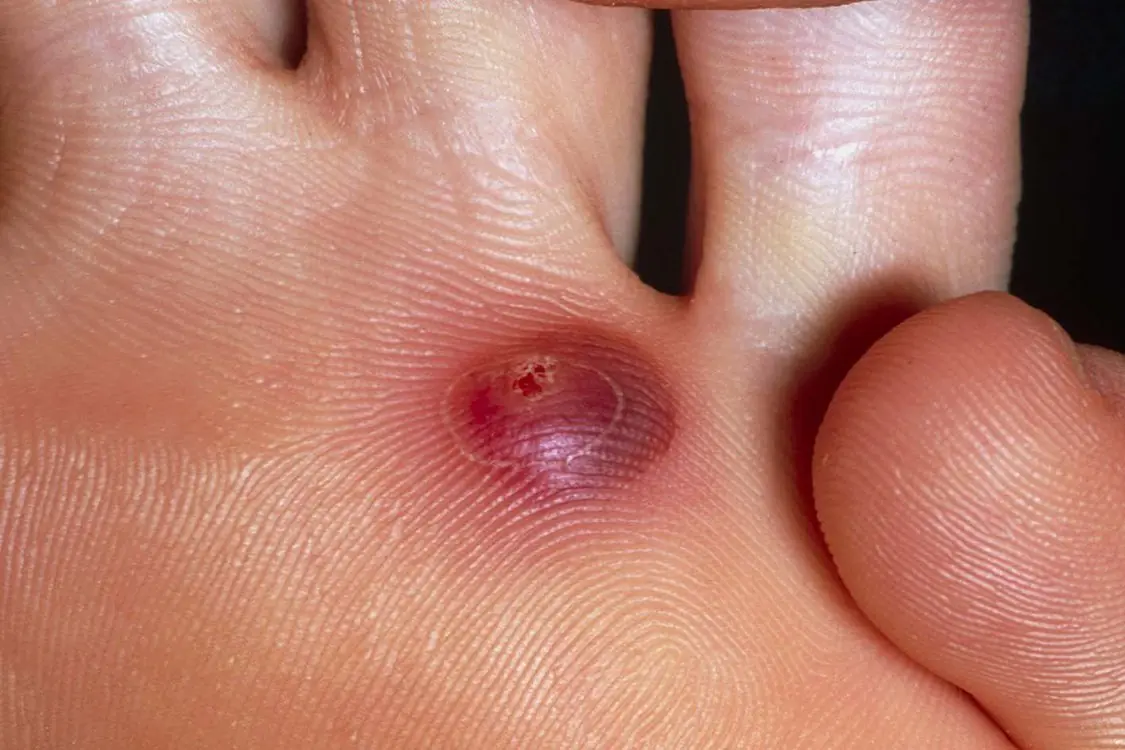
The First Warning Sign Parents Should Never Ignore
A dark mark on the foot is not automatically an emergency. Children frequently develop bruises, blisters, small cuts, and other skin changes while playing.
What makes the situation more concerning is the combination of the skin change with the child's symptoms.
If a child suddenly cannot stand or put weight on the affected leg, this is not something parents should simply observe for several days.
The NHS advises urgent assessment when a child cannot put weight on a leg. The Royal Children's Hospital Melbourne also identifies acute inability to walk or bear weight as a warning sign requiring careful medical assessment. These recommendations are especially important when pain is severe or the child appears generally unwell.
A child who refuses to walk may be experiencing pain from the skin itself, but the source can sometimes be deeper.
For example, a small puncture wound may extend farther beneath the surface than it appears. A foreign object can become trapped in the tissue. An infection may cause swelling and tenderness. An injury involving a bone or joint can also produce difficulty walking.
Parents should therefore avoid assuming that the visible dark spot explains every symptom.
If the child cannot bear weight, arrange emergency medical assessment rather than waiting for the spot to change. If the child also has fever, rapidly spreading redness, significant swelling, severe pain, or looks very ill, seek emergency help immediately.
What Could Cause a Large Dark Spot on the Sole of a Child's Foot?
The skin on the bottom of the foot is different from the skin on many other parts of the body.
It is naturally thicker because it must withstand repeated pressure from standing, walking, running, and jumping.
That thickness can sometimes hide injuries or make certain skin conditions look unusual.
A dark lesion may be caused by blood beneath the skin, a viral wart, a small injury, a foreign object, or another type of growth.
The location also matters.
A spot beneath the toes experiences repeated pressure whenever the child walks. Even a relatively small lesion can become extremely uncomfortable in this area.
The following possibilities are worth understanding, although none can be confirmed from the supplied photograph alone.
1. A Blood Blister: One of the Most Common Explanations for a Dark Spot
One possible explanation is a blood blister.
A blood blister develops when small blood vessels beneath the skin break and blood becomes trapped under the outer layer. Instead of appearing transparent or pale like an ordinary friction blister, it may look dark red, purple, brown, or almost black.
The color can be alarming, particularly when the blister is located on the sole of a child's foot.
Blood blisters can develop after the skin is pinched, crushed, or subjected to repeated pressure. A child might develop one after playing sports, running for long periods, wearing uncomfortable shoes, or experiencing an unnoticed injury.
For example, imagine a child spending an afternoon running around in new shoes. The footwear may appear to fit properly while the child is standing still, but repeated movement can create friction in one particular area.
Over time, the pressure damages tiny blood vessels.
Blood collects beneath the skin, producing a raised, dark-colored blister.
Another possibility is a direct impact. A child may accidentally step on something hard, have a toe caught in a door, or experience pressure from a toy or another object.
Young children do not always remember exactly what happened. They may continue playing after a minor injury and only complain when the discomfort becomes significant.
How does a blood blister usually look?
-
It may appear dark red, purple, brown, or nearly black.
-
It can be raised above the surrounding skin.
-
The surface may look smooth and stretched.
-
The area may feel tender when touched.
-
Walking or wearing shoes may increase discomfort.
A blood blister is often harmless and gradually heals without complicated treatment. However, a very painful blister, an unexplained lesion, or a lesion accompanied by an inability to walk should not automatically be treated as an ordinary household injury.
Parents should also avoid deliberately puncturing a dark blister.