If a wound becomes increasingly painful, swollen, or red, it should be evaluated.
Teach children to report injuries.
Young children may hide an injury because they are afraid of getting into trouble or do not understand its importance.
Encourage them to tell an adult whenever they step on something sharp or experience pain while playing.
Check footwear regularly.
Look inside shoes for small stones, broken pieces, sharp edges, or damaged insoles.
A tiny object inside a shoe can cause repeated pressure against the same area.
These habits cannot eliminate every risk, but they make it easier to identify problems before they become more uncomfortable.
12. Why a Photograph Cannot Tell Parents Exactly What the Lesion Is
The supplied photograph shows a rounded, dark gray-black area beneath the toes.
It appears raised and visibly different from the surrounding skin.
This makes it understandable that parents would be concerned.
However, photographs have important diagnostic limitations.
Lighting can change how a lesion appears.
A dark red blood blister may look almost black in certain lighting conditions.
A shadow can make a relatively small bump appear larger.
The photograph also cannot show whether the lesion is soft, hard, fluid-filled, or attached to deeper tissue.
It cannot establish whether the child has an infection or whether an object is trapped beneath the surface.
Even a dermatologist may need to examine a lesion directly before deciding whether further testing is appropriate.
The photograph therefore provides a reason to investigate, not a definitive diagnosis.
Parents should also be cautious about comparing their child's foot with images found online.
Two lesions may look similar while having completely different causes.
For example, a blood blister and a plantar wart may both contain dark areas, but they develop through different processes and may require different management.
The most useful information comes from combining the appearance of the lesion with its history, symptoms, and physical examination.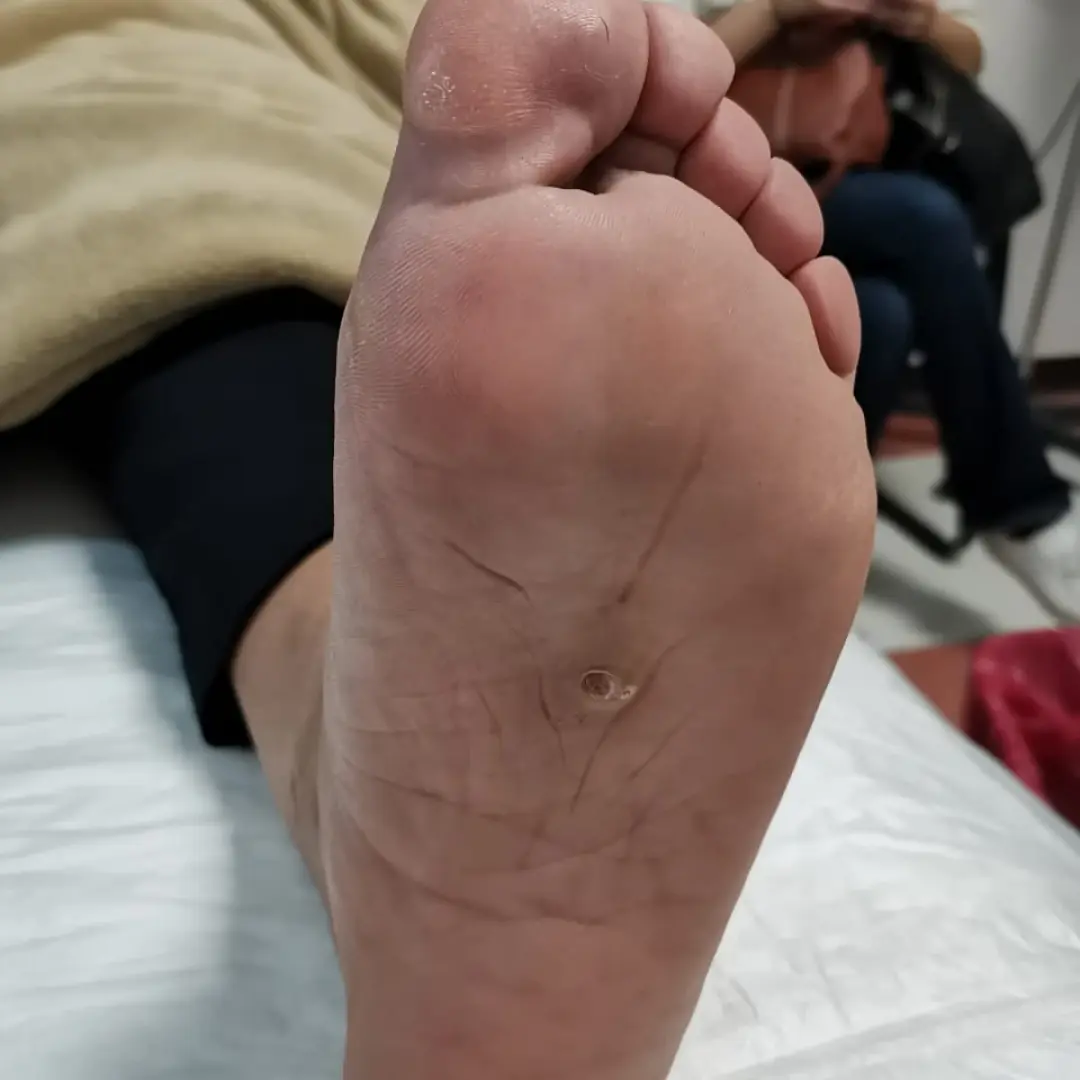
13. What If the Dark Spot Suddenly Becomes Larger?
A lesion that changes quickly deserves attention.
Parents should be particularly careful if the spot appears to expand over a short period, becomes increasingly swollen, or develops new areas of discoloration.
There are several possible reasons.
A blood blister may become more noticeable after additional pressure.
An injury may produce further bruising.
An infection may cause increasing inflammation.
A foreign object may continue irritating the surrounding tissue.
A growing skin lesion may also require examination by a dermatologist.
It is important to distinguish between a lesion that looks different because of lighting and one that is genuinely changing.
Taking photographs under similar lighting conditions can help document its appearance.
However, photographs should never replace medical evaluation when concerning symptoms are present.
If the lesion grows rapidly and the child is experiencing severe pain, seek prompt medical attention.
If the child cannot stand or put weight on the foot, seek emergency assessment.
14. Questions Parents Frequently Ask About Dark Spots on Children's Feet
Is every black spot on a child's foot dangerous?
No.
Many dark spots are caused by relatively common conditions, including bruises, blood blisters, and plantar warts.
However, an unexplained lesion should be assessed when it is painful, changing, bleeding, or interfering with normal activities.
Can a blood blister look completely black?
Yes.
Blood trapped beneath the skin can appear dark red, purple, brown, or nearly black.
Its appearance depends on the amount of blood, the depth of the blister, and lighting.
However, color alone cannot confirm that a lesion is a blood blister.
Can plantar warts make children refuse to walk?
They can cause significant discomfort, particularly when located on pressure-bearing areas of the sole.
Nevertheless, a child who suddenly refuses to walk should receive medical assessment rather than having the symptoms automatically attributed to a wart.
Does a dark spot always mean infection?
No.
A dark lesion may contain blood or represent a noninfectious skin growth.
Signs such as spreading redness, warmth, swelling, pus, fever, and worsening pain increase concern for infection.
Should parents remove a dark spot at home?
No.
An unexplained lesion should not be cut, squeezed, scraped, or punctured.
The correct treatment depends on its cause.
Can children develop melanoma?
Yes, but melanoma is rare in children.
A growing, changing, bleeding, or unusual skin lesion should be evaluated by a qualified dermatologist.
How quickly should a child who cannot walk be examined?
A child who suddenly cannot bear weight should receive emergency medical assessment.
Parents should not wait several days to see whether the problem disappears.
Can a small splinter cause severe pain?
Yes.
A foreign object embedded in a pressure-bearing area can cause considerable discomfort, particularly when the child walks.
A clinician may need to assess whether an object remains beneath the skin.
The Most Important Message for Every Parent
A dark spot on the bottom of a child's foot may have a simple explanation. It could be a blood blister caused by pressure, a plantar wart, an injury, or a small object trapped beneath the skin.
But parents should never judge the seriousness of a problem by color alone.
The symptoms surrounding the lesion matter just as much as its appearance.
A child who can walk normally and has a small, painless blister may need a very different approach from a child who is crying, experiencing severe pain, and refusing to stand.
In the situation described in the accompanying photograph, the reported inability to put weight on the foot is particularly important. The child should receive urgent medical assessment rather than waiting for the dark spot to disappear.
The goal is not to frighten parents into believing that every unusual mark is dangerous.
It is to encourage them to recognize when an ordinary-looking skin problem may be accompanied by symptoms that need professional attention.
Children cannot always explain what happened to their bodies. They depend on adults to notice changes, listen to their complaints, and seek help when something does not seem right.
Sometimes, the smallest detail is the one that deserves the closest attention.