Catastrophic Texas Floods: 137 Lives Lost as Search Efforts Reveal the Devastating Scale of the July 2025 Disaster
The water came faster than many families could imagine. In the early hours of July 4, 2025, residents of Central Texas awoke to an extraordinary disaster as powerful floodwaters surged through neighborhoods, swept away vehicles, destroyed homes, and overwhelmed summer camps along the Guadalupe River. Roads that had been quiet only hours earlier became raging channels of muddy water. Cars disappeared beneath the current, trees were uprooted, and entire sections of riverside communities were transformed into scenes of destruction.
For some families, there was almost no time to escape. Parents rushed to gather their children, residents searched for higher ground, and people trapped inside homes and vehicles desperately waited for help. Across the Texas Hill Country, emergency responders faced an increasingly difficult situation as the floodwaters continued to rise.
The tragedy initially appeared to be a devastating local emergency. But as daylight revealed the extent of the destruction, the scale of the disaster became increasingly clear. Hundreds of people needed assistance, dozens were reported missing, and rescue teams began searching through flooded neighborhoods, damaged campsites, and enormous piles of debris.
On July 6, 2025, a social media post reported that 51 people had died and dozens remained missing. That figure reflected an early stage of the unfolding emergency, not the final death toll.
As the days passed, the confirmed number of victims increased dramatically. The July 4 disaster ultimately claimed 137 lives across the affected region of Texas, according to a later scientific analysis of the event. Kerr County, one of the hardest-hit areas, suffered 117 confirmed deaths, while two additional people remained missing in the official accounting cited by the Texas legislative investigation.
The catastrophe became one of the deadliest flash-flood disasters in modern American history.
Yet the number of lives lost tells only part of the story. Behind the statistics were families who lost loved ones, children whose summer holidays became a nightmare, communities left without homes, and rescue workers who spent days searching through dangerous conditions.
To understand how the disaster unfolded, it is necessary to look at the extraordinary weather that triggered the flooding, the rapid rise of the Guadalupe River, the desperate rescue operations, and the questions that emerged about warnings and emergency preparedness.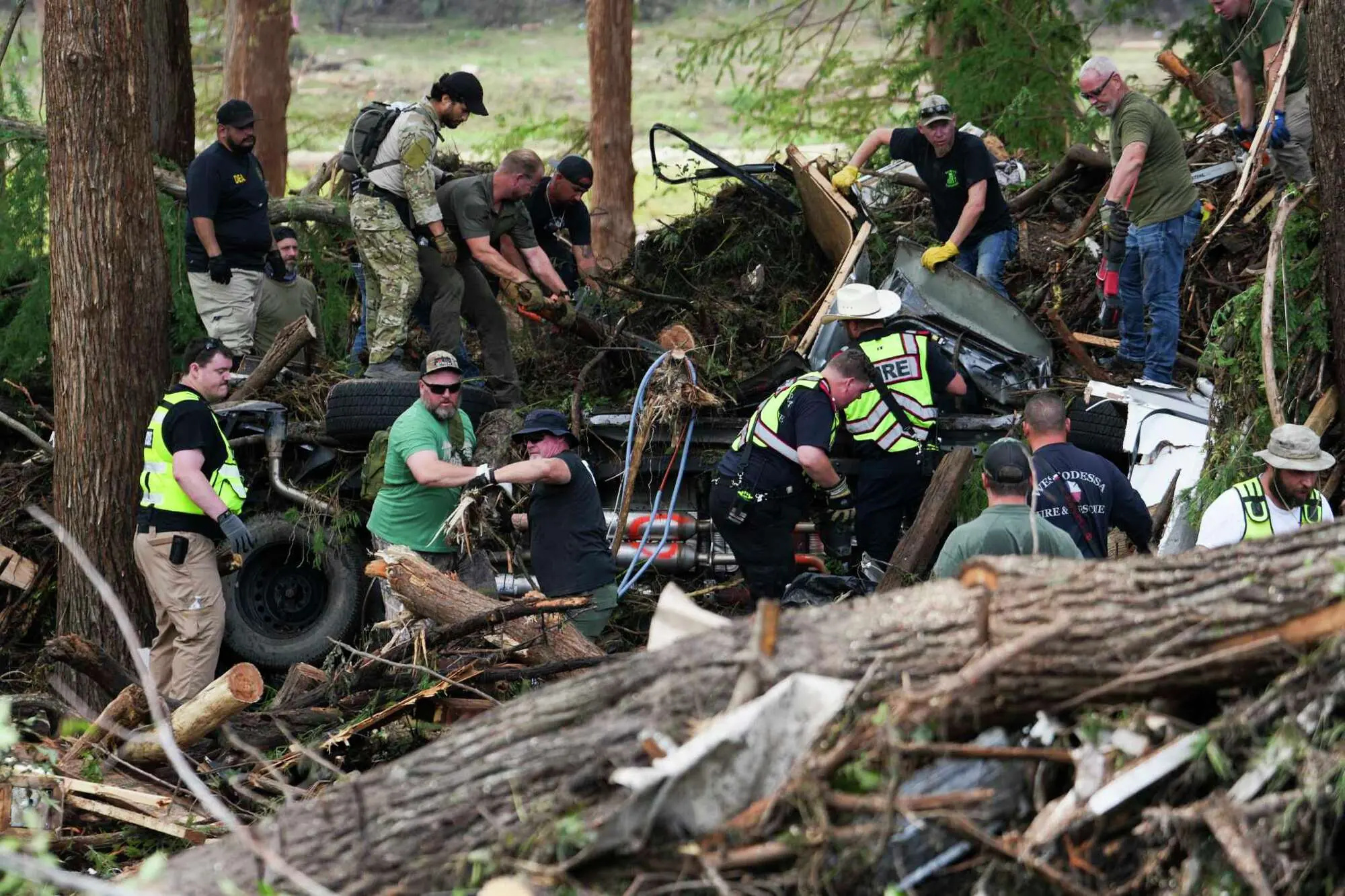
The Night Central Texas Changed Forever
The Texas Hill Country is known for its scenic rivers, rolling hills, limestone landscapes, and popular outdoor destinations.
During summer, the region attracts families, tourists, campers, and people looking to spend time near the water.
The Guadalupe River is one of its most recognizable natural features. Its banks contain residential properties, recreational areas, campsites, and popular locations for swimming and boating.
But the same geography that makes the region attractive can also make it vulnerable to sudden flooding.
Steep slopes and relatively thin soils can allow rainwater to move rapidly toward river channels. When intense rainfall occurs over a short period, water levels can rise with extraordinary speed.
This characteristic has earned parts of Central Texas the nickname Flash Flood Alley.
On July 3, 2025, weather conditions began developing into a dangerous situation across the region.
Forecasters were monitoring storms capable of producing substantial rainfall. A flood watch had been issued, warning residents that heavy rain could cause dangerous conditions.
However, the amount of rain that ultimately fell over parts of Kerr County was far more destructive than many people anticipated.
During the early hours of July 4, intense rainfall concentrated over the Guadalupe River basin.
Some areas received more than 10 inches of rain within a few hours.
The ground could not absorb water quickly enough, and runoff poured into creeks and rivers.
The result was a sudden and powerful flood surge.
The Guadalupe River rose dramatically, carrying water, mud, trees, vehicles, and debris downstream.
At the U.S. Geological Survey gauge near Hunt, the river eventually reached a recorded high-water mark of 37.52 feet.
The speed of the rise was particularly alarming.
According to the later Texas legislative investigation, the river rose from approximately 10 feet around 3 a.m. to its recorded crest at approximately 5:10 a.m.
For people living or staying near the river, those hours became a race against time.
Some were asleep when the water began entering their properties.
Others were awakened by warnings, emergency calls, or the sound of rapidly moving water.
In some locations, the floodwaters rose so quickly that people had little opportunity to gather belongings or reach their vehicles.
The disaster was no longer simply a weather emergency.
It had become a major rescue operation involving local authorities, state agencies, emergency personnel, and volunteers.
Texas House of Representatives+2
Why the Guadalupe River Rose So Quickly
Understanding the disaster requires looking at the relationship between rainfall, geography, and river systems.
A river does not rise only because rain falls directly into its channel.
Water from surrounding hills, roads, fields, creeks, and drainage systems eventually flows toward lower ground.
When rainfall is intense, this runoff can arrive almost simultaneously from multiple directions.
That is what made the July 4 event especially dangerous.
The storm system produced concentrated rainfall over the headwaters of the Guadalupe River basin.
The steep landscape accelerated the movement of water toward the river.
As additional runoff entered the system, the river's flow increased dramatically.
The resulting flood wave moved through areas where homes, recreational properties, and summer camps were located.
The situation was made more dangerous by the darkness.
Many people were asleep, and visibility was limited.
A normal-looking river can become a powerful destructive force within a short period.
Water that initially appears to be rising slowly can accelerate, carrying heavy objects and creating dangerous currents.
Vehicles that are normally capable of driving through ordinary road conditions can become trapped or swept away.
Even relatively shallow moving water can destabilize a person, while deeper floodwater can conceal road damage, open drainage channels, and submerged obstacles.
The July 2025 disaster demonstrated how quickly conditions can change when extreme rainfall affects a vulnerable watershed.
A later analysis published in the Bulletin of the American Meteorological Society identified a nearly stationary storm system that produced exceptionally heavy rainfall over the Guadalupe River basin.
The researchers found that localized rainfall exceeded 250 millimeters in a concentrated period.
The study also examined how simultaneous flood surges on the South Fork of the Guadalupe River and Cypress Creek contributed to the inundation near Camp Mystic.
This helps explain why the flooding became so destructive in a relatively short period.
The disaster was not simply the result of one overflowing river.
It involved intense rainfall, the geography of the watershed, rapidly moving runoff, and multiple water surges reaching vulnerable locations.
The First Reports: 51 Dead and Dozens Missing
When the first reports emerged on July 4 and July 5, authorities were still trying to understand the extent of the disaster.
Rescue teams were moving through affected communities.
Emergency officials were receiving reports of missing residents, damaged properties, and people trapped by floodwaters.
At that stage, the number of confirmed deaths was changing rapidly.
The social media post dated July 6 reported 51 deaths and dozens of missing people.
That number should be understood as an early update rather than a final accounting.
The situation was evolving hour by hour.
Some people had been rescued but had not yet been reunited with their families.
Others were missing because communication systems had been disrupted.
In several areas, roads were blocked by debris, making it difficult for emergency teams to reach affected properties.
The process of identifying victims also took time.
Floodwaters can carry people and objects considerable distances from their original locations.
Search teams had to examine damaged buildings, riverbanks, wooded areas, and debris fields.
The authorities therefore could not immediately establish a complete picture of the losses.
On July 4, the Texas Tribune reported that at least 24 people had died in Kerr County and 23 girls from Camp Mystic were unaccounted for.