Moving floodwater has tremendous physical power.
Its force increases with depth and speed.
It can undermine foundations, damage road surfaces, and push vehicles away from their original positions.
Debris makes the situation even more dangerous.
A flood can carry tree trunks, pieces of buildings, metal objects, and household materials.
These objects can strike structures and create additional damage.
Even after the water begins to recede, the area may remain dangerous.
Mud can conceal holes, broken infrastructure, sharp materials, and unstable ground.
Buildings may have weakened foundations or damaged electrical systems.
This is why emergency officials generally advise people not to return to flooded properties until authorities determine that conditions are safe.
The Texas disaster demonstrated that the effects of a flash flood continue long after the water stops rising.
The immediate threat may come from the current, but the aftermath can involve structural damage, contaminated water, damaged utilities, and major transportation problems.
The Human Toll: 137 Lives Lost Across the Affected Region
The early social media headline reported 51 deaths.
That figure was already devastating, but it did not represent the final scale of the tragedy.
As the search and identification process continued, the number increased.
Later scientific analysis of the July 4, 2025 event reported 137 fatalities across the affected region of South Texas.
The Texas legislative investigation documented 117 confirmed deaths in Kerr County, including 37 children, and two additional people who remained missing in its accounting.
The figures must be distinguished carefully because reports at different stages used different methods and geographic totals.
Kerr County suffered the greatest concentration of deaths, but flooding also caused fatalities in other counties.
The victims included residents, visitors, families on holiday, children attending summer camps, and people who happened to be in vulnerable locations when the water rose.
The ages of the victims reflected the breadth of the tragedy.
According to the Texas Tribune's identification report, the youngest victims in Kerr County were just one year old, while the oldest was 91.
Some victims had traveled from other states to visit the region.
Others were local residents who had lived near the river for years.
The deaths were not limited to one neighborhood or one group of people.
The flood affected communities across a wide area.
Behind every number was a family dealing with a permanent loss.
For some, the disaster meant losing a child.
For others, it meant losing a parent, spouse, sibling, friend, or neighbor.
The scale of the tragedy made it one of the most consequential flood disasters in the United States in recent decades.
It also prompted renewed attention to flood preparedness in communities where rivers and creeks can rise rapidly.
Why Different Reports Show Different Death Tolls
Readers may encounter several figures when researching the Texas floods.
On July 6, the reported toll was 51.
By July 8 and July 9, Reuters reported at least 109 deaths as the search continued.
Later reports provided higher totals.
Some publications reported 135 deaths, while later scientific and legislative materials used figures of 137 across the affected region.
There are several reasons for these differences.
First, the death toll changed as victims were located and identified.
Second, some reports focused on Kerr County, while others included multiple affected counties.
Third, missing-person counts and confirmed fatalities were not always presented in the same way.
A person who remained unaccounted for could be listed separately from confirmed deaths.
For an accurate retrospective article, it is therefore important to state the date, geographic scope, and reporting basis of each figure.
The most useful summary for this story is that the July 4 disaster caused 137 fatalities across the affected region according to the later scientific analysis, while the Texas legislative report documented 117 confirmed deaths and two additional missing people in Kerr County.
This provides a clearer picture than repeating the early figure of 51 as though it were the final toll.
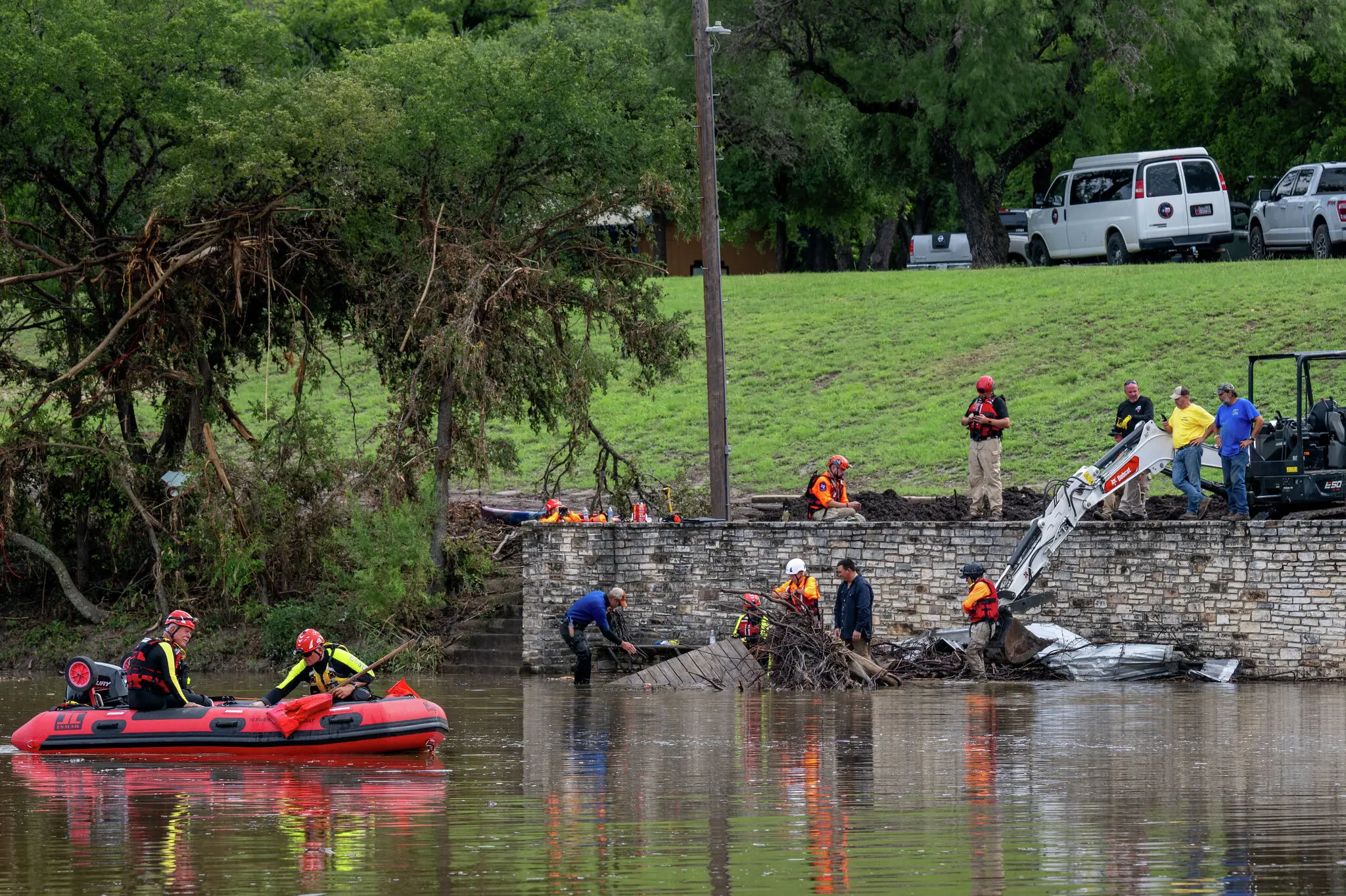
The Role of Emergency Responders and Volunteers
As the floodwaters moved through Central Texas, emergency responders faced an enormous challenge.
The initial response involved local firefighters, police officers, emergency medical teams, and other personnel.
As the scale of the disaster became apparent, additional resources were brought in.
Specialized rescue teams arrived with equipment designed for swift-water operations.
Helicopters were used to reach locations that could not be accessed by road.
Boats allowed responders to navigate flooded neighborhoods and river channels.
Drones provided aerial views that helped teams assess conditions.
Search crews worked through difficult terrain, sometimes moving across damaged roads and unstable riverbanks.
Volunteers also played a major role.
People from surrounding communities offered supplies, transportation, food, equipment, and practical assistance.
Some helped clear debris.
Others supported families who had lost homes or were searching for relatives.
Emergency operations required cooperation between multiple levels of government and many different organizations.
This coordination was especially important because the disaster affected several counties and required resources beyond the capacity of any single local department.
The Dangers Faced by Rescue Workers
Rescuing people during a flash flood is one of the most dangerous forms of emergency response.
Swift-moving water can overturn boats, trap vehicles, and carry debris.
The depth of water may be difficult to judge.
A road that appears passable may have been damaged underneath.
Rescue workers must also consider electrical hazards, unstable structures, and the possibility of additional rainfall.
After the initial flood, the search continued under difficult conditions.
Mud and debris made it hard to reach some areas.
Some properties were surrounded by damaged trees and broken structures.
Teams had to move cautiously while searching for people who remained missing.
When new rain threatened the region, operations were sometimes interrupted or adjusted to protect responders.
The Associated Press reported that heavy rain on July 13 caused another pause in parts of the search operation as authorities warned that waterways could rise again.
This demonstrated that the danger did not disappear immediately after the first flood.
The emergency response remained closely tied to weather conditions and river levels.
Questions About Warnings and Emergency Preparedness
As the immediate rescue effort continued, attention increasingly turned toward the warnings issued before and during the disaster.
Residents and families wanted to understand whether people had received sufficient notice of the danger.
The National Weather Service had issued flood-related alerts as the weather system developed.
However, the speed and severity of the flooding raised questions about whether warnings reached people in time and whether local emergency systems were used effectively.
One of the major issues examined later was the use of emergency notification systems in Kerr County.
The Washington Post reported that local officials did not activate the more far-reaching Integrated Public Alert and Warning System, known as IPAWS, before or during the early morning hours when the river was rising.
Instead, local notifications relied on a system with more limited reach, including messages to people who had registered to receive them.
The National Weather Service separately issued alerts through the federal system.
This distinction became important in later investigations.
Emergency warnings are most effective when people receive them quickly, understand the danger, and have enough time to act.
A general flood watch may not communicate the same urgency as a location-specific evacuation instruction.
For people sleeping in campsites or homes close to a river, a clear warning can make an enormous difference.
The July 4 disaster raised questions about whether local systems were prepared to reach visitors and residents who were not registered for county notifications.
It also highlighted the difficulty of communicating during a rapidly developing emergency when mobile coverage may be unreliable.
Why Warning Systems Matter So Much
A warning system cannot stop rain from falling.
But it can provide people with information that helps them move to safety.
The difference between receiving a warning several hours before flooding and receiving it only after water has entered a property can be enormous.
In flash-flood-prone regions, emergency planning must account for people who may be asleep, unfamiliar with the area, or visiting temporarily.