This is a useful example of how nutrition research should be interpreted. A possible improvement in one laboratory measurement is not the same as proving that a food prevents cardiovascular disease.
Dates may support a heart-conscious diet when eaten in sensible portions and used to replace less nutritious snacks. They should not be regarded as a substitute for prescribed cholesterol medication, blood pressure treatment, or other medical care.
For people with kidney disease, potassium intake may need to be individualized. Some patients are advised to limit potassium-rich foods depending on their kidney function and blood test results.
In that situation, even a naturally nutritious food may need to be portion-controlled according to professional advice.
The broader message is straightforward: dates can contribute useful nutrients to a heart-conscious diet, but their benefits depend on the overall pattern of eating and the person's medical circumstances.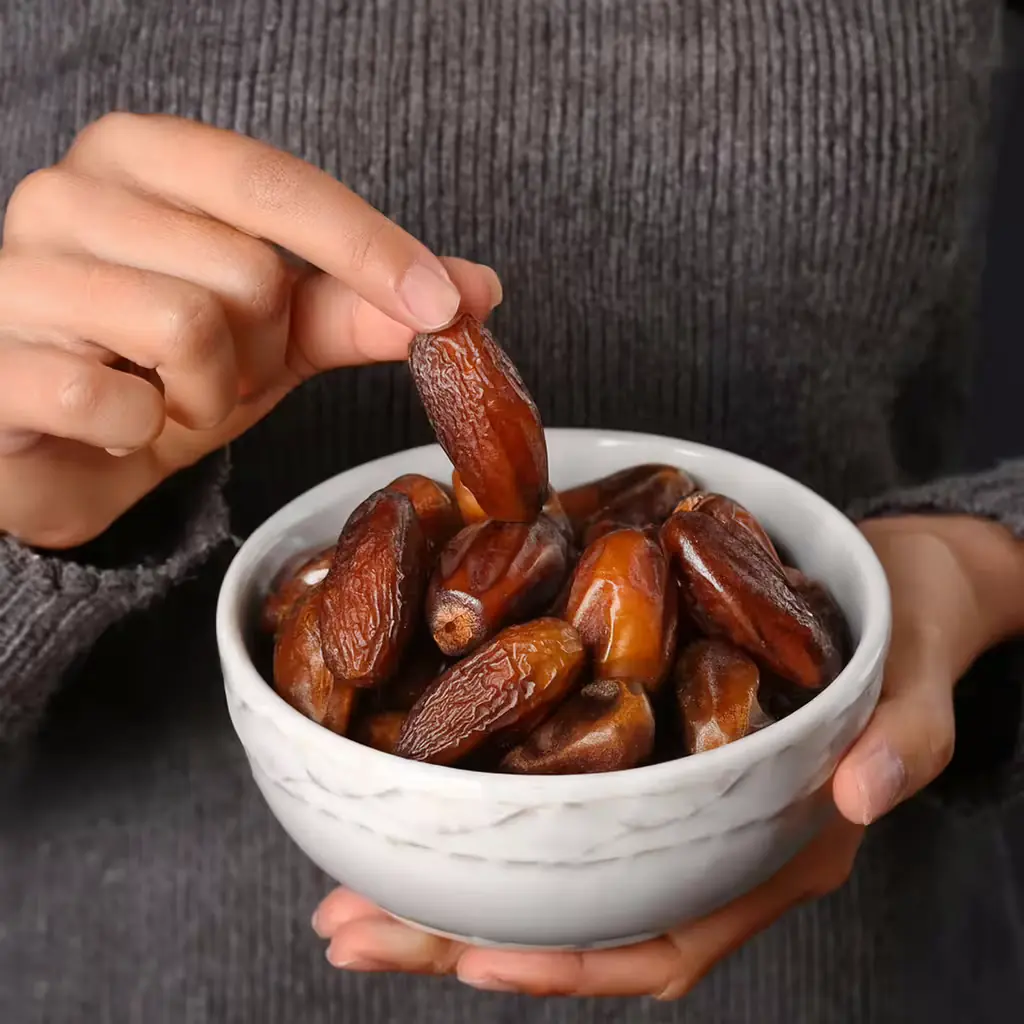
5. Could Dates Provide More Steady Energy?
Dates are rich in carbohydrates, the body's primary source of energy.
This makes them a convenient snack before physical activity, during a long day, or when someone needs a small amount of food between meals.
Their natural sugars are readily available for the body to use. For this reason, dates are sometimes included in snacks for hikers, athletes, and people who need portable energy.
The advantage is convenience. Dates do not require cooking, refrigeration for short periods in many circumstances, or elaborate preparation.
They are also easy to carry in a small container or lunch bag.
However, the phrase "steady energy" should not be interpreted as a guarantee that dates prevent fatigue throughout the day. Energy levels depend on sleep, hydration, overall food intake, physical activity, and many other factors.
Two dates alone are unlikely to sustain someone through several hours of demanding work.
A more balanced snack might combine dates with nuts, seeds, or yogurt. The dates provide carbohydrates, while the accompanying food contributes protein or fat and may make the snack more filling.
For someone who often reaches for candy or sweet biscuits, replacing part of that habit with a small serving of dates may improve the nutritional quality of the snack.
But dates still contain calories and sugar. Eating them in addition to an already adequate diet, without considering total intake, can contribute to excess energy consumption.
The best use of dates is therefore practical rather than magical: they are a convenient source of carbohydrate that can be included in a balanced eating pattern.
6. Antioxidants and the Body's Natural Protection Systems
Dates contain several plant compounds that researchers have studied for antioxidant activity.
Antioxidants are often discussed in popular health articles as though they directly remove every harmful substance from the body. In reality, the biology is more complex.
The human body naturally produces reactive molecules during normal metabolism. These molecules also have useful functions, including participation in cell signaling and immune responses.
Problems can arise when reactive processes become excessive or poorly regulated. This is one reason researchers investigate antioxidant compounds in foods.
Dates contain phenolic compounds and other substances that may interact with oxidative processes in laboratory settings.
The amount and type of these compounds vary according to the date variety, growing conditions, maturity, storage, and processing.
A date that has been dried or stored under different conditions may not have exactly the same composition as another date.
The presence of antioxidant compounds makes dates an interesting part of a varied diet, but it does not prove that eating two dates daily prevents cancer, reverses aging, or eliminates inflammation.
Such claims go beyond the evidence.
A diet containing a wide range of fruits, vegetables, legumes, nuts, and whole grains provides many different plant compounds. No single fruit can reproduce the diversity of nutrients found in that pattern.
Dates can be one small contributor.
It is also worth remembering that antioxidant supplements and antioxidant-rich foods are not interchangeable. Foods contain complex combinations of nutrients and compounds, and their effects depend on the entire dietary context.
The most reasonable conclusion is that dates contain plant compounds that are worth including as part of a varied diet, while their specific disease-prevention effects remain uncertain.
7. What About Weight Management?
Dates sometimes appear in weight-loss discussions because they are naturally sweet and can replace desserts or packaged snacks.
Their usefulness depends on how they are incorporated.
A small serving of dates may satisfy a craving for something sweet. When dates replace a more calorie-dense dessert or a snack with little fiber, they may help improve the overall quality of the diet.
However, dates are not a low-calorie food in the same way that many watery fruits are.
Dried dates are concentrated because much of their water has been removed. This means a relatively small quantity can provide a substantial amount of energy.
Two large dates may contain more calories than someone expects.
For weight management, the important question is not whether dates are "good" or "bad." It is whether the portion fits the person's overall energy needs and whether the snack helps them maintain a satisfying, balanced eating pattern.
Dates may be more satisfying when paired with protein or healthy fats. For example, a date with a small amount of nut butter or a few almonds may provide a more balanced snack than dates eaten alone.
The portion should still be considered.
Some people find it helpful to place two dates in a small bowl rather than eating directly from a large package. This makes the serving visible and reduces the chance of unintentionally consuming several more.
Weight management is influenced by many factors, including eating habits, physical activity, sleep, medications, stress, and health conditions.
Dates cannot independently cause weight loss, but they can be part of a sustainable eating plan.
The most useful approach is to choose foods that are enjoyable, nutritionally valuable, and appropriate for the person's needs.