People with a known allergy to dates should avoid them and seek medical advice if they experience allergic symptoms.
12. How to Choose and Store Dates
The dates shown in the image have a deep brown color and a wrinkled surface, characteristics commonly seen in dried varieties.
When selecting dates, look for fruit that is reasonably intact and free from signs of mold, unusual fermentation, or an unpleasant smell.
A little natural surface crystallization may occur in some stored dates, but visible mold or a strong off odor is a reason to discard the product.
Dates may be sold with or without pits. Pitted dates are convenient for cooking and snacking, while whole dates may retain their shape better during storage.
The texture varies considerably.
Some varieties are soft and moist, while others are firmer and drier. Medjool dates are often larger and softer, while Deglet Nour dates are commonly smaller and may have a firmer texture.
The best variety is largely a matter of taste and intended use.
Dates should be stored according to the package instructions. Keeping them in a sealed container helps protect them from moisture, odors, and insects.
Depending on their moisture content and storage conditions, dates may be kept at room temperature for a period or refrigerated for longer storage.
If buying in bulk, it is sensible to divide them into smaller portions so the package is not repeatedly exposed to moisture.
Good storage helps preserve quality and reduces food waste.
13. Simple Ways to Eat Two Dates Every Day
There is no special time of day when dates must be eaten to obtain their nutrients.
The best time is usually the time that fits comfortably into the person's routine.
Some people enjoy dates with breakfast. Others prefer them as an afternoon snack or as a small dessert after a meal.
Here are a few simple ideas:
With plain yogurt: Chop one or two dates into plain yogurt and add a small amount of nuts or seeds. This combines the sweetness of dates with protein and other nutrients.
With oatmeal: Slice dates into oatmeal while it is warm. Their natural sweetness may reduce the need for additional sugar.
With nuts: Pair dates with a few almonds or walnuts for a portable snack that combines carbohydrates with fats and some protein.
With fruit: Add chopped dates to a small fruit salad, keeping the portion modest because dates are more concentrated than many fresh fruits.
As a simple dessert: Enjoy one or two dates slowly after a meal rather than automatically reaching for a larger sweet.
These ideas are not special treatments. They are practical ways to make a small serving part of an ordinary eating pattern.
People who need to monitor blood glucose can consider the carbohydrate content of the entire snack and follow their clinician's advice.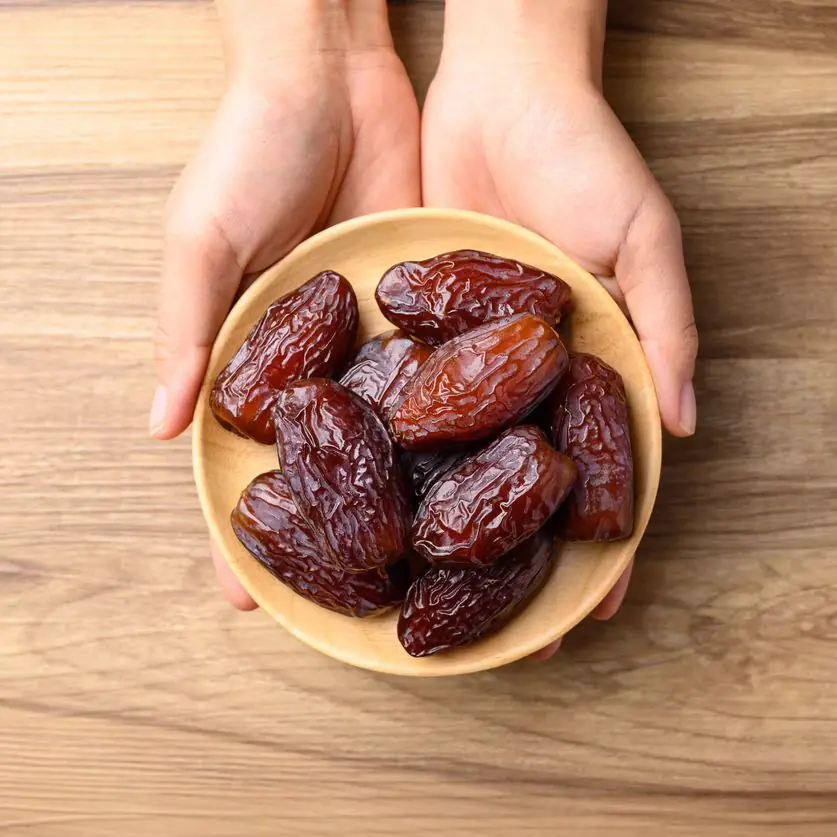
14. The Most Important Point: Dates Are Not a Miracle Food
The popularity of dates has led to many dramatic claims online.
Some posts suggest that eating two dates daily will cleanse the body, reverse aging, eliminate inflammation, cure constipation, or protect against serious disease.
Those claims are not supported by strong clinical evidence.
Dates contain fiber, minerals, natural sugars, and plant compounds. These components can contribute to a nutritious diet, but no single food can guarantee a particular health outcome.
The human body already has organs and systems responsible for processing waste products and maintaining internal balance. Dates do not "detox" the body in the way many advertisements suggest.
Similarly, antioxidant content does not prove that dates prevent cancer or other major diseases.
The available research on dates and metabolic health is promising in some areas, but studies are often relatively small, use different date varieties, and examine different quantities.
It is not possible to conclude that exactly two dates per day will produce the same effect in every person.
A realistic approach is more useful than an exaggerated promise.
Dates can be enjoyed as a whole fruit. They can contribute fiber and minerals, provide energy, and offer a naturally sweet alternative to some refined snacks.
Their benefits are most likely to matter when they are part of a broader pattern that includes balanced meals, adequate physical activity, sufficient sleep, and appropriate medical care.
The best diet is not built around one celebrated ingredient. It is built around consistency, variety, and choices that a person can maintain over time.
So, What Can Eating Two Dates a Day Really Do?
The answer is not a dramatic overnight transformation, but a small and potentially useful contribution to everyday nutrition.
Two dates may provide a convenient source of energy, some dietary fiber, potassium, magnesium, and naturally occurring plant compounds. They may help make a snack more satisfying when paired with nuts or yogurt, and they can be a reasonable alternative to certain refined sweets.
Research involving people with type 2 diabetes has also offered some reassurance that moderate date consumption does not necessarily worsen long-term blood glucose control. However, dates still contain carbohydrates, and individual responses vary.
The most important consideration is the size of the dates. Two small dates and two large Medjool dates can provide very different amounts of calories and carbohydrates.
For most people who enjoy dates, the fruit can be part of a balanced diet. Those with diabetes, kidney disease, swallowing difficulties, or specific dietary restrictions should consider their individual needs and seek professional guidance when necessary.
Dates are not a cure, and there is no evidence that eating exactly two every day guarantees better health.
But a simple habit can still have value when it encourages better food choices. Choosing a small serving of whole fruit instead of a highly processed snack may be one practical step toward improving the overall quality of a diet.
Sometimes, the most useful nutritional habits are not complicated. They are small, enjoyable choices repeated consistently.