Doctors Reveal What Eating Walnuts Can Do for Your Heart, Brain and Long-Term Health – The Benefits May Surprise You!
What if one of the simplest snacks in your kitchen could help protect your heart, support your brain and improve the quality of your diet as you grow older? It is not an expensive supplement, an exotic superfood or a complicated health routine. It is an ordinary handful of walnuts.
Recognized by their distinctive shape, which remarkably resembles the human brain, walnuts have attracted considerable attention from nutrition researchers. Hidden inside their hard shells is a combination of healthy fats, plant-based omega-3 fatty acids, fiber, vitamins, minerals and antioxidant compounds.
But there is more to these familiar nuts than their nutritional reputation suggests.
Research has found that regularly eating walnuts can improve certain cholesterol measurements, making them particularly interesting for people concerned about cardiovascular health. Their nutritional composition may also support healthy brain function, while their fiber and plant compounds contribute to a balanced diet.
For adults approaching retirement age, and especially those hoping to maintain their independence and vitality well into their later years, these benefits deserve a closer look.
However, not every popular claim about walnuts is supported equally by science. Some benefits have been demonstrated in human clinical trials, while others remain promising but require more research.
So what actually happens when you make walnuts part of your everyday diet? And how many should you eat to obtain their nutritional benefits without consuming excessive calories?
The answers begin with the organ that works continuously throughout your life: your heart.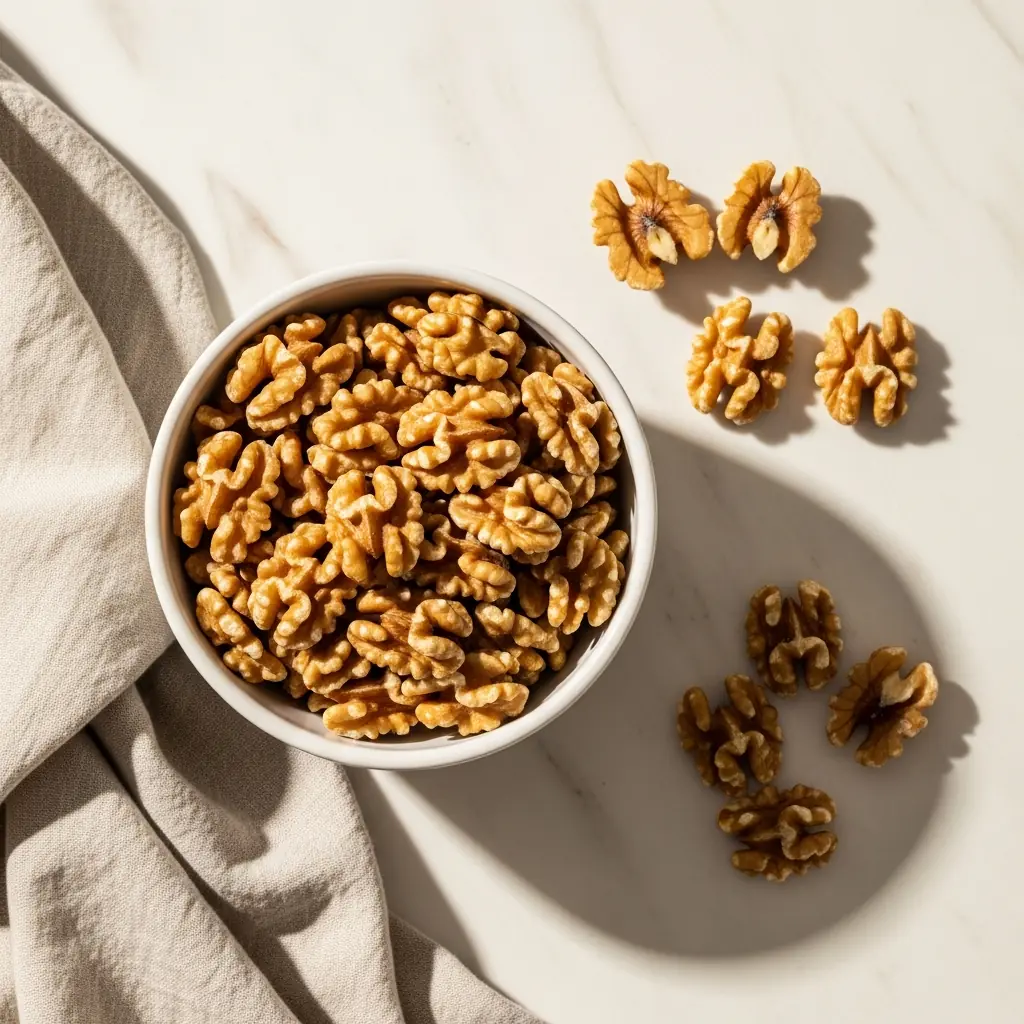
1. A Powerful Ally for Heart Health
Heart health becomes increasingly important as people grow older. Blood vessels naturally change with age, and factors such as high cholesterol, elevated blood pressure, smoking, diabetes and physical inactivity can increase cardiovascular risk.
Diet plays an important role in managing several of these factors.
Among commonly available nuts, walnuts have a particularly interesting nutritional profile because they contain alpha-linolenic acid, usually abbreviated as ALA.
ALA is a plant-based omega-3 fatty acid that the human body cannot produce in sufficient quantities on its own. It must therefore come from food.
Walnuts are one of the richest commonly eaten plant sources of this essential fatty acid.
Unlike many snacks that contain substantial amounts of refined carbohydrates or added sugar, walnuts provide predominantly unsaturated fats. Replacing some foods rich in saturated fats with foods containing unsaturated fats can help improve blood cholesterol levels.
This is one reason nutrition researchers have paid so much attention to walnuts.
How can walnuts support cardiovascular health?
-
Cholesterol management: Regular walnut consumption has been associated with modest reductions in LDL cholesterol, often called bad cholesterol.
-
Healthy fats: Their unsaturated fatty acids can help improve the overall quality of dietary fat intake.
-
Blood vessel function: Certain studies suggest that walnut-rich diets may positively influence the function of blood vessel walls.
-
Nutritional support: Walnuts also provide fiber, magnesium and plant compounds that contribute to a heart-conscious eating pattern.
The cholesterol findings are particularly interesting.
A two-year clinical trial involving more than 600 healthy older adults examined what happened when participants regularly included walnuts in their diets.
Researchers found that people in the walnut group experienced a modest reduction in LDL cholesterol compared with their baseline measurements.
The average reduction was approximately 4.3 mg/dL. Total cholesterol also decreased.
The findings were published in the journal Circulation and reported by the American Heart Association in August 2021.
This does not mean walnuts can replace cholesterol medication or eliminate cardiovascular risk. Instead, it demonstrates how a relatively simple dietary change may contribute to healthier cholesterol levels over time.
And the potential benefits do not stop at cholesterol.
The condition of blood vessels is another important part of cardiovascular health, which brings us to the next reason researchers are interested in these nuts.
2. Potent Antioxidant Support: Why Walnuts Deserve Attention
Another remarkable feature of walnuts is their concentration of plant compounds with antioxidant properties.
Every day, the human body produces molecules known as free radicals through normal metabolic processes. Environmental pollution, cigarette smoke, ultraviolet radiation and other exposures can also contribute to oxidative stress.
When oxidative stress becomes excessive, it can damage cells and contribute to processes associated with aging and chronic disease.
Antioxidants help the body manage this damage by participating in chemical processes that neutralize or limit the effects of certain reactive molecules.
Walnuts contain several compounds that have attracted scientific interest.
Important antioxidant compounds found in walnuts include:
-
Polyphenols: Plant chemicals that can participate in antioxidant and other biological processes.
-
Vitamin E: A fat-soluble vitamin that helps protect cell membranes from oxidative damage.
-
Melatonin: A naturally occurring compound that is involved in regulating sleep-wake rhythms and also has antioxidant properties.
-
Ellagitannins: Plant compounds that can be transformed by intestinal bacteria into smaller metabolites called urolithins.
One particularly interesting feature is the concentration of polyphenols in the thin brown skin surrounding the walnut kernel.
That skin may not look especially appealing, but it contains valuable plant compounds. Removing it unnecessarily means discarding part of the walnut's natural nutritional package.
Research has also investigated how walnut polyphenols interact with intestinal bacteria and how the resulting metabolites may influence human health.
However, it is important to understand what these findings actually mean.
Having antioxidant compounds does not automatically mean that eating walnuts prevents cancer, stops aging or eliminates inflammation. Laboratory experiments and human dietary studies measure different things, and results cannot always be translated directly into promises about disease prevention.
What researchers can reasonably say is that walnuts contribute a variety of beneficial plant compounds to the diet.
A review published in Nutrition Reviews examined research involving walnuts and several health outcomes. It found relatively consistent evidence supporting improvements in blood lipid profiles, while evidence for some other outcomes, including neurological health, remained less conclusive.
This makes walnuts particularly interesting as part of a varied diet containing fruits, vegetables, whole grains, legumes and other nutrient-rich foods.
The next potential benefit is even more fascinating because it involves an organ that walnuts have been visually associated with for centuries.
3. Can Walnuts Help Support Brain Function?
Cut a walnut in half and look closely.