If a dog that has always slept independently suddenly refuses to leave your side, consider whether something may have changed. A new household member, a recent move, loud noises, changes in your schedule, or a medical issue may influence the behavior.
Sudden changes are especially important in older dogs, because pain or age-related conditions may affect their comfort and ability to rest.
Excessive Separation Distress
A dog that cannot tolerate being separated from its owner may display signs such as persistent barking, whining, pacing, destructive behavior, excessive drooling, or attempts to escape when left alone.
These symptoms may indicate separation-related distress rather than ordinary attachment.
Nighttime Restlessness
A dog that repeatedly wakes up, pants excessively, walks around the room, cries, or seems unable to settle may be experiencing discomfort or another issue.
Possible causes include pain, digestive problems, urinary problems, anxiety, respiratory issues, or age-related changes.
Difficulty Breathing During Sleep
Occasional snoring may occur in some dogs, particularly those with certain facial structures. However, loud or worsening breathing noises, pauses in breathing, coughing, choking sounds, or signs of respiratory distress should not be ignored.
If your dog struggles to breathe, appears distressed, or has abnormal breathing while awake, seek veterinary advice promptly.
Possessive Behavior Around the Bed
If your dog growls, snaps, or aggressively prevents others from approaching the bed, the sleeping arrangement may need to be reconsidered.
The bed can become a valuable resource for some dogs. When the dog feels threatened, it may attempt to guard the space or the person sleeping there.
This behavior should be managed carefully to prevent injuries and reduce conflict.
How to Encourage Healthy Sleeping Habits
Whether your dog sleeps beside you or in a separate bed, several simple practices can support healthy sleep.
Create a Consistent Bedtime Routine
Dogs often respond well to predictable schedules. Try to maintain relatively consistent times for evening walks, feeding, bathroom breaks, and bedtime.
A routine can help the dog recognize when the household is settling down.
Provide Enough Exercise and Mental Stimulation
Dogs that receive appropriate physical exercise and mental stimulation during the day may be more likely to settle at night.
The amount of activity required depends on the dog's age, breed, health, and personality. A short walk, play session, training activity, or enrichment game may help meet the dog's needs.
Avoid excessive exercise, especially for puppies, senior dogs, or dogs with medical conditions.
Make the Sleeping Area Comfortable
If your dog sleeps in its own bed, choose a size and material that allow it to stretch, curl up, and reposition comfortably.
Older dogs or dogs with joint problems may benefit from supportive bedding and easy access to the sleeping area.
Avoid Punishing the Dog for Seeking Comfort
If your dog wants to sleep near you, it is generally better to establish clear boundaries calmly rather than punish the behavior.
If you do not want the dog in your bed, provide an alternative sleeping area and reward the dog for using it.
Help Your Dog Learn to Relax Independently
A dog can be strongly attached to its owner while still learning to rest independently. Encourage calm behavior in different areas of the home and gradually build the dog's confidence when separated from you.
This can be particularly helpful for dogs that become anxious whenever their owner moves out of sight.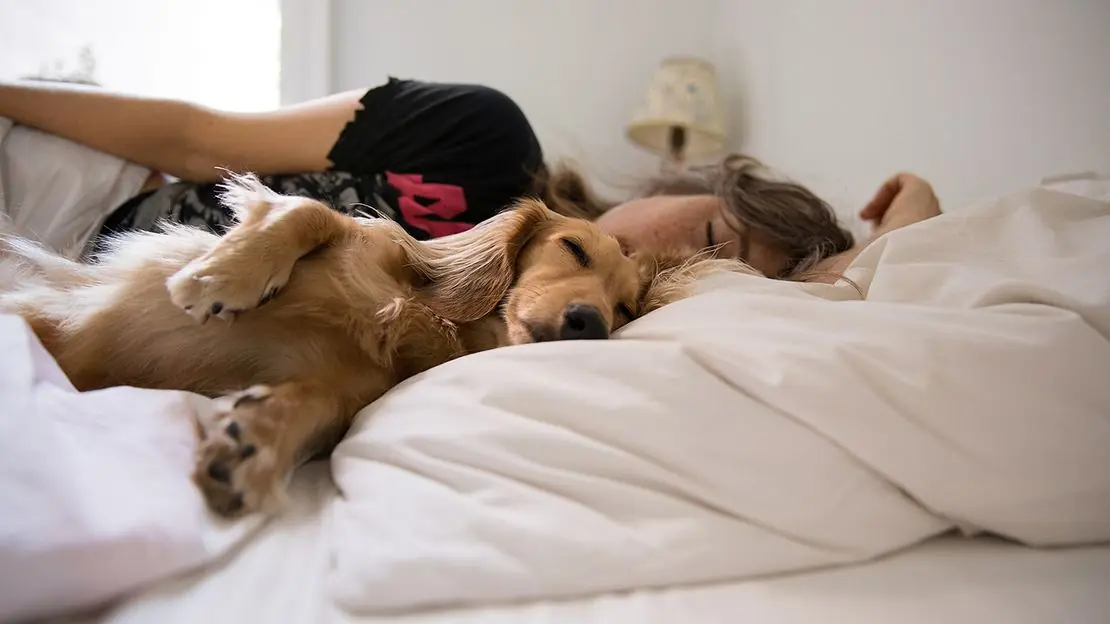
Final Thoughts
Does your dog always sleep beside you? The behavior may reveal more about your dog's comfort, trust, personality, and natural social instincts than you initially realized.
Your dog may choose your bed because it feels safe, because it enjoys warmth, because your scent is familiar, because it has learned that bedtime is a comforting routine, or simply because your mattress is the most comfortable place in the house.
For many dogs, sleeping beside a human is a normal expression of companionship. It can be part of a strong bond that develops through consistent care and positive experiences.
However, it is important to pay attention to sudden changes. A dog that becomes unusually clingy, restless, anxious, or unable to sleep independently may be responding to stress, discomfort, or a health problem.
If your dog is relaxed, sleeps comfortably, and both of you enjoy sharing the space, there is usually no need to worry about the habit.
And the next time your dog curls up beside you, presses its head against your leg, or quietly settles near your pillow, remember that the reason may be beautifully simple: your dog has found a place where it feels comfortable, familiar, and close to someone it trusts.
Sometimes, the place your dog chooses to sleep is simply the place where it feels most at home.