When people think about warning signs of lung disease, they often think of a persistent cough, shortness of breath, chest discomfort, or coughing up blood. Those symptoms deserve attention, especially when they persist or worsen.
But there is another physical change that is sometimes overlooked: changes in the shape or appearance of the fingertips and fingernails.
One of the most recognizable examples is digital clubbing, a condition in which the ends of the fingers become enlarged and the nails curve more noticeably around the fingertips. Clubbing can occur alongside certain lung conditions, including some types of lung cancer.
That does not mean that every unusual-looking fingernail is a sign of cancer. In fact, many changes in the fingers have completely different explanations.
Still, understanding what to look for can help you recognize when a change deserves medical attention.
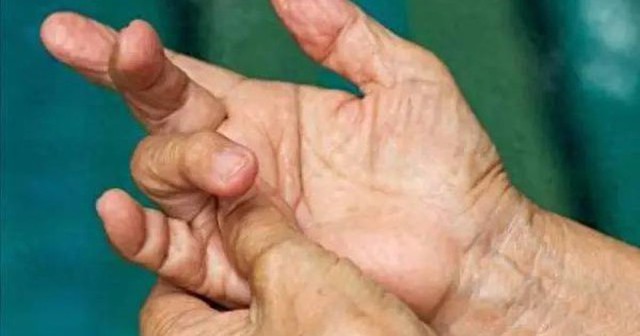
What Is Digital Clubbing?
Digital clubbing refers to a gradual change in the appearance of the fingertips and nails.
Instead of the fingertips having their usual shape, the ends of the fingers may become rounder, fuller, or more bulbous. The nails may also become more curved, sometimes creating the appearance that the nail is wrapping around the fingertip.
The change usually develops gradually rather than appearing overnight.
It can affect several fingers and may eventually involve both hands.
Because clubbing can be associated with a number of underlying medical conditions, doctors do not treat it as a diagnosis by itself. Instead, it is considered a physical sign that may prompt further evaluation.
A Simple Fingernail Check
There is a simple observation sometimes used to identify possible clubbing: the Schamroth window test.
Place the same fingers from each hand together so that the fingernails face each other.
In many people, a small diamond-shaped gap can be seen between the nails.
With clubbing, that space may disappear because of increased curvature of the nails and changes in the fingertips.
However, this is only a simple screening observation, not a diagnostic test.
If you notice a significant change in the shape of your fingertips or nails, a healthcare professional can examine them properly.
Why Can Lung Problems Affect the Fingers?
The relationship between lung disease and finger clubbing is complex.
Researchers have proposed several mechanisms involving changes in blood flow, inflammatory signals and the behavior of blood vessels and connective tissue. However, the exact biological pathway is not fully understood in every condition.
What is important for the average person to know is that clubbing can occur in association with certain diseases affecting the lungs and other organs.
These can include some forms of lung cancer, bronchiectasis, lung abscesses, cystic fibrosis and certain interstitial lung diseases.
But there is an equally important point:
Clubbing does not automatically mean lung cancer.
A person with clubbing may have another underlying condition, and some people can even have clubbing without an immediately obvious cause.
Lung Cancer Can Have More Than One Warning Sign
If someone develops new finger clubbing, doctors generally look at the entire clinical picture rather than focusing on the fingers alone.
Other symptoms may include:
Persistent or worsening cough
A cough that continues for weeks, particularly when it is new or different from a person's usual cough, deserves evaluation.
Not every persistent cough is related to cancer. Respiratory infections, asthma, allergies, reflux and other conditions can also cause prolonged coughing.
But a cough that does not improve should not simply be ignored.
Shortness of breath
Some people notice that ordinary activities suddenly become more difficult.
They may become breathless when walking, climbing stairs or performing tasks that previously caused no problem.
Again, shortness of breath has many possible causes, ranging from asthma and heart conditions to infections and anemia.
Chest pain
Chest discomfort or pain can occur for many reasons.
Pain that is persistent, unexplained or associated with breathing or coughing should be discussed with a healthcare professional.
Sudden severe chest pain, especially when accompanied by difficulty breathing, fainting or other serious symptoms, requires urgent medical attention.
Coughing up blood
Blood in the sputum should not be dismissed as a minor symptom.
There are several possible causes, some relatively minor and others more serious.
If you cough up blood, particularly repeatedly or in significant amounts, seek medical evaluation promptly.
Finger Changes Can Have Many Other Causes
This is where it is important not to jump to conclusions.
Fingernail and fingertip changes are not specific to lung cancer.
For example, nail discoloration can result from fungal infections, trauma, staining or other conditions.
Nail ridges can occur naturally with aging or after previous injury.
Brittle nails may be associated with repeated exposure to water or chemicals, nutritional issues, or other medical conditions.
Changes in nail color can have numerous explanations.
And clubbing itself can occur with diseases affecting organs other than the lungs.
Some gastrointestinal, cardiovascular and other systemic conditions have been associated with clubbing.
Therefore, looking at your fingers can provide a reason to ask questions, but it cannot tell you what disease you have.
What Does True Clubbing Look Like?
Because normal fingertips vary from person to person, it can sometimes be difficult to recognize subtle clubbing.