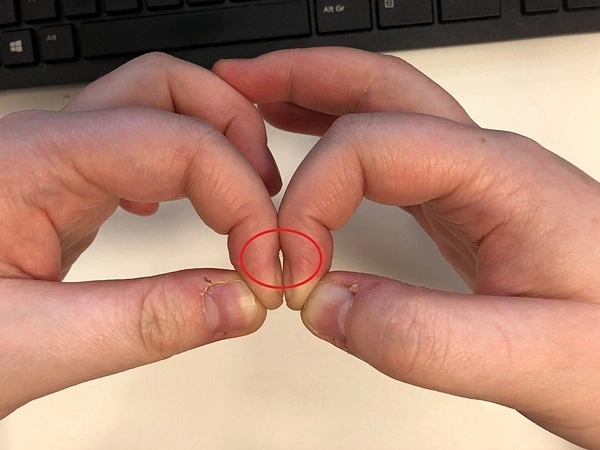
Possible features include:
-
Enlargement of the fingertips
-
A more rounded or bulbous appearance at the ends of the fingers
-
Increased curvature of the fingernails
-
Nails that appear to curve downward around the fingertips
-
A softer or spongier feeling at the nail bed
-
Loss of the normal angle between the nail and surrounding skin
The changes typically develop over time.
If you compare recent photographs of your hands with older photographs and notice a significant difference, that can be useful information to mention to your doctor.
Why You Shouldn't Diagnose Yourself From Your Nails
The internet is filled with photographs showing dramatic examples of clubbing.
The problem is that people naturally have different finger shapes and nail curves.
A person may see a slightly curved nail and immediately worry about cancer when the appearance is completely normal for them.
The opposite can also happen: someone may notice a genuine physical change but dismiss it because they feel otherwise healthy.
That is why a new, persistent change is more important than simply having a particular nail shape.
If you are unsure whether your fingers have changed, a clinician can examine them in person.
What Happens If a Doctor Notices Clubbing?
A doctor will usually consider the person's entire medical history.
They may ask:
-
When did the change begin?
-
Has it progressed?
-
Does it affect both hands?
-
Are there respiratory symptoms?
-
Do you smoke or have a history of smoking?
-
Have you had repeated chest infections?
-
Are there other medical conditions?
-
Are there changes in weight, appetite or energy?
-
Are there cardiovascular or digestive symptoms?
Depending on the circumstances, the doctor may recommend further testing.
This could involve blood tests, chest imaging or other investigations based on the individual's symptoms and risk factors.
The purpose is not simply to look for cancer.
The purpose is to find out what is causing the physical change.
Don't Wait for Symptoms to Become Severe
One reason potentially important symptoms are sometimes overlooked is that people expect serious illness to cause dramatic problems immediately.
But some diseases can develop gradually.
A person might notice a subtle change in their nails months before experiencing significant respiratory symptoms.
That does not mean the nail change itself proves that a serious illness is present.
It simply means that persistent unexplained physical changes deserve attention rather than automatic dismissal.
Early medical evaluation can also provide reassurance when the cause turns out to be harmless.
Smoking History Matters
Smoking remains one of the major risk factors for lung cancer.
If someone has a history of smoking and develops persistent respiratory symptoms or unexplained physical changes, discussing them with a healthcare professional is particularly important.
However, lung cancer can also occur in people who have never smoked.
That is why the absence of a smoking history should not automatically explain away persistent symptoms.
Other factors can contribute to lung cancer risk, including exposure to certain occupational substances, radon and secondhand smoke, as well as age and other individual factors.
Risk varies considerably from person to person.
Pay Attention to Changes, Not Just Individual Symptoms
A useful way to think about health warning signs is to look at patterns.
For example, a newly developed change in the fingertips accompanied by a persistent cough, unexplained weight loss or increasing breathlessness deserves more attention than a naturally curved fingernail that has looked the same for decades.
Similarly, a temporary nail discoloration after an injury is very different from a progressive change affecting multiple fingers.
The combination, duration and progression of symptoms matter.
When Should You Seek Medical Attention?
Make an appointment with a healthcare professional if you notice:
-
New or progressive changes in the shape of your fingertips
-
Increasing curvature of several fingernails
-
Persistent unexplained cough
-
Unexplained shortness of breath
-
Recurrent chest discomfort
-
Repeated respiratory infections
-
Unexplained weight loss
-
Persistent fatigue accompanied by other concerning symptoms
-
Coughing up blood
You should seek urgent medical care for severe difficulty breathing, significant coughing of blood, severe or sudden chest pain, fainting, or other symptoms that could indicate a medical emergency.
Your Fingers Are Not a Diagnosis
It is easy to turn an interesting medical clue into a frightening headline.
But the reality is more nuanced.
Finger clubbing can be associated with certain lung diseases, including some lung cancers, but it is not proof of cancer.
Likewise, having a cough does not automatically mean lung disease, and having unusual-looking nails does not necessarily mean something is wrong with your lungs.
What matters is recognizing meaningful changes and discussing persistent or unexplained symptoms with an appropriate healthcare professional.
Your hands are visible every day, which makes them useful for noticing changes over time. A quick look at your fingertips can be part of paying attention to your overall health—but it should never replace proper medical evaluation.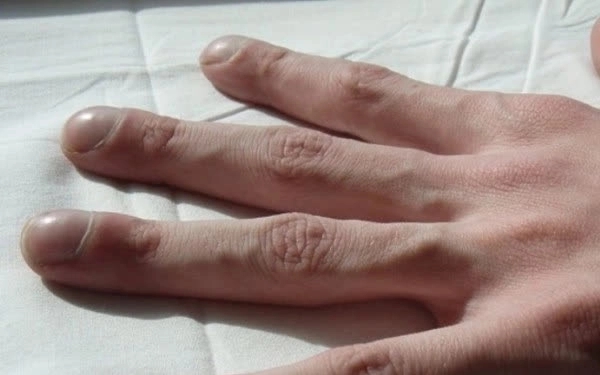
The Takeaway
A persistent cough is not the only physical change worth paying attention to when it comes to lung health.
New enlargement of the fingertips or increased curvature of the nails - particularly when it develops gradually and affects multiple fingers can sometimes be associated with underlying lung or other systemic disease.
But there are many possible explanations, and lung cancer is only one of them.
If your fingers have genuinely changed, especially alongside respiratory symptoms or other unexplained changes in your health, don't try to diagnose yourself from a photograph or online checklist.
Instead, have the change examined by a healthcare professional.
Sometimes the explanation is harmless. Sometimes it points to a condition that needs treatment. Either way, knowing what is actually happening is far more useful than guessing.