3 Early Warning Signs of Cancer in the Neck You Should Never Ignore
Cancer can sometimes develop silently, but there are often early warning signs that can help detect it at an earlier, more treatable stage. Swelling or changes in the neck can be an important indicator of cancer, and early detection can significantly increase the chances of successful treatment.
Here are 3 common signs in the neck that could signal a potential cancer risk.
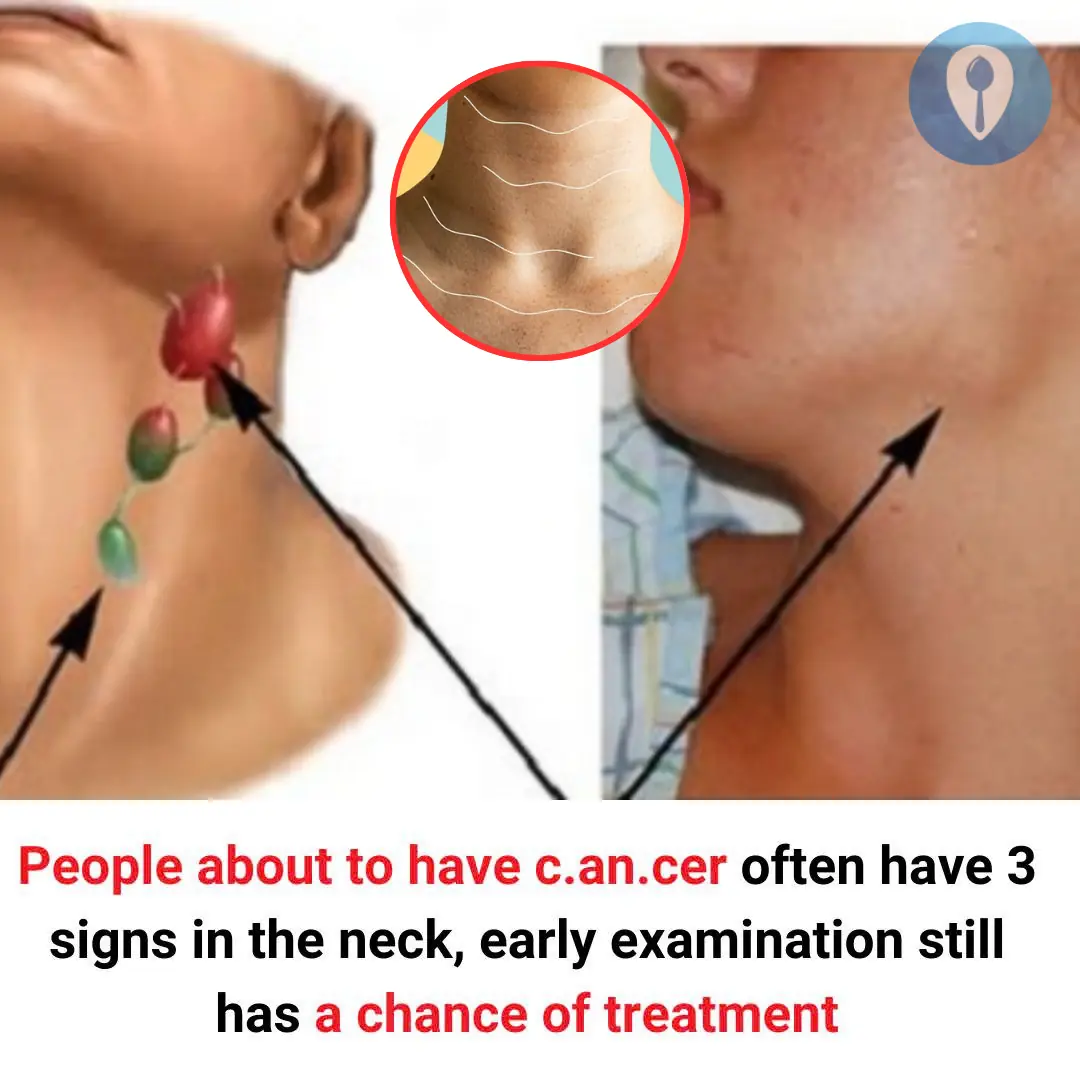
1. Swollen Lymph Nodes (Lumps in the Neck) 🦠
The lymph nodes in your neck act as part of your immune system, and when cancer cells spread (like in lymphoma or throat cancer), they can cause swelling or the formation of painless lumps.
⚠️ What to Watch For?
✔️ Hard, painless lumps that do not go away after a few weeks.
✔️ Lumps that move or feel firm to the touch.
✔️ Swelling in the neck, under the chin, or along the jawline.
👉 If you notice any unusual lumps, consult a healthcare professional. Swollen lymph nodes might indicate infection, but they can also signal cancerous growth.
2. Unexplained Pain or Discomfort in the Neck 💔
Persistent neck pain or discomfort, especially if it doesn't improve with rest, can be a symptom of cancer.
⚠️ What to Watch For?
✔️ Ongoing pain or tightness in the neck that doesn't seem related to any injury.
✔️ Pain radiating to the jaw, throat, or ears.
✔️ Difficulty swallowing or speaking due to discomfort in the neck area.
👉 Chronic, unexplained pain is a red flag that should not be ignored.
3. Visible Changes in the Neck Area 🌱
Any visible changes in the neck, such as changes in the skin or swelling, may indicate something abnormal, including cancer.
⚠️ What to Watch For?
✔️ Thickening or hardening of the skin on the neck.
✔️ Asymmetry, where one side of the neck appears different from the other.
✔️ A bulging vein or unusual swelling on one side.
👉 If you notice any changes, it is crucial to seek an early examination from a doctor. Early detection is the key to effective treatment.
When to See a Doctor?
If you experience any of these symptoms, it is important to seek professional advice:
- Persistent lumps, pain, or changes in the neck area.
- Difficulty swallowing, talking, or breathing.
- Swelling that doesn’t go down after a couple of weeks.
👉 Even if symptoms seem mild or unrelated, it’s always better to be proactive about health and get checked early.
Final Thoughts: Early Detection is Crucial
While these symptoms do not necessarily mean cancer, early detection and intervention can make a huge difference in treatment outcomes.
💡 What Should You Do?
✔️ Keep track of any unusual symptoms in your body and neck area.
✔️ Don’t wait for symptoms to worsen—consult with a doctor for an early diagnosis.
✔️ Regular health checks and self-examinations can help you detect any abnormalities before they become serious.
📢 Share this information with others to help raise awareness about the importance of early cancer detection.
5. Other Warning Signs That May Appear Alongside Neck Changes
A lump or swelling in the neck is not the only symptom that deserves attention.
Depending on the type and location of a disease, cancer affecting the head, neck, thyroid, or lymphatic system may cause several additional symptoms.
These symptoms can develop gradually, and some may initially seem unrelated to the neck.
Recognizing them together can help people understand when a medical examination is necessary.
A Persistent Sore Throat
A sore throat is usually caused by a viral infection, bacterial infection, allergies, or irritation.
Most cases improve within several days.
However, a sore throat that persists for several weeks, particularly without an obvious explanation, should be evaluated.
Some cancers involving the throat, tonsils, or nearby structures may cause ongoing irritation or discomfort.
Pay attention if the soreness:
-
Remains on one side of the throat.
-
Does not improve with usual treatment.
-
Occurs alongside a persistent neck lump.
-
Makes swallowing increasingly uncomfortable.
-
Is accompanied by unexplained changes in your voice.
A persistent sore throat does not automatically indicate cancer. Nevertheless, symptoms that continue or progressively worsen deserve attention.
Hoarseness or Changes in the Voice
Have you noticed that your voice sounds different recently?
Perhaps it has become unusually rough, weak, breathy, or hoarse.
Temporary hoarseness commonly occurs after a cold, excessive talking, smoking, or irritation of the vocal cords.
However, persistent hoarseness can sometimes be associated with cancer of the larynx, also known as the voice box.
The larynx contains the vocal cords, which vibrate to produce sound.
A growth affecting this area may interfere with normal vocal cord movement.
Possible changes include:
-
A consistently raspy voice.
-
Difficulty speaking loudly.
-
A voice that becomes weaker over time.
-
Frequent throat discomfort when speaking.
-
A feeling that something is interfering with the voice.
In adults, unexplained hoarseness lasting more than three to four weeks should be assessed by a healthcare professional, particularly if the person smokes or has other risk factors.
A doctor may recommend an examination of the throat and vocal cords.
Difficulty Swallowing
Difficulty swallowing is medically known as dysphagia.
It may begin as a feeling that food is sticking in the throat.
Some people find that solid foods are more difficult to swallow, while others eventually experience difficulty with liquids as well.
Possible causes include acid reflux, inflammation, neurological conditions, narrowing of the esophagus, and certain cancers.
Cancer affecting the throat, esophagus, or nearby structures may interfere with the normal passage of food.
Watch for:
-
Food repeatedly feeling stuck.
-
Pain when swallowing.
-
Coughing or choking during meals.
-
Unexplained weight loss.
-
Increasing difficulty swallowing over time.
Persistent or progressive swallowing problems should be investigated.
If you cannot swallow saliva, have difficulty breathing, or are choking, seek emergency medical care.
Persistent Ear Pain Without an Ear Infection
Another symptom that may seem unrelated to the neck is ongoing ear pain.
Some structures in the throat and head share nerve pathways with the ear.
As a result, problems affecting the throat, tonsils, tongue, or surrounding tissues can sometimes produce pain that is felt in the ear.
This is known as referred ear pain.