However, when the article does not provide reliable answers, the discussion can quickly move beyond the evidence.
Readers may begin suggesting possible offenses, motives, or personal relationships.
Those suggestions can become increasingly dramatic, even though none of them has been confirmed.
This is how an incomplete story can acquire details that were never part of the original report.
Repetition does not equal confirmation
When the same claim appears on several websites, it may seem more credible.
But if every article traces back to the same unverified source, the apparent agreement may be misleading.
A reliable verification process requires more than counting how many times a headline has been repeated.
It requires checking whether the information comes from independent and trustworthy sources.
In the reported motel case, the available material does not provide enough information to establish the details of the incident.
That limitation should remain clear even if the headline continues circulating.
Chapter 9: The Role of Police Statements and Court Records
Official records can help clarify an incident when they are available.
A police statement may identify the date and location of an arrest, explain the general nature of the investigation, and describe whether charges have been filed.
Court records may provide information about formal allegations, hearings, and later developments.
However, not every record is immediately available.
Some information may be withheld during an investigation. Certain details may be restricted to protect privacy or comply with legal requirements.
A lack of immediate public information does not automatically prove that an incident did not occur.
At the same time, the absence of official confirmation means that readers should avoid treating the report as established fact.
The correct approach is to remain open to new information while maintaining a clear distinction between what is known and what is not.
Chapter 10: What the Story Does—and Does Not—Establish
The headline describes an elderly man's motel arrest as an event drawing public attention.
The article's body, however, offers only a limited account.
It says that a police response reportedly occurred and that an elderly man was allegedly taken into custody.
It does not establish the reason for the response, the nature of the suspected offense, or the outcome of the case.
It also does not provide enough information to identify the people involved.
The story therefore cannot responsibly be expanded into a detailed account of a supposed crime without additional evidence.
A more complete report would need to explain the circumstances in a way that readers could verify.
Until then, the most accurate conclusion is that an online report describes an arrest, but the central facts remain unresolved.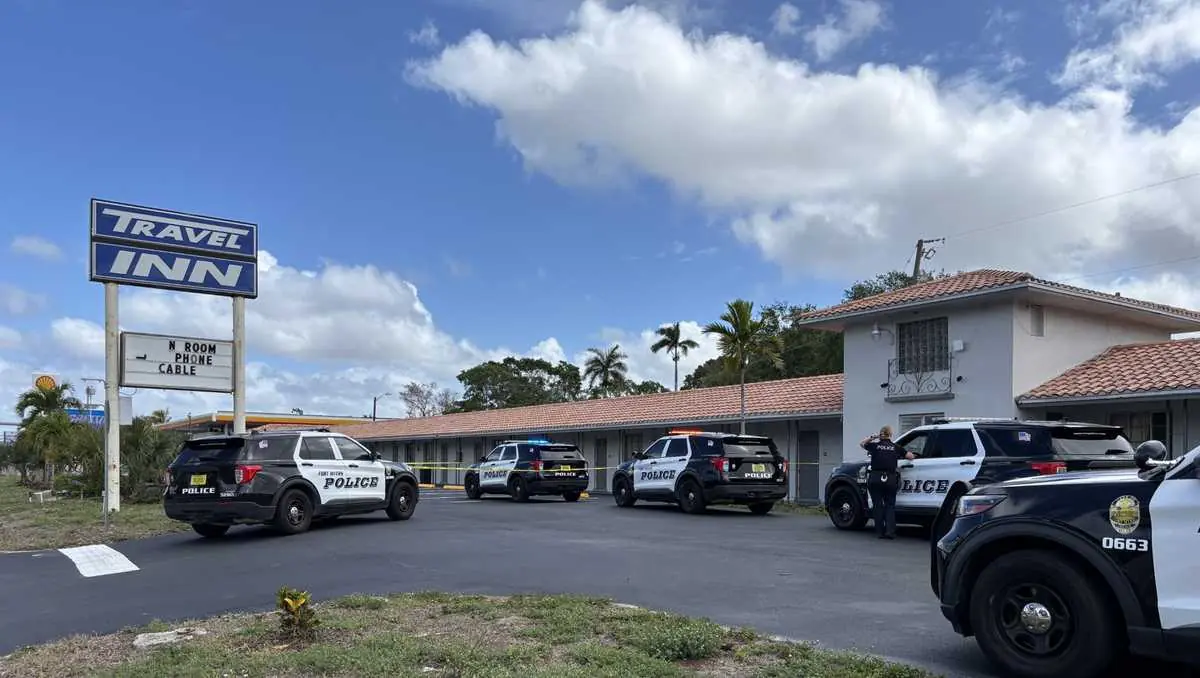
Chapter 11: Why the Missing Details Matter More Than the Headline
A dramatic headline can create the impression that the most important part of a story is already known.
In this case, the headline tells readers that an elderly man was reportedly arrested at a motel.
But the information that would explain the incident is missing.
The reason for the police response is unknown.
The allegation is unknown.
The location is unknown.
The legal outcome is unknown.
Those missing details are not minor gaps. They are the facts that would allow readers to understand the event.
Without them, the headline provides a starting point for inquiry, not a complete explanation.
The public may continue to ask questions, but the answers should come from reliable reporting rather than speculation.
Chapter 12: A Cautious Conclusion
The reported motel arrest has attracted attention because it combines an unexpected police response with an elderly person and a setting that many readers can easily imagine.
Yet the available information remains limited.
The supplied article does not identify the man, the motel, the police department, or the specific allegation. It does not provide a verified account of what happened before officers arrived, and it does not describe the legal outcome.
That means readers should be careful about accepting dramatic interpretations of the story.
An arrest does not establish guilt.
A police presence does not reveal the full circumstances.
And an incomplete headline cannot substitute for evidence.
The most important question remains unanswered: What prompted officers to respond to the motel, and what actually happened before the elderly man was taken into custody?
Until reliable information clarifies those details, the incident should be treated as a report with unconfirmed circumstances.
The story may become clearer if official statements or court records emerge. For now, the responsible approach is to follow the available evidence, respect the people involved, and avoid turning unanswered questions into accusations.