Testing methods have limitations, and the timing of sample collection can influence the results.
For this reason, toxicology findings should be interpreted by qualified forensic professionals rather than by online commentators.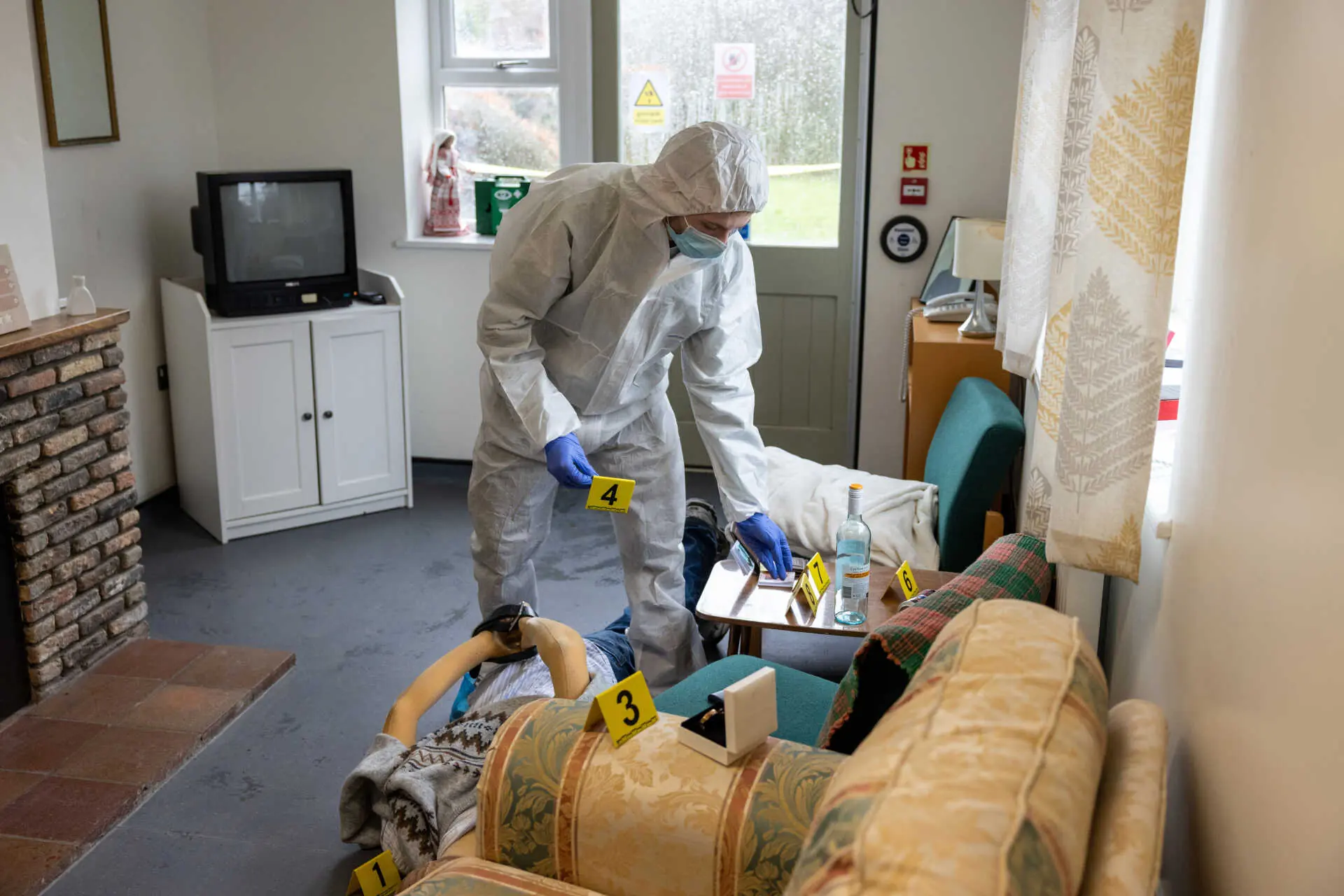
5. Phone Records and Digital Evidence
Digital information can help investigators establish contact between people before and after an incident.
Depending on the legal authority available, investigators may examine relevant messages, call records, location information, and other communications.
Such evidence can help clarify who arranged a meeting, when individuals communicated, and whether anyone requested assistance.
However, digital evidence must also be interpreted carefully.
A message sent at a particular time does not automatically establish where the sender was or what they knew.
The context of the communication matters.
The original article does not provide any verified information about phone records or digital evidence in this particular case.
These are investigative possibilities, not confirmed findings.
6. The Statements of the Companions
The people reportedly accompanying the elderly man could potentially provide important information about the hours before his collapse.
Investigators might need to establish:
-
How they knew the man.
-
Whether they had met him previously.
-
Where the group met.
-
What beverages or food were consumed.
-
Whether anyone brought a drink into the motel.
-
When each person left the room.
-
Whether anyone noticed symptoms or unusual behavior.
The supplied text says that the two young men were identified and were cooperating with authorities.
However, it does not name them, identify the investigating agency, or provide an official statement confirming their cooperation.
The headline and other versions describe the companions differently.
It is therefore not possible to determine their identities, ages, gender, or legal status from the available material.
No person should be treated as responsible for a death simply because they were reportedly present before an emergency.
A witness, companion, person of interest, suspect, and convicted offender are different legal categories.
Responsible reporting must preserve those distinctions.
The Contradiction That Readers Should Not Overlook
There is a significant problem with the way this story has been presented online.
The headline displayed in the supplied screenshot says:
"Elderly man dies inside motel after drinking 'blue' and went two young gir..."
The wording suggests that two young girls or women were involved.
However, the body of the article says that the elderly man arrived with two young men.
The Facebook image repeats the headline's reference to young girls, while the article itself describes young men.
A separate online version published under a similar headline describes two young women who were allegedly seen with the man.
These are not small differences.
The identity and number of people involved can be central to a death investigation.
If different publications cannot agree on whether the companions were men or women, readers have good reason to question how carefully the story was researched.
It is possible that different versions are referring to separate incidents.
It is also possible that an original story has been rewritten, copied, or altered as it circulates.
Without identifiable locations, dates, police departments, and official statements, there is no reliable way to resolve the discrepancy.
The safest editorial approach is not to choose whichever version sounds more dramatic.
Instead, the article should state that the descriptions conflict and that the identities of the companions have not been independently established.
This also protects people who may be incorrectly associated with a serious incident.
A photograph of an elderly man, a motel exterior, and people carrying a stretcher does not prove that the individuals shown belong to the same event.
The supplied image appears to combine several visual elements, including a portrait and an outdoor scene.
There is no verified photographic caption identifying the man or explaining where the photograph was taken.
Consequently, the image should not be used to identify a victim or imply that the people pictured were involved in the reported death.
Why the Absence of an Official Location Matters
One of the most basic details in a crime or sudden-death report is the location.
A report normally identifies at least a city, district, or general area when authorities have released that information.
The supplied article provides none.
It does not identify a country, state, town, street, motel name, police department, or emergency service.
This makes it extremely difficult to verify the story.
There may be several motels with similar layouts and exterior features in different locations.
A photograph of a pink building, a parked vehicle, or a motel entrance cannot reliably establish where an incident occurred.
Without a location, readers cannot easily identify the appropriate police department or search for local reporting.
The absence of a date also creates difficulties.
The screenshot displays an October 7, 2026, publication date, while a similar version appeared online in September 2026 and another version was dated October 6.
Those dates may represent separate publication dates rather than the date of an actual incident.
A story published in October is not necessarily describing an event that happened in October.
This distinction is particularly important when online articles are copied between websites.
A post may be republished with a new date, a shortened headline, or slightly different wording.
The original event, if one exists, may have occurred much earlier.
For readers, the absence of a clearly identified incident date means that the timeline cannot be independently reconstructed.
The article also contains no names of officials, no quoted police spokesperson, no case number, and no publicly available forensic findings.
These omissions do not prove that no incident occurred.
They do mean that the current account falls short of what would normally be expected from a fully verified news report.
Could the Drink Have Been Responsible for the Sudden Death?
This is probably the question that attracts the most attention.
The headline connects the elderly man's death with a beverage described as “blue.” The article also says that investigators were examining the drink to determine whether it contributed to the collapse.
However, a sequence of events is not the same as proof of causation.
If someone drinks something and later becomes unresponsive, the timing may be important. But investigators must establish whether the substance actually caused or contributed to the medical emergency.
There are several broad possibilities that forensic professionals may consider in an unexplained death involving a recent drink.
Accidental Toxic Exposure
An accidental exposure occurs when someone unintentionally consumes a harmful substance.
This could happen if a beverage is contaminated, mislabeled, incorrectly prepared, or mixed with an ingredient that should not be consumed.
Some household and industrial chemicals can cause serious harm if swallowed.
However, there is no evidence in the supplied article that the blue drink contained a chemical contaminant.
That possibility should not be presented as a finding.
An Unexpected Medication Interaction
Another possibility in a general medical investigation is an interaction between alcohol and medication.
Older adults may take several medicines every day, and some can interact dangerously with alcohol.
The National Institute on Alcohol Abuse and Alcoholism identifies several categories of medication that may produce harmful interactions.
These include certain medicines used for anxiety, sleep disorders, pain, allergies, and other medical conditions.
Depending on the combination, the effects may include excessive sedation, impaired coordination, low blood pressure, internal bleeding, or respiratory suppression.
Some interactions can be life-threatening.
However, the motel article does not establish that the man was taking any particular medication.
There is no verified medical history, prescription list, or toxicology report available.
An Underlying Medical Emergency
A sudden death can also occur because of a medical condition unrelated to a beverage.
Heart rhythm disturbances, heart attacks, strokes, pulmonary embolisms, and other serious conditions can develop unexpectedly.
A person may appear relatively well shortly before experiencing a sudden medical emergency.
This is why the timing of a drink cannot establish the cause of death.
A forensic examination must consider whether the person had an underlying condition that could explain the event.
Multiple Contributing Factors
In some cases, a death may involve more than one contributing factor.
An underlying health condition, alcohol, medication, and another substance may interact in complicated ways.
Determining the relative importance of each factor can require extensive toxicological and medical analysis.
For example, a substance may increase the risk associated with an existing medical condition without being the only cause.
The final medical determination may therefore involve more than identifying a single chemical.
Again, these are general investigative possibilities, not explanations confirmed in the motel story.
The only responsible conclusion is that the cause of the reported death remains unverified.
The Warning Signs of a Possible Poisoning or Overdose
Although the details of this particular case are uncertain, the subject raises an important practical issue.
People sometimes fail to recognize when someone is experiencing a potentially life-threatening reaction to an unknown drink, alcohol, or medication.
The first signs may appear relatively mild.
Someone may become unusually sleepy, confused, unsteady, or unable to speak clearly.
In more serious situations, symptoms can progress rapidly.
Warning signs that require immediate attention include:
-
Difficulty breathing or unusually slow breathing.
-
Inability to wake the person.
-
Loss of consciousness.
-
Seizures.
-
Severe confusion or unusual behavior.
-
Repeated vomiting, especially when the person is very drowsy.
-
Blue or gray lips or skin.
-
Collapse or sudden loss of normal responsiveness.
These signs should never be dismissed as ordinary tiredness or simply being intoxicated.
A person who cannot be awakened or is having trouble breathing needs emergency medical assistance immediately.
If an unknown substance may have been consumed, medical professionals and poison specialists should be contacted as soon as possible.
The American Poison Control guidance specifically warns against inducing vomiting after a suspected poisoning.
Trying to make an unconscious or confused person vomit can create additional danger, including choking.