Chapter 1: The Everyday Electrical Habit That Can Put a Home at Risk
Electricity has become so deeply integrated into daily life that most people rarely think about the risks associated with it. Phones charge beside beds, televisions remain plugged in, kitchen appliances operate throughout the day, and extension cords help power devices in rooms where wall outlets are limited.
These routines are convenient, but they can become dangerous when electrical equipment is damaged, overloaded, poorly installed, or used in ways it was not designed for.
The supplied image shows a power strip with visible burn damage and a separate wall socket with a cable apparently on fire. Both scenes illustrate an important warning: electrical overheating can develop into ignition, and a small problem around a plug or cable should never be dismissed.
The accompanying message claims that firefighters are urging people to share the warning because it could save homes and families. Although the exact message cannot be independently attributed to a particular fire department, the underlying advice is supported by official fire-safety guidance.
The U.S. Fire Administration, for example, advises people not to overload outlets or power strips, to replace damaged cords, and to keep electrical cables away from places where they can become pinched or damaged.
Why can a power strip become dangerous?
A power strip provides additional sockets, but it does not create additional electrical capacity. The total amount of electricity supplied through the wall outlet and the connected circuit remains limited.
When several high-power appliances operate through one power strip, the electrical load may exceed what the equipment or circuit is designed to handle.
Excessive current can cause wires and connections to heat up. If the equipment is damaged, poorly rated, or already worn, that heat can damage insulation and create conditions in which an electrical fire may start.
The danger is not determined simply by counting how many plugs are inserted. A strip with several low-power devices may be within its rating, while one high-power appliance can exceed the rating of an unsuitable strip.
People should check the manufacturer's load rating and the electrical requirements of the appliances being connected.
Why ordinary household habits matter
Many electrical hazards do not begin with dramatic sparks or visible flames. They can develop gradually.
A loose connection may generate heat. A damaged cable may expose conductors. A plug that does not fit securely may create poor electrical contact. A power strip hidden beneath clothing or furniture may have limited ventilation.
These problems can remain unnoticed until the equipment becomes hot, begins to smell, or produces smoke.
The Massachusetts Department of Fire Services identifies warning signs such as sparks, buzzing or sizzling sounds, burning odors, overheated plugs, and discolored outlets.
Massachusetts Government+1
The warning signs people should never ignore
Pay attention if you notice:
-
A plug or outlet becoming unusually hot.
-
Brown or black scorch marks around a socket.
-
A burning-plastic smell near an appliance.
-
Crackling, buzzing, or sizzling sounds.
-
Sparks when a plug is connected or disconnected.
-
Cables with cracked, frayed, or exposed insulation.
-
Circuit breakers that trip repeatedly.
-
Lights that flicker or dim when appliances operate.
These signs do not all mean a fire is already starting, but they may indicate a dangerous electrical fault.
If there is smoke, active sparking, or a burning smell accompanied by visible heat or damage, treat the situation seriously. Keep people away and call emergency services if a fire or immediate danger is present. Do not touch damaged electrical equipment.
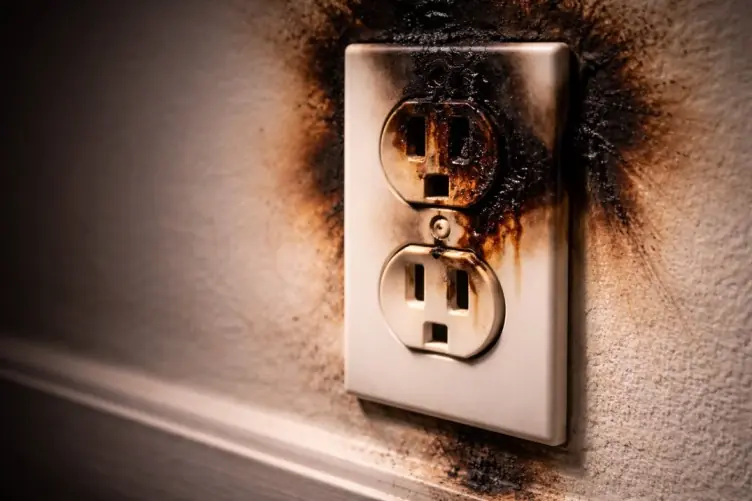
An illustrative image of an overheated power strip. Damaged or smoking electrical equipment should not be used again.
Why sharing accurate fire-safety advice matters
A viral warning can encourage people to inspect their homes, but the information must be accurate. Not every power strip is dangerous, and not every device plugged into an extension lead will cause a fire.
The real concern is unsafe use: exceeding the equipment's rating, connecting multiple strips together, using damaged products, or relying on temporary extension cords as permanent wiring.
A few minutes spent checking cables, plugs, and outlets may reveal a problem before it becomes an emergency.
The most important lesson is simple: electrical equipment should be treated as a safety device, not as something that can be used indefinitely regardless of its condition.
Chapter 2: Five Electrical Mistakes That Can Start a House Fire
Many electrical fires are linked to equipment failures, damaged wiring, or unsafe use of everyday appliances. Some hazards are easy to overlook because they develop behind furniture, beneath rugs, or inside electrical connections.
Here are five common mistakes worth checking in every home.
1. Overloading a power strip
A power strip is designed to provide additional outlets, not unlimited electrical capacity.
Connecting several high-power appliances to one strip can exceed its rated load. The strip, its cable, or the wall circuit may overheat.
Pay particular attention to appliances that generate heat or draw substantial power, such as portable heaters, kettles, irons, microwaves, and air conditioners. These should generally be connected directly to suitable wall outlets according to the manufacturer's instructions and local electrical requirements.
The U.S. Fire Administration specifically advises plugging major appliances directly into wall outlets and never using extension cords with them.
2. Connecting one power strip to another
This practice is often called daisy-chaining. It involves plugging a power strip or extension lead into another one to create more sockets or reach a distant location.
Although it may appear convenient, connecting multiple strips does not increase the capacity of the original wall circuit. It also creates additional connection points that may become loose, damaged, or overloaded.
The Office of the Compliance Workplace Rights describes how interconnected power strips can become overloaded and create a possible fire hazard.
Power Strips and Dangerous Daisy Chains+1
If a room does not have enough outlets, the safer long-term solution is to ask a qualified electrician to assess the circuit and install suitable additional outlets.
3. Using damaged or frayed electrical cords
A cable may look usable even when its outer insulation is cracked or worn.