Damage can occur when cords are repeatedly bent, pulled, crushed by furniture, caught in doors, or exposed to heat. If internal conductors become exposed, the cable may create a risk of electric shock, short circuits, and fire.
Never continue using a cord that has exposed wires, melted insulation, a damaged plug, or signs of overheating.
Do not rely on ordinary adhesive tape as a permanent repair. Remove the damaged item from use and have it replaced or assessed by a qualified professional.
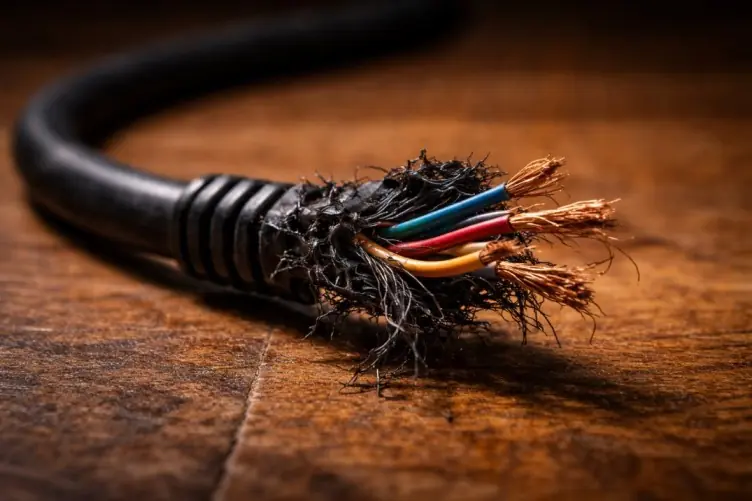
An illustrative close-up of a damaged cable. Exposed wires are a reason to stop using the cord immediately.
4. Hiding cables beneath rugs or trapping them behind furniture
Running extension cords beneath carpets may seem like an easy way to keep a room tidy. However, regular foot traffic can damage the insulation, while the covering can prevent heat from escaping.
Cables squeezed behind heavy furniture can also become pinched or crushed. Over time, this may damage the outer covering or internal conductors.
Keep cables visible where possible, avoid placing heavy objects on them, and use appropriate cable-management products without trapping or damaging the wiring.
The U.S. Fire Administration specifically warns against placing cords where they can be damaged or pinched, including beneath rugs.
5. Ignoring loose, hot, or discolored outlets
A plug that repeatedly falls out of a socket may indicate that the outlet has become worn or damaged.
A loose electrical connection can generate heat. Dark scorch marks, melted plastic, unusual warmth, buzzing, or a burning smell are warning signs that should not be ignored.
Do not keep using an outlet that shows these symptoms. If there is active sparking, smoke, or a fire, move away and call emergency services. Otherwise, arrange an inspection by a qualified electrician before using it again.
The Massachusetts Department of Fire Services identifies overheated plugs, loose outlets, discoloration, and burning odors as potential warning signs of electrical hazards.
A quick inspection can reveal hidden hazards
Walk through the rooms in your home and look at the electrical equipment you use every day. Check the condition of power strips, charging cables, plugs, and visible outlets.
Do not open sockets or attempt electrical repairs yourself. The purpose of a home inspection is to identify obvious problems and arrange professional help—not to work on live wiring.
A few minutes of attention can help prevent unsafe equipment from remaining in use.
Chapter 3: The Warning Signs of an Electrical Fire—and What to Do Immediately
An electrical fire does not always begin with a large flame. Sometimes the first sign is a strange smell, a warm socket, a buzzing sound, or a light that begins to flicker.
Recognizing these clues can help people respond before a small fault becomes a serious emergency.
1. A burning-plastic or fishy smell
A persistent burning smell near an outlet, switch, power strip, or appliance should be treated seriously.
Overheated insulation and plastic components can release unpleasant odors. The smell may be noticeable before visible smoke appears.
Do not assume that the odor will disappear on its own. Stop using the affected equipment and arrange a professional inspection. If there is smoke, visible burning, or immediate danger, evacuate and contact emergency services.
2. Warm or discolored wall outlets
An outlet or plug that feels unusually warm may indicate an electrical problem.
Brown marks, black scorch areas, melted plastic, or discoloration around a socket are especially concerning.
Do not touch a visibly damaged or smoking outlet. Keep people away and do not attempt to pull out a plug if doing so would bring you close to sparks, flames, or exposed wiring.
3. Buzzing, crackling, or sizzling sounds
Electrical outlets and switches should not normally make persistent buzzing, sizzling, or crackling noises.
These sounds may indicate loose connections, arcing, or another electrical fault. Arrange for a qualified electrician to investigate.
If the sound is accompanied by sparks, smoke, or a burning smell, treat it as an immediate hazard.
4. Frequently tripped circuit breakers
A circuit breaker is designed to interrupt electricity when a circuit experiences an unsafe condition, such as an overload or short circuit.
If a breaker trips repeatedly, do not keep resetting it without finding the cause. Repeated trips may indicate that too many appliances are connected, that an appliance is faulty, or that there is a wiring problem.
A qualified electrician can inspect the circuit and determine what needs to be corrected.
5. Flickering or dimming lights
Lights that flicker or dim when appliances start may indicate an overloaded circuit, loose connection, or other electrical issue.
There can be several explanations, so the symptom alone does not prove that a fire is about to start. However, persistent or unexplained changes should be investigated.
The Electrical Safety Foundation International identifies flickering lights, frequently tripped breakers, warm or discolored wall plates, buzzing sounds, and burning odors among possible signs of an overloaded electrical system.
Scorch marks around an outlet can indicate overheating or an electrical fault. Do not continue using a damaged socket.
What should you do if an outlet starts smoking or catches fire?
The first priority is to protect people, not electrical equipment.
-
Move away from the outlet or appliance. Do not touch the plug, cable, power strip, or damaged socket.
-
Warn everyone in the home. Get children, older adults, and anyone who may need assistance moving toward a safe exit.
-
Call the local fire or emergency service. Do not delay if there are flames, smoke, or signs that the fire is spreading.
-
Leave the building if there is danger. Close doors behind you if it is safe to do so, and do not return for belongings.
-
Do not use water on an electrical fire. Water can conduct electricity and create a serious shock hazard.
-
Do not re-enter until emergency personnel say it is safe.
If the electricity can be disconnected at the main breaker without approaching the fire or entering a dangerous area, an adult who knows the system may do so. Never take a risk to reach the electrical panel.
Should you try to extinguish the fire yourself?