Urgent Signs That Indicate a GAS CYLINDER May Explode in 10 Minutes—Run Far Away to Survive, Remember These Signs for Your Family's Safety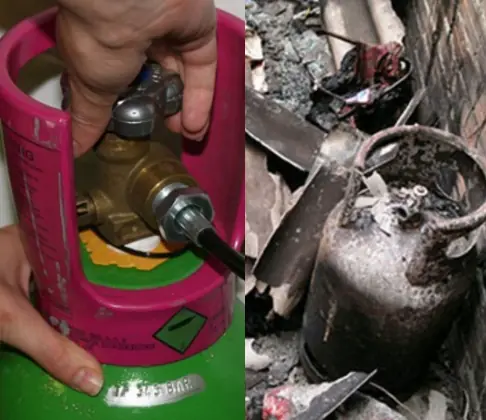
If you don't want your family to fall victim to a gas explosion, house fire, or fatalities as often reported in the news, you should be aware of the signs that a gas cylinder is about to explode. Don't wait until the damage is done to take action:
1. Gas Smell
Even if the stove is not turned on, if you notice a faint or strong gas smell in the room, it could be a sign that the gas valve is broken, the gas pipe is leaking, or the gas hose is improperly connected.
If the gas smell becomes stronger and the room temperature increases, immediately open all windows and use a fan to blow the gas out of the room. Do not turn on lights, fans, or any electrical devices to avoid sparks that could ignite the gas. It is best to turn off the main circuit breaker in the house.
At the same time, apply soap to the suspected leak area and spray water on the cylinder. If you notice the gas cylinder is deformed or swollen, leave the area immediately, as it could easily explode (this is rare) and seek assistance from a repair technician.
2. Noise from the Flame
If you hear a "hissing" sound while cooking, it could mean gas is leaking or the air intake or flame nozzle is misaligned, or the flame exit is clogged. You should turn off the stove and shut off the gas valve immediately to prevent an explosion or fire.
If adjusting the nozzle and cleaning the exit doesn’t stop the sound, call a technician to inspect it.
3. Red Flame
If the flame turns red shortly after replacing the gas cylinder, it may be due to impurities or water mixed with the gas, which compromises its quality. Your gas cylinder could be from an unregulated source that does not meet safety standards, such as expired cylinders or substandard gas quality. To ensure safety, avoid using gas from unreliable stores and switch to reputable suppliers.
Also, a red flame can cause the bottom of the pots to turn black quickly, affecting cooking and cleaning.
Common Gas Explosion Causes:
-
Gas Hose Connection: The hose connecting the gas cylinder to the stove is the most common cause of gas explosions. Made of rubber, the hose may leak over time or become damaged by twists, falling oil, or rodent bites.
To ensure safety, purchase genuine gas hoses, inspect them regularly, and avoid twisting or tangling them. Replace the hose as recommended by the manufacturer.
-
Faulty or Loose Valve Seals: If the valve or joints between the hose, cylinder, and stove are loose, this can also lead to a gas leak.
In this case, inspect the connection between the regulator valve and the cylinder or hose using soapy water. Replace the valve if it is old or damaged and tighten any loose connections. -
Improper Gas Shutdown: Some people may turn off the stove before closing the gas valve, unaware that gas may still be present in the pipes. Others may close the gas cylinder but leave the stove on, causing gas to leak out.
The correct process is to close the gas valve, wait for the flame to consume any remaining gas in the pipe, and then turn off the stove. -
Negligence While Cooking: When using a gas stove, avoid direct wind blowing at the stove. Do not place paper, cloths, or plastic bottles near the stove to prevent them from catching fire. Never store insecticides near the flame or spray them under or near the stove when it's on.
An avoidable mistake is leaving the stove unattended while cooking. Many people forget the stove is on, causing the pot to burn, wind to blow, or water to spill over, extinguishing the flame while gas continues to leak without being ignited.
For safety, place the gas cylinder at least 1–1.5 meters away from the stove in a well-ventilated area where you can smell any gas leaks.
-
Old or Poor-Quality Gas Cylinders and Stoves: Gas explosions are rare with quality cylinders, except for cases where illegal refills occur or when cylinders are past their expiration date but still being reused. Stove explosions are also uncommon, but old, rusted, dirty stoves with misaligned burner plates can cause gas leaks.
To ensure safety, buy gas cylinders and stoves from reputable brands. Regularly clean the stove to save gas and detect any issues.