For millions of people, this familiar experience is simply acid reflux. But what happens when the symptoms keep returning? What if swallowing gradually becomes more difficult, food seems to get stuck in the throat, or unexplained weight loss begins to occur?
These changes may have explanations other than cancer. However, in some cases, persistent symptoms that resemble ordinary acid reflux can be associated with esophageal cancer, a disease that develops in the tube connecting the throat to the stomach.
One of the challenges with esophageal cancer is that its early symptoms can be subtle. Some people initially experience heartburn, indigestion, or mild difficulty swallowing. Because these problems are common, they may be dismissed as routine digestive discomfort.
Unfortunately, esophageal cancer can progress before it produces obvious warning signs. Recognizing persistent or worsening changes is therefore important, particularly for people with known risk factors.
This does not mean that every person with heartburn should fear cancer. Acid reflux is extremely common, and most people who experience it do not have esophageal cancer. The key is understanding which symptoms deserve medical attention, how the disease develops, and why certain changes should never be ignored.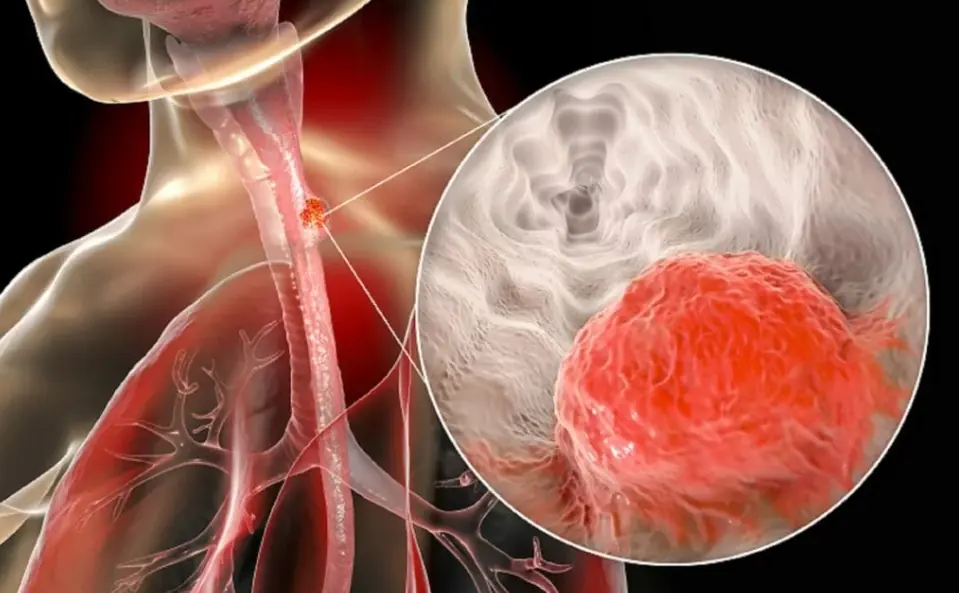
Chapter 1: Why Esophageal Cancer Can Be Mistaken for Acid Reflux
To understand why esophageal cancer can go unnoticed, it helps to understand how the esophagus works.
The esophagus is a muscular tube that carries food and liquids from the mouth to the stomach. When you swallow, coordinated muscle contractions push food downward. At the lower end of the esophagus is a ring of muscle called the lower esophageal sphincter. It normally opens to allow food into the stomach and then closes to help prevent stomach contents from flowing backward.
When this barrier does not function properly, stomach acid and digestive contents can move into the esophagus. This is known as gastroesophageal reflux.
Occasional reflux is common. However, when it happens frequently and causes troublesome symptoms or complications, it may be diagnosed as gastroesophageal reflux disease, commonly called GERD.
The connection between acid reflux and esophageal cancer
Long-standing GERD is an important risk factor for one particular type of esophageal cancer: esophageal adenocarcinoma.
Repeated exposure to stomach acid can irritate and damage the lining of the lower esophagus. In some people, this leads to a condition called Barrett's esophagus.
With Barrett's esophagus, the normal cells lining the lower esophagus are replaced by cells resembling those found in the intestinal lining. This change is called intestinal metaplasia.
Barrett's esophagus is not cancer. Most people with the condition will not develop esophageal cancer. However, it increases the risk of esophageal adenocarcinoma, particularly when abnormal cellular changes known as dysplasia develop.
There are two major types of esophageal cancer:
-
Esophageal adenocarcinoma: Often develops in the lower part of the esophagus and is associated with conditions such as chronic GERD and Barrett's esophagus.
-
Esophageal squamous cell carcinoma: Develops from the flat cells lining the esophagus and is more strongly associated with tobacco use, heavy alcohol consumption, and certain other risk factors.
These two cancer types have different patterns of risk and distribution around the world.
Why early symptoms are easy to overlook
The esophagus can accommodate certain changes without immediately producing dramatic symptoms.
A small tumor may not initially interfere significantly with the passage of food. As the tumor grows, however, it can narrow the passage and make swallowing increasingly difficult.
At first, someone may notice only occasional discomfort when eating solid food. They might assume they swallowed too quickly or did not chew properly.
Over time, the problem may become more frequent. Bread, meat, or other solid foods may feel as though they are getting stuck. Eventually, even softer foods or liquids may become difficult to swallow.
This gradual progression is one reason people sometimes delay seeking medical attention.
The most important distinction is not whether a symptom resembles reflux. It is whether the symptom is persistent, progressive, unusual for that person, or accompanied by other warning signs.
Chapter 2: 10 Warning Signs That May Be Mistaken for Ordinary Digestive Problems
Esophageal cancer does not produce exactly the same symptoms in everyone. Some people experience several changes, while others initially notice only one.
The following symptoms are not proof of cancer. Many have common and treatable causes. However, persistent or worsening symptoms should be evaluated by a healthcare professional.
1. Persistent Heartburn That Does Not Improve
Heartburn is one of the most recognizable symptoms of acid reflux.
It usually causes a burning sensation behind the breastbone, sometimes moving upward toward the throat. It may become worse after eating, bending over, or lying down.
Many people experience occasional heartburn and manage it with lifestyle changes or over-the-counter medications.
However, persistent heartburn that continues despite appropriate treatment deserves further evaluation.
Esophageal cancer can sometimes cause discomfort that resembles reflux because a tumor may irritate or obstruct the esophagus.
It is important to understand that heartburn alone is not a reliable indicator of cancer. Most people with heartburn do not have the disease.
Nevertheless, a new pattern of symptoms, particularly in someone with long-standing GERD or Barrett's esophagus, should not be ignored.
If heartburn becomes progressively worse, occurs alongside difficulty swallowing, or is accompanied by unexplained weight loss, seek medical advice.
2. Difficulty Swallowing Food
Difficulty swallowing is medically known as dysphagia and is one of the most important warning signs of esophageal cancer.
In the early stages, a person may feel that solid foods take longer than usual to move down the throat.
Bread, meat, rice, or other foods may seem to stick in the chest after swallowing. Some people need to drink water to help food pass.
As the disease progresses, the esophagus may become increasingly narrowed, making swallowing more difficult.
Initially, the problem may affect only solid foods. Later, softer foods and even liquids may become difficult to swallow.
This progression deserves particular attention.
Dysphagia can also result from benign conditions, including GERD-related strictures, esophageal rings, inflammation, and certain muscle disorders.