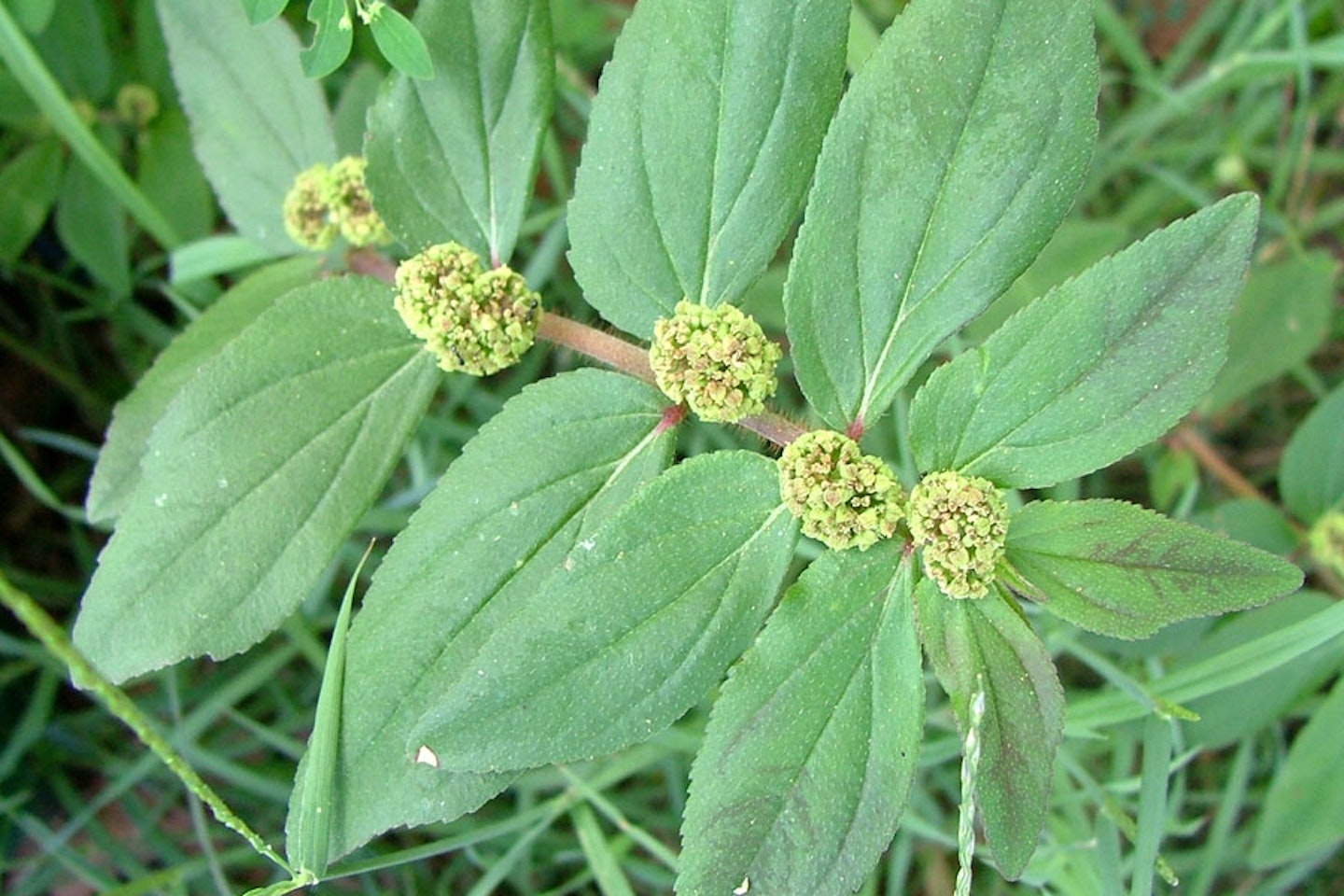
Euphorbia hirta, commonly known as the asthma-plant, is a small annual herb that has held an important place in traditional medicine
systems across Asia, Africa, and parts of the Americas for centuries. Despite its modest appearance, this plant has been widely valued for its
therapeutic properties, especially in treating respiratory disorders. Long before modern pharmacology emerged, local healers relied on
Euphorbia hirta as a natural remedy for asthma, coughs, bronchitis, gastrointestinal issues, skin conditions, and infections.
Today, Euphorbia hirta continues to attract scientific interest due to its rich phytochemical profile and broad spectrum of biological activities.
This article provides a comprehensive overview of the plant, its traditional uses, preparation methods, and modern applications, while also
addressing safety considerations.
Botanical Description and Distribution
Euphorbia hirta belongs to the family Euphorbiaceae. It typically grows close to the ground, reaching a height of 30–50 cm. The plant is
characterized by:
-
Slender, reddish or purplish hairy stems
-
Opposite, oval-shaped leaves with serrated edges
-
Small yellowish or pinkish flowers clustered in leaf axils
-
A milky latex that is released when the plant is broken
The plant thrives in warm climates and is commonly found along roadsides, open fields, gardens, and waste areas. It is widely distributed in
tropical and subtropical regions, including Southeast Asia, India, China, Africa, Australia, and Latin America. Because of its resilience and rapid
growth, Euphorbia hirta is often considered a weed, though its medicinal value is far from insignificant.
Phytochemical Composition
The medicinal potential of Euphorbia hirta is largely attributed to its diverse phytochemical constituents. Studies have identified several
bioactive compounds, including:
-
Flavonoids (such as quercetin and kaempferol)
-
Tannins
-
Alkaloids
-
Saponins
-
Phenolic acids
-
Terpenoids
These compounds are known for their antioxidant, anti-inflammatory, antimicrobial, bronchodilatory, and antispasmodic properties. The
synergistic action of these phytochemicals explains why Euphorbia hirta has been effective in treating multiple ailments in traditional
medicine.
Traditional Uses in Respiratory Disorders
Asthma and Bronchial Conditions
The most well-known traditional use of Euphorbia hirta is in the management of asthma, which is why it earned the name asthma-plant. In
many cultures, the whole plant or its aerial parts are boiled to make herbal teas or decoctions. These preparations are believed to:
-
Relax bronchial muscles
-
Reduce airway inflammation
-
Ease breathing difficulties
-
Suppress persistent coughing
Traditional healers often prescribed Euphorbia hirta for chronic asthma, bronchitis, and wheezing, particularly in children and the elderly. Its
bronchodilatory effect has been supported by pharmacological studies, which suggest that the plant helps reduce bronchial spasms.
Coughs and Upper Respiratory Infections
Euphorbia hirta has also been used to treat dry and productive coughs, colds, and mild respiratory infections. Decoctions are commonly taken
warm to soothe the throat, reduce irritation, and help expel mucus from the lungs.
Gastrointestinal Applications
In traditional medicine, Euphorbia hirta is frequently used to address digestive disorders. Its applications include:
-
Diarrhea and dysentery: Due to its astringent properties, the plant is believed to reduce intestinal secretions and control excessive bowel movements.
-
Stomach pain and cramps: The antispasmodic effects help relieve abdominal discomfort.
-
Intestinal parasites: In some regions, Euphorbia hirta has been used as a mild anthelmintic to expel worms.
Typically, leaves are boiled in water, and the resulting decoction is consumed in small doses.
Antimicrobial and Antiviral Uses
Traditional healers have long recognized the plant’s ability to combat infections. Euphorbia hirta has been applied both internally and
externally for microbial conditions.
-
Bacterial infections: Decoctions are used to treat urinary tract infections, typhoid-like symptoms, and gastrointestinal infections.
-
Viral conditions: In folk medicine, Euphorbia hirta has been used as a supportive remedy during viral fevers, including dengue, particularly to help stabilize platelet counts.
-
Fungal infections: Poultices made from crushed leaves are applied to fungal skin infections and ringworm.
Modern research has confirmed antimicrobial activity against several bacterial and fungal strains, lending scientific credibility to these
traditional practices.
Skin and Wound Care
Topical application is another major area of traditional use. The fresh plant juice or crushed leaves are applied directly to the skin to treat:
-
Minor wounds and cuts
-
Boils and abscesses
-
Eczema and rashes
-
Warts and insect bites
The plant’s antimicrobial and anti-inflammatory properties help prevent infection and promote faster healing. However, the milky latex must
be used cautiously, as it can cause skin irritation in sensitive individuals.
Anti-inflammatory and Pain-Relieving Properties
In traditional systems, Euphorbia hirta has been used to relieve inflammation and pain associated with:
-
Joint pain and arthritis
-
Muscle aches
-
Swelling due to injury
Herbal poultices or warm compresses made from the plant are applied to affected areas to reduce pain and inflammation. The presence of
flavonoids and phenolic compounds plays a significant role in these effects.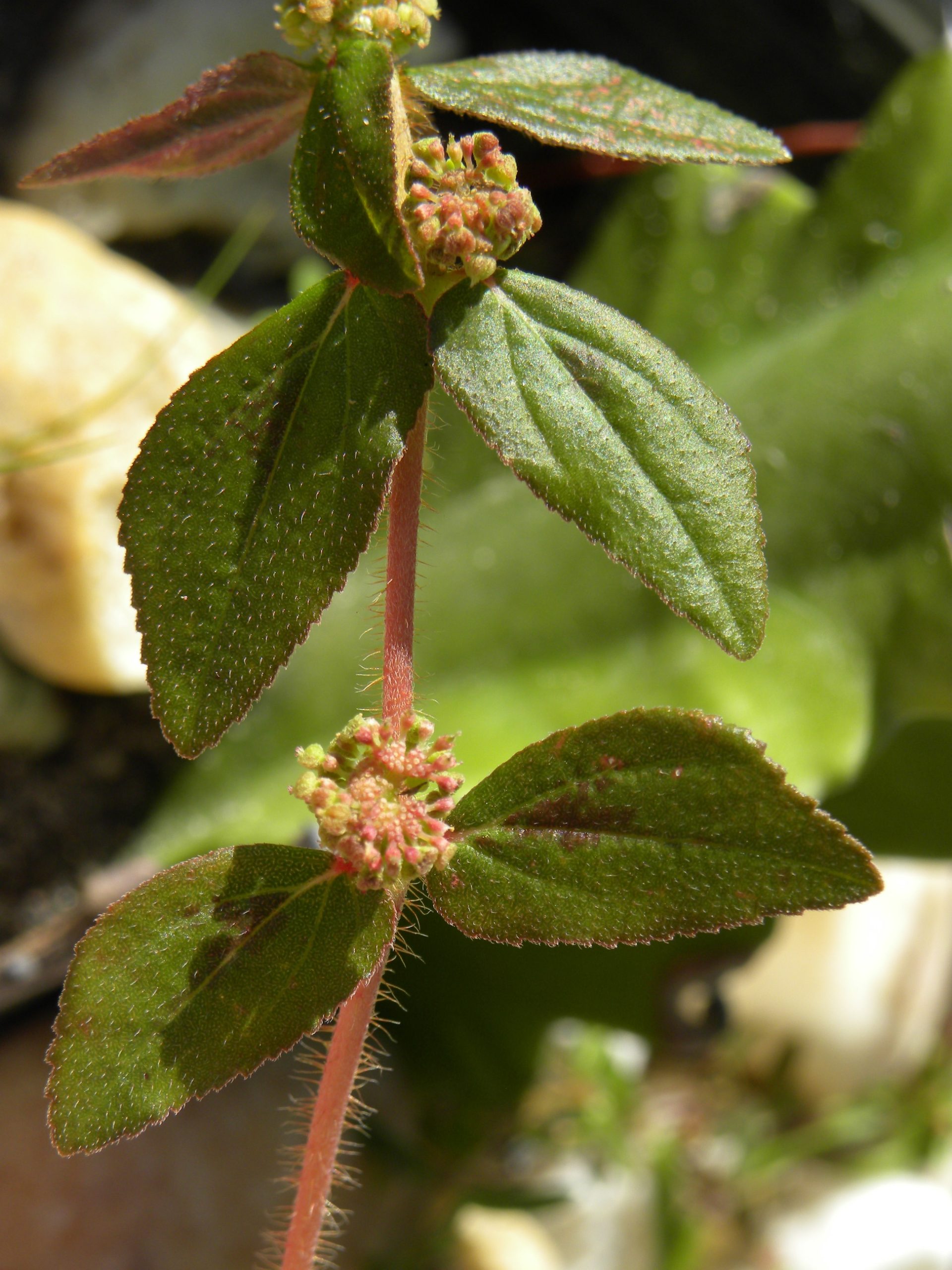
Use in Female and Reproductive Health
Some traditional practices include the use of Euphorbia hirta in managing female reproductive health issues. These uses vary widely by region
and culture and include:
-
Regulation of menstrual flow
-
Relief from menstrual cramps
-
Postpartum care
It is important to note that such applications are based on traditional knowledge and should be approached with caution, as scientific
evidence in this area remains limited.
Preparation Methods in Traditional Medicine
Euphorbia hirta is prepared in several forms depending on the condition being treated:
1. Decoction – Boiling fresh or dried plant parts in water; commonly used for respiratory and digestive ailments.
2. Infusion (herbal tea) – Pouring hot water over leaves and stems; used for mild coughs and colds.
3. Poultice – Crushing fresh plant material and applying it externally to skin conditions or wounds.
4. Plant juice or latex – Used sparingly for topical applications such as warts or insect bites.
Dosage is typically low, as traditional practitioners emphasize moderation to avoid adverse effects.
Modern Research and Pharmacological Interest
In recent decades, Euphorbia hirta has been the subject of numerous scientific studies. Research has explored its:
-
Bronchodilatory and anti-asthmatic effects
-
Antioxidant capacity
-
Anti-inflammatory activity
-
Antimicrobial and antiviral potential
While laboratory and animal studies have produced promising results, clinical trials in humans are still limited. As a result, Euphorbia hirta is
often considered a complementary or supportive remedy rather than a replacement for conventional medical treatment.
Safety, Toxicity, and Precautions
Despite its long history of use, Euphorbia hirta is not entirely risk-free. Important safety considerations include:
-
The milky latex can be irritating to the skin and eyes
-
Excessive internal consumption may cause nausea, vomiting, or diarrhea
-
Pregnant and breastfeeding individuals should avoid using the plant without medical guidance
-
People with chronic conditions or those taking medication should consult a healthcare professional before use
Traditional knowledge emphasizes correct identification, proper preparation, and controlled dosage to minimize risks.
Cultural and Ethnomedicinal Significance
Euphorbia hirta is deeply embedded in the ethnomedicinal traditions of many communities. In rural areas, the plant represents accessible
healthcare, especially where modern medical facilities are limited. Knowledge about its uses has been passed down orally through
generations, reflecting a close relationship between humans and their natural environment.
Conclusion
Euphorbia hirta, or the asthma-plant, is a powerful example of how traditional medicine harnesses the therapeutic potential of nature. From
treating asthma and respiratory disorders to addressing infections, digestive issues, and skin conditions, this humble herb has served as a
versatile remedy across cultures for centuries.
Modern scientific research increasingly supports many of its traditional applications, particularly its anti-asthmatic, antimicrobial, and anti-
inflammatory properties. However, responsible use is essential. While Euphorbia hirta holds significant promise, it should be used with caution
and ideally under professional guidance, especially in modern clinical contexts.
As interest in herbal and natural medicine continues to grow, Euphorbia hirta stands as a bridge between ancient wisdom and contemporary
science - small in size, yet substantial in medicinal value.