A cute illustration shows a woman soaking in a tub dotted with cloves. Beside it, a close-up of dried cloves in a wooden spoon signals the ingredient behind the trend. The bold caption at the bottom—“Every woman should know that clove has the power to…”—is classic social-media framing: a promise of a simple, natural remedy that can transform feminine health.
Cloves (the dried flower buds of Syzygium aromaticum) have a long history in traditional medicine and cooking. They contain aromatic compounds—most famously eugenol—that give cloves their strong smell and warming sensation. In lab settings and some clinical contexts, clove components have shown antimicrobial and anti-inflammatory properties. But translating that into safe, effective “clove baths” or intimate washes requires more caution than most viral posts mention.
Why some women try clove baths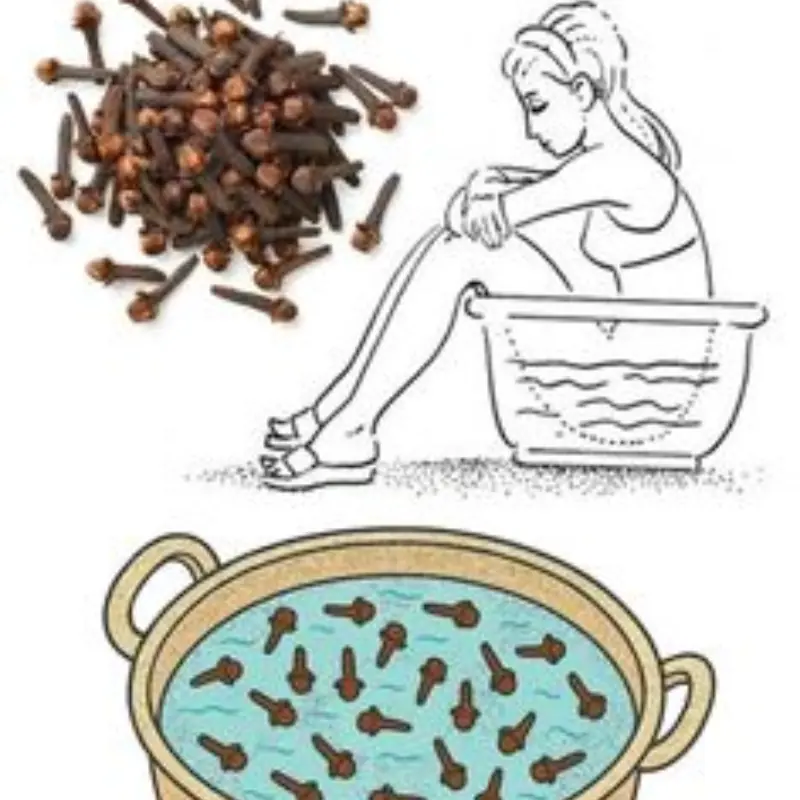
Online, clove-infused water is commonly promoted for:
-
Reducing body odor or “freshening” the intimate area
-
Soothing itching or mild irritation
-
Supporting vaginal health or balancing “pH”
-
Easing cramps or pelvic discomfort (less commonly)
-
Improving skin through a fragrant soak
The appeal is understandable. A warm bath feels comforting, and cloves smell clean and spicy. If you’ve had mild odor after sweating, or skin irritation from tight clothing, a soak can seem like a natural reset.
What cloves can realistically do
1) Provide a pleasant scent and a warming sensation
Cloves are highly aromatic. In bath water, that fragrance may temporarily mask odor on the skin—similar to any scented soak. Some people also enjoy the warming feel of clove’s natural compounds.
2) Offer mild antimicrobial effects—on the skin
Eugenol and other clove compounds can inhibit some microbes in controlled conditions. That may help on external skin in very mild situations (for example, sweat-related odor on the body). However, “antimicrobial” does not automatically mean “safe to use anywhere,” especially on delicate mucous membranes.
3) Calm minor inflammation for some people
Clove has been studied for anti-inflammatory potential. In a diluted soak, it may feel soothing—similar to other warm herbal baths—particularly if discomfort is due to dryness, shaving irritation, or friction.
What clove baths cannot do
This is where the viral claims often go too far.
Clove baths do not “detox” the vagina, “tighten” it, or permanently change its pH in a healthy way. The vagina is self-cleaning and maintains its own microbiome. Using strong herbs, soaps, or disinfecting solutions inside the vagina can disrupt the natural balance and potentially increase the risk of irritation or infection.
Clove baths also cannot treat infections such as bacterial vaginosis, yeast infections, or sexually transmitted infections. If there is persistent odor, unusual discharge, burning, pelvic pain, or bleeding, the safest step is medical evaluation—not home remedies.
The biggest risk: irritation and burns
Clove is potent. Eugenol is a strong compound, and concentrated clove oil can irritate skin and cause a burning sensation—especially on sensitive areas. Even whole cloves steeped too strongly can make water “hot” in a way your skin may not like.
Signs you should stop immediately:
-
stinging, burning, or worsening itch
-
redness, swelling, or rash
-
increased dryness or peeling
-
new discharge or worsening odor
If symptoms persist, see a clinician—don’t keep trying stronger mixtures.
If you still want to try it, do it safely
If your goal is a relaxing soak and you have no signs of infection, here are safer guidelines:
-
External use only. Do not douche or introduce clove water internally.
-
Keep it dilute. Use a small handful of whole cloves steeped briefly, then strain. The water should smell pleasant, not sharp or “spicy hot.”
-
Patch test first. Try it on a small area of skin (like your forearm) to check for irritation.
-
Limit time. 10–15 minutes is plenty.
-
Skip if pregnant or postpartum without guidance. Sensitive tissue and changing hormones can increase irritation risk.
-
Avoid if you have eczema, allergies, or very sensitive skin.
-
Never use essential clove oil directly in bath water unless properly diluted with a carrier and used under professional guidance (undiluted essential oils can cause burns).
Better, evidence-based ways to stay comfortable
If your concern is odor or irritation, these basics are often more effective than trending remedies:
-
Wear breathable underwear and change out of sweaty clothes quickly
-
Wash externally with warm water (and mild, fragrance-free cleanser if needed)
-
Avoid scented sprays, harsh soaps, and internal cleansing products
-
If itching or discharge persists, get checked—treating the right cause matters
The takeaway
Cloves are a powerful spice with real bioactive compounds. A mild, diluted clove bath may be a comforting, aromatic soak for the body and external skin. But the phrase “Every woman should know clove has the power to…” can be misleading when it implies clove water is a cure-all for intimate health.