The family was not simply trying to identify an object. They were trying to understand whether something had entered the bed and caused discomfort.
This explains why everyone took the investigation seriously, at least initially.
Nobody wanted to overlook a genuine problem.
However, the longer they examined the object, the more obvious it became that they might be approaching the mystery from the wrong direction.
Perhaps the answer was not connected to insects at all.
Perhaps the object had nothing to do with the mattress, the bedroom, or even the nighttime environment.
It might have come from something much more familiar.
The Question Nobody Had Thought to Ask
After several unsuccessful attempts to identify the object, one family member asked a remarkably simple question.
"What did we eat for dinner last night?"
For a moment, everyone went quiet.
It seemed like an unusual question in the middle of an investigation involving a suspected insect or mysterious creature.
But then the family began thinking about the previous evening.
They remembered that they had eaten cooked chicken.
Suddenly, the tiny brown object seemed a little less mysterious.
Its color, texture, and irregular shape appeared consistent with a dried fragment of food.
Could a small piece of chicken have become trapped in someone's clothing or bedding without anyone noticing?
It was a surprisingly ordinary possibility.
The family had been concentrating so heavily on insects and other explanations that nobody had considered the simplest connection: something from dinner might have followed someone into the bedroom.
The discovery did not happen because someone used an expensive tool or performed a complicated examination.
It began with a basic question about what had happened earlier that day.
And that question changed the entire atmosphere in the room.
The Chicken Connection
According to the account, the family began to suspect that the object was a dried piece of food, possibly a fragment of chicken left over from the previous meal.
The idea made increasing sense as they considered its appearance.
Cooked chicken can leave behind small pieces of skin, meat, or browned material that become firmer as they cool and dry.
Depending on how the food was prepared, these fragments may have irregular shapes and darkened surfaces.
A tiny piece can also become difficult to recognize when separated from the meal it originally came from.
Imagine a small fragment falling onto clothing after dinner.
Perhaps it becomes trapped in a fold of fabric. Perhaps it remains unnoticed while someone moves around the house. Later, when that person changes position in bed, the hardened fragment presses against the skin.
The result could be an uncomfortable sensation that feels surprisingly similar to something sharp touching or scratching the body.
This explanation is consistent with the story, although the available account does not establish a laboratory-confirmed identification of the object.
That distinction is important.
The family apparently recognized the possibility that the fragment came from their chicken dinner, and the mystery began to make sense.
The person who had been convinced that something was biting their skin now had a much more ordinary explanation to consider.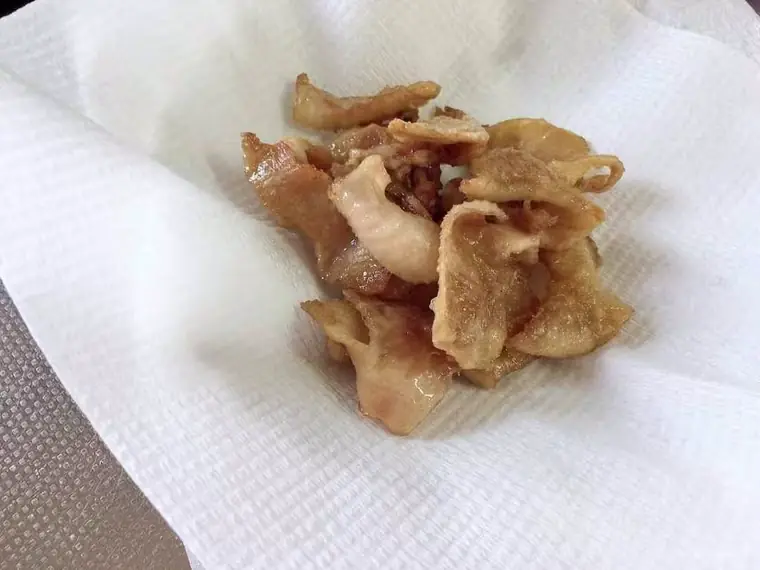
From Fear to Laughter
The atmosphere changed almost immediately.
Only minutes earlier, the family had been examining the object with serious expressions.
Now, the same object seemed almost ridiculous.
The person had woken everyone up because of a possible insect, only for the leading explanation to turn out to be a forgotten piece of dinner.
The family began laughing.
It was the kind of laughter that follows an unnecessary scare, especially when everyone realizes that the situation may have been far less dramatic than initially imagined.
The tiny brown fragment had become the unexpected star of the night.
The person who had been frightened was now facing a different problem: explaining why the entire household had been summoned to investigate something so ordinary.
Yet the embarrassment did not erase the original experience.
The sensation had been real.
The sudden awakening had been real.
The confusion and fear had also been real.
Only the explanation had changed.
And that is what makes the story memorable.
The mystery was not solved by discovering a dangerous creature. It was apparently solved by remembering what the family had eaten only a few hours earlier.
But there was still an important question worth exploring.
Why can such a small and harmless sensation feel so frightening when it happens during sleep?
And how can people distinguish a simple household mystery from a genuine problem involving insects or skin irritation?
Chapter 3: Why the Brain Can Turn a Tiny Sensation Into a Terrifying Experience
The most interesting part of this incident may not be the small piece of chicken itself.
It is how quickly the situation changed from an ordinary nighttime interruption into something that felt genuinely frightening.