Understanding the progression of liver disease helps explain why doctors pay attention to certain symptoms.
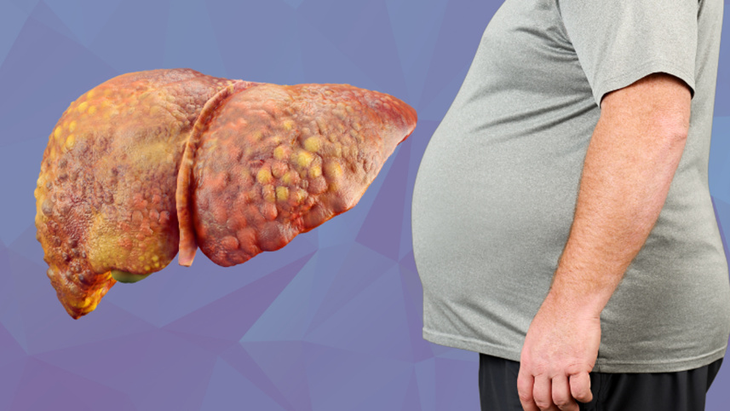
The earliest stage may involve fat accumulation in the liver.
For some people, this remains relatively stable.
For others, ongoing metabolic stress can contribute to inflammation and liver-cell injury.
Over time, repeated injury may stimulate the formation of scar tissue.
This process is known as fibrosis.
Fibrosis can range from mild to advanced.
If significant fibrosis progresses, the liver's architecture can become increasingly distorted.
Eventually, some people develop cirrhosis.
Cirrhosis can interfere with the liver's ability to perform its normal functions and can lead to complications affecting multiple parts of the body.
That is why identifying liver disease before advanced scarring develops is so important.
What Happens When Cirrhosis Develops?
Cirrhosis does not happen overnight.
It usually develops after prolonged liver injury.
As scarring increases, blood has more difficulty flowing normally through the liver.
This can contribute to a condition called portal hypertension, in which pressure increases in the portal venous system.
Portal hypertension can contribute to fluid accumulation in the abdomen, known as ascites.
It can also contribute to swelling in the lower extremities.
At this stage, swelling may be accompanied by other signs of advanced liver disease.
These can include:
-
Abdominal swelling
-
Yellowing of the skin or eyes
-
Easy bruising
-
Significant fatigue
-
Loss of appetite
-
Muscle loss
-
Confusion or changes in alertness
-
Dark urine
-
Pale stools
-
Itching
Not everyone develops all of these symptoms.
And some can occur for reasons unrelated to liver disease.
Foot Swelling Has Many Other Causes
This is one of the most important points to remember.
Swollen feet are common and have many possible causes.
For example, edema can occur because of:
Prolonged sitting or standing
Remaining in one position for hours can cause fluid to accumulate in the lower legs.
Venous insufficiency
When veins have difficulty returning blood to the heart, fluid can accumulate in the legs and ankles.
Heart disease
Certain heart conditions can cause fluid retention and swelling in the lower extremities.
Kidney disease
The kidneys help regulate fluid and electrolyte balance. Kidney problems can therefore contribute to edema.
Certain medications
Some blood-pressure medications, hormonal medications, steroids, and other drugs can cause swelling.
Injury or inflammation
An injured foot or ankle can become swollen because of local inflammation.
Blood clot
A deep vein thrombosis can cause swelling, often affecting one leg more than the other, and can require urgent medical evaluation.
Because so many conditions can produce similar symptoms, it is not possible to determine the cause simply by looking at swollen feet.
When Swelling Deserves More Attention
Persistent swelling deserves more attention when it is:
-
New
-
Getting progressively worse
-
Present without an obvious explanation
-
Associated with abdominal swelling
-
Associated with yellowing of the eyes or skin
-
Accompanied by unexplained weight changes
-
Associated with shortness of breath
-
Occurring in someone already diagnosed with significant liver disease
The combination of several symptoms is generally more informative than any single symptom.
For example, someone with known liver disease who develops increasing ankle swelling and abdominal distension should speak with a healthcare professional.
A Swollen Foot Is Not Proof of "Irreversible" Liver Disease
This deserves emphasis because dramatic health headlines can easily cause unnecessary fear.
A person may read that swollen feet indicate liver damage and immediately assume that the liver has reached a point where nothing can be done.
That conclusion is not justified.
Edema can occur for many reasons.
And even when liver disease is responsible, the degree and cause of liver damage must be assessed medically.
Some forms of fatty liver disease can improve substantially when underlying metabolic problems are addressed.
Lifestyle changes, weight management when appropriate, physical activity, treatment of diabetes or abnormal cholesterol, and avoidance of excessive alcohol can all be important components of liver care.
The earlier significant liver disease is recognized, the more opportunity there may be to reduce further injury.
The Importance of Fibrosis
If someone has fatty liver, one of the most important questions is not simply:
"How much fat is in the liver?"
A more important question can be: