Flight attendants may sit very upright, keep their feet positioned in a specific way, maintain their heads and bodies in a prescribed posture, and place their hands in a particular location.
But safety procedures are rarely designed around comfort.
They're designed around what happens when something goes wrong.
In aviation, emergency procedures are based on anticipating events that may be unlikely but potentially serious.
That's why crew members practice them repeatedly.
The goal is to make the correct response as automatic as possible.
9. Don't Copy the Exact Position Without Knowing Your Aircraft's Instructions
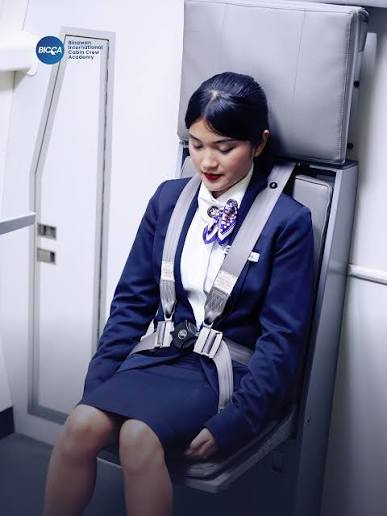
There is one important misconception to avoid.
Passengers sometimes see a flight attendant's posture and assume that they should copy the exact position.
Passengers should follow the safety instructions provided by the airline and crew rather than attempting to imitate cabin-crew procedures.
Passenger brace positions and crew brace procedures are not necessarily identical.
Your seat location, seat design, restraint system, and aircraft configuration all matter.
If an emergency occurs, listen carefully to the cabin crew and follow their commands.
They are trained specifically for the aircraft and situation.
10. Why Takeoff and Landing Get So Much Attention
When the aircraft reaches cruising altitude, flight attendants typically move around the cabin and perform their normal duties.
During takeoff and landing, however, they must remain seated and restrained.
This is because those phases require additional attention to crew safety and emergency readiness.
It also explains why the cabin suddenly becomes much quieter during these periods.
Tray tables must be stowed, seats returned to their required positions, bags secured, window shades may be adjusted depending on airline procedures, and passengers must remain seated with seat belts fastened.