The Allergy He Thought He Had Was Actually a Warning Sign of Something Else...
A Simple Allergy? That's What He Believed Until the Medical Tests Came Back...

1. What causes gallstones?
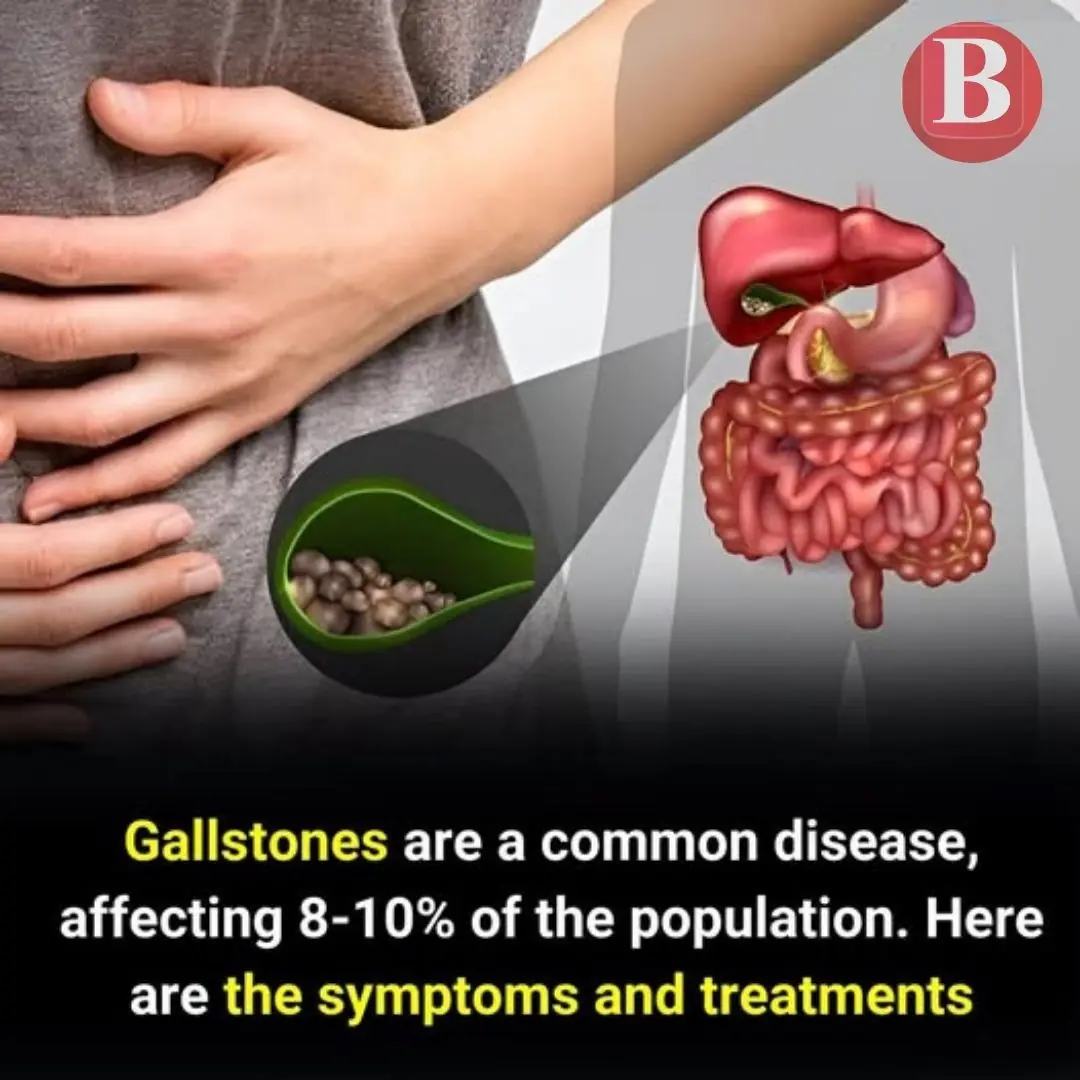
Gallstones are solid lumps that develop in the gallbladder or bile duct (a duct-like system in the liver). Gallstones can vary significantly in size from pebble-like particles to solid objects the size of a golf ball. Smaller stones are more problematic, as they can break out and become stuck in the gallbladder, while larger stones remain in the gallbladder.
Gallstones are divided into two main types: cholesterol stones and pigment stones.
Cholestone stones are made primarily from the cholesterol component in bile. This type of stone is common in Western countries, accounting for 80 - 85%. Studies in Vietnam show that the rate of cholesterol stones accounts for only 30 - 50% of cases. This type of stone is common in obese people, twice as common in women as men, people on a Western diet, and people taking estrogen birth control pills.
Pigment stones are often caused by biliary tract infections, hemolysis, cirrhosis, inflammation or resection of the ileum (the last part of the small intestine).
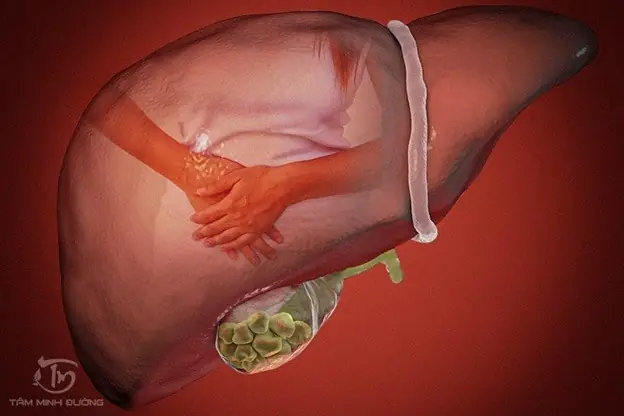
The cause of gallstones is often metabolic, when the concentration of cholesterol in the bile is too high, it will form crystals, from which gallstones are formed.
Gallstones are solid stones that develop in the gallbladder or bile duct.
2. Symptoms of gallstones
About 30% of cases are symptomatic, the most common symptom of gallstones is biliary colic (86%), with the following characteristics:
Separate pain attacks lasting from 30 minutes to several hours. Pain occurs in the epigastric region or the upper right abdomen, with cases of most pain in the epigastric region, making it easy to confuse with gastric ulcer - duodenal ulcer.
The patient has severe and continuous pain, the pain can make the patient stop breathing. Pain occurs within a few hours after eating, or at night, often waking the patient up.
Other symptoms include back pain, left upper abdominal pain, nausea and vomiting, bloating (indigestion with fatty foods).
3. Treatment of gallstones
All cases of symptomatic stones are indicated for treatment regardless of the size and number of stones.
For asymptomatic gallstones, the role of cholecystectomy and other treatment methods is unclear. Studies on the natural progression of gallstones show that it is not necessary to perform preventive cholecystectomy, except in cases where patients are at high risk of gallbladder cancer such as porcelain gallbladder, stones combined with gallbladder polyps larger than 10 mm, stones larger than 25 mm, etc.
Currently, there are 2 treatment methods: Non-surgical and surgical.
Non-surgical treatment includes taking medication to dissolve stones, using shock waves to break stones, dissolving stones and removing stones through the skin, and removing gallstones through endoscopy. The treatment results of these methods are not high, because they depend on the type of stone, the size of the stone and the anatomy of the bile duct. In addition, these treatment methods all have the common feature of leaving the gallbladder, which is the place where stones will form in the future, thus limiting the long-term results.
Surgical treatment includes open cholecystectomy and laparoscopic cholecystectomy.
After cholecystectomy, patients do not need to take additional digestive support drugs, because the liver still secretes enough bile.
A few cases have indigestion with fatty foods and eggs. Therefore, it is best for patients to limit eating fatty foods and eggs for 3 months after surgery so that the body can adjust its bile reserves. Diarrhea after surgery is rare, and this symptom usually resolves after a few weeks.

A Simple Allergy? That's What He Believed Until the Medical Tests Came Back...

If You Wake Up in the Morning and Feel These 4 Things, Your Kidneys May Be Under Stress

Spending Too Long on the Toilet With Your Phone Can Seriously Harm Your Health — Here Are 5 Real Dangers You Should Know

Alzheimer’s disease is one of the most challenging health issues of our time - a condition that slowly affects memory, thinking, and daily functioning. With no absolute cure yet, scientists around the world have been searching for lifestyle factors that

Drink Coffee This Way to Extend Lifespan and Stay Younger, Experts Say

Many people wonder about the meaning of the intriguing gesture of scratching the palm of another person’s hand, especially when it occurs between a man and a woman.

Cer.vical can.cer remains one of the leading cancers affecting women worldwide, but it is also one of the most preventable forms of can.cer, thanks to early detection through regular screening (Pap smears) and the availability of the HPV vaccine.

If you hear ringing, buzzing, hissing, or roaring sounds in one or both ears when no external sound is present, you may be experiencing tinnitus.

Nightly Leg Cramps? Here’s Why They Happen—and How to Stop Them Waking up in the middle of the night with sudden, intense leg pain is a frustrating and often frightening experience.

Cervical cancer is one of the most common cancers affecting women, yet it often develops silently in the early stages. Many women don’t notice clear symptoms until the disease has progressed.

Stroke is an extremely dangerous medical condition that can take a person's life within moments. Before a stroke actually occurs, the body usually shows some definite warning signs.

10 Signs You May Have Kidney Disease Without Knowing It

In recent months, a sobering trend has emerged that has left both the public and the medical community reeling: end-stage renal disease (ESRD), once considered a condition of the elderly, is now showing up in people in their 20s—and even teenagers.

Think It's Just Weight Gain? These Signs Say Otherwise

5 People Who Should Limit Ginger—The Last One May Surprise You

Some breakfast choices may quietly affect stomach health over time.

Night leg cramps may signal more than fatigue—learn the possible causes today.

Doctor Warns: These 4 Everyday Foods May Be Quietly Damaging Your Li.ver

A tiny ear pit may be harmless—but its origin is truly fascinating.

Small white spots may be harmless—or a sign you shouldn't ignore.

A Simple Allergy? That's What He Believed Until the Medical Tests Came Back...

If You Wake Up in the Morning and Feel These 4 Things, Your Kidneys May Be Under Stress

Spending Too Long on the Toilet With Your Phone Can Seriously Harm Your Health — Here Are 5 Real Dangers You Should Know

Alzheimer’s disease is one of the most challenging health issues of our time - a condition that slowly affects memory, thinking, and daily functioning. With no absolute cure yet, scientists around the world have been searching for lifestyle factors that

Drink Coffee This Way to Extend Lifespan and Stay Younger, Experts Say

The Right Way to Wash Grapes: Most People Are Doing It Wrong

Many people wonder about the meaning of the intriguing gesture of scratching the palm of another person’s hand, especially when it occurs between a man and a woman.

Cer.vical can.cer remains one of the leading cancers affecting women worldwide, but it is also one of the most preventable forms of can.cer, thanks to early detection through regular screening (Pap smears) and the availability of the HPV vaccine.

If you hear ringing, buzzing, hissing, or roaring sounds in one or both ears when no external sound is present, you may be experiencing tinnitus.

Nightly Leg Cramps? Here’s Why They Happen—and How to Stop Them Waking up in the middle of the night with sudden, intense leg pain is a frustrating and often frightening experience.

Cervical cancer is one of the most common cancers affecting women, yet it often develops silently in the early stages. Many women don’t notice clear symptoms until the disease has progressed.

Stroke is an extremely dangerous medical condition that can take a person's life within moments. Before a stroke actually occurs, the body usually shows some definite warning signs.

10 Signs You May Have Kidney Disease Without Knowing It

In recent months, a sobering trend has emerged that has left both the public and the medical community reeling: end-stage renal disease (ESRD), once considered a condition of the elderly, is now showing up in people in their 20s—and even teenagers.

Think It's Just Weight Gain? These Signs Say Otherwise

5 People Who Should Limit Ginger—The Last One May Surprise You

Some breakfast choices may quietly affect stomach health over time.

Night leg cramps may signal more than fatigue—learn the possible causes today.

Doctor Warns: These 4 Everyday Foods May Be Quietly Damaging Your Li.ver

A tiny ear pit may be harmless—but its origin is truly fascinating.