Garlic has earned a reputation as one of the most useful ingredients in the kitchen.
It adds a distinctive flavor to soups, sauces, vegetables, meat, seafood, and countless traditional dishes. Beyond its culinary role, garlic has also been studied for a variety of potential health effects, particularly its sulfur-containing compounds and their possible relationship with cardiovascular and metabolic health.
For many people, eating garlic as part of a normal, balanced diet is perfectly reasonable.
But healthy does not mean suitable for everyone in every amount.
Some people may experience digestive problems after eating garlic. Others may need to be cautious because of medications they take or because they have certain medical conditions. Garlic supplements and concentrated garlic extracts can also behave differently from the small amounts normally used in cooking.
That distinction is important.
The question is not whether garlic is "good" or "bad."
The more useful question is:
Who may need to be careful with garlic, and why?
Understanding that difference can help you enjoy garlic safely without turning a nutritious food into something to fear.
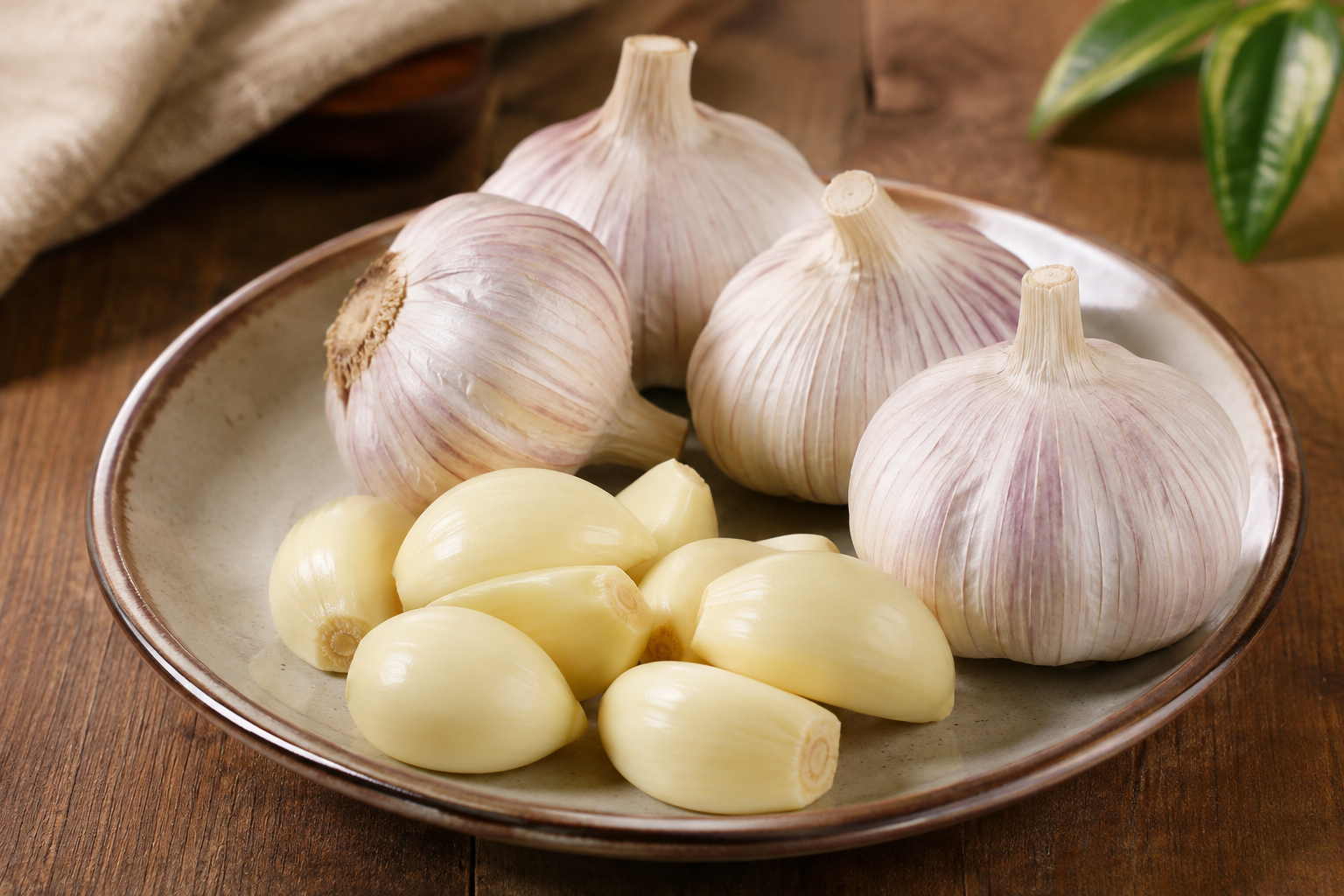
Why Is Garlic Considered Healthy?
Garlic belongs to the Allium family, along with onions, shallots, leeks, and chives.
When garlic is chopped, crushed, or chewed, it undergoes chemical reactions that produce sulfur-containing compounds. One of the best-known is allicin, which contributes to the characteristic smell and flavor of freshly crushed garlic.
Garlic also contains smaller amounts of nutrients and various plant compounds.
Research has investigated garlic for potential effects involving:
-
Cardiovascular health
-
Blood pressure
-
Blood cholesterol
-
Blood sugar
-
Oxidative stress
-
Inflammation
-
Immune function
Some studies suggest that garlic preparations may produce modest improvements in certain cardiovascular risk factors, particularly blood pressure in some people with hypertension.
However, garlic should not be considered a replacement for prescribed medication or medical treatment.
Eating garlic does not guarantee protection against heart disease, diabetes, infection, or cancer.
Its potential benefits are best understood as part of an overall healthy dietary pattern.
The First Group That May Need to Be Careful: People With Digestive Problems
One of the most common reasons someone may need to limit garlic is surprisingly simple:
It can upset the digestive system.
Garlic contains fermentable carbohydrates known as fructans, which belong to the broader group of FODMAPs.
For some people, particularly those with irritable bowel syndrome (IBS), foods high in certain FODMAPs can trigger symptoms.
These may include:
-
Bloating
-
Gas
-
Abdominal discomfort
-
Cramping
-
Diarrhea
-
Changes in bowel habits
The amount matters.
A person may tolerate a small amount of garlic cooked into a meal but develop symptoms after eating a large quantity of raw garlic.
That does not necessarily mean garlic is harmful to the digestive tract.
It may simply mean that the individual is sensitive to the amount or type of carbohydrate present.
People With IBS May Be Especially Sensitive
People with irritable bowel syndrome sometimes notice that garlic causes significant digestive symptoms.
This is because garlic is particularly high in fructans.
A low-FODMAP diet may temporarily restrict garlic and other high-FODMAP foods in people with IBS under appropriate guidance.
But there is an important point:
Avoiding garlic forever is not necessarily the goal.
Dietary tolerance varies considerably from person to person.
Some people may eventually tolerate small portions.
A registered dietitian familiar with the low-FODMAP approach can help identify individual triggers and determine whether foods can gradually be reintroduced.
Raw Garlic May Be Harder to Tolerate
Raw garlic is particularly potent.
It contains concentrated flavor compounds and can feel irritating to some people's digestive systems.
Eating large amounts of raw garlic may cause:
-
Heartburn
-
Stomach discomfort
-
Nausea
-
Gas
-
Bloating
Cooking garlic can change its chemical composition and reduce some of its pungency.
For someone who experiences discomfort after eating raw garlic, using a smaller amount in cooked food may be easier to tolerate.