That makes a large bird of prey in the wider region entirely plausible. It does not, however, confirm the particular story of a giant eagle being captured.
There are several species of large raptors in North America, and some can be confused when viewed briefly or photographed from unusual angles. Immature bald eagles, for example, do not have the fully white head and tail associated with adults. Their plumage changes as they mature, and they may be confused with other large birds of prey.
Golden eagles are another large species found in North America. They have a different overall appearance, particularly around the head and neck, but a distant or low-quality photograph may not always make identification easy.
The U.S. Fish and Wildlife Service notes that bald eagles can be confused with golden eagles, particularly when plumage details are not clearly visible. Other large birds, including vultures and hawks, may also be mistaken for eagles when size and perspective are misjudged.
If wildlife specialists had actually captured an unusually large raptor near Brownsville, identifying its species would be one of the first steps.
They would examine the bird's physical characteristics, including feather patterns, bill shape, leg structure, body proportions and measurements. They might also compare photographs with established identification references and, if necessary, use genetic analysis.
But no such examination is documented in the supplied report. The visible photographs alone do not establish that the bird represents a new species, a new subspecies or an unusual population.
Why Brownsville and the Border Region Matter to Birdwatchers
Brownsville is located in one of the most interesting birding regions in the United States.
Its position near the Rio Grande and the Gulf of Mexico creates a meeting point for different habitats and migration routes. Birds that depend on wetlands, woodland, grassland and coastal environments can be found across the wider region.
The area is especially well known among birdwatchers because species found in Mexico and Central America may reach the northern edge of their range in South Texas. Other birds migrate through the region or spend part of the year there.
The Sabal Palm Audubon Sanctuary is one example of the area's ecological importance. Its protected landscape includes a remnant of native palm forest and habitat for a variety of wildlife. The sanctuary's location near the border makes it an important place for observing the region's distinctive natural environment.
This biodiversity helps explain why unusual wildlife stories can attract so much attention. People who visit the region may encounter birds they have never seen before. A large raptor perched near water or flying over a wooded area can become a memorable sight.
But the presence of rich wildlife habitat does not mean that every extraordinary animal claim is true.
A region can be important for conservation without being the site of a newly discovered giant species. A rare sighting may be valuable even if the animal is already known to science. And an unusually large individual does not automatically represent a new population or evolutionary development.
The Brownsville story combines a real geographical setting with an extraordinary claim. The location makes the general idea of encountering an eagle plausible. The claimed capture and 10-foot wingspan, however, require evidence that has not been supplied.
This is why local wildlife knowledge is so important. Researchers and birdwatchers familiar with South Texas can help distinguish a genuinely unusual observation from a familiar species seen under unusual conditions.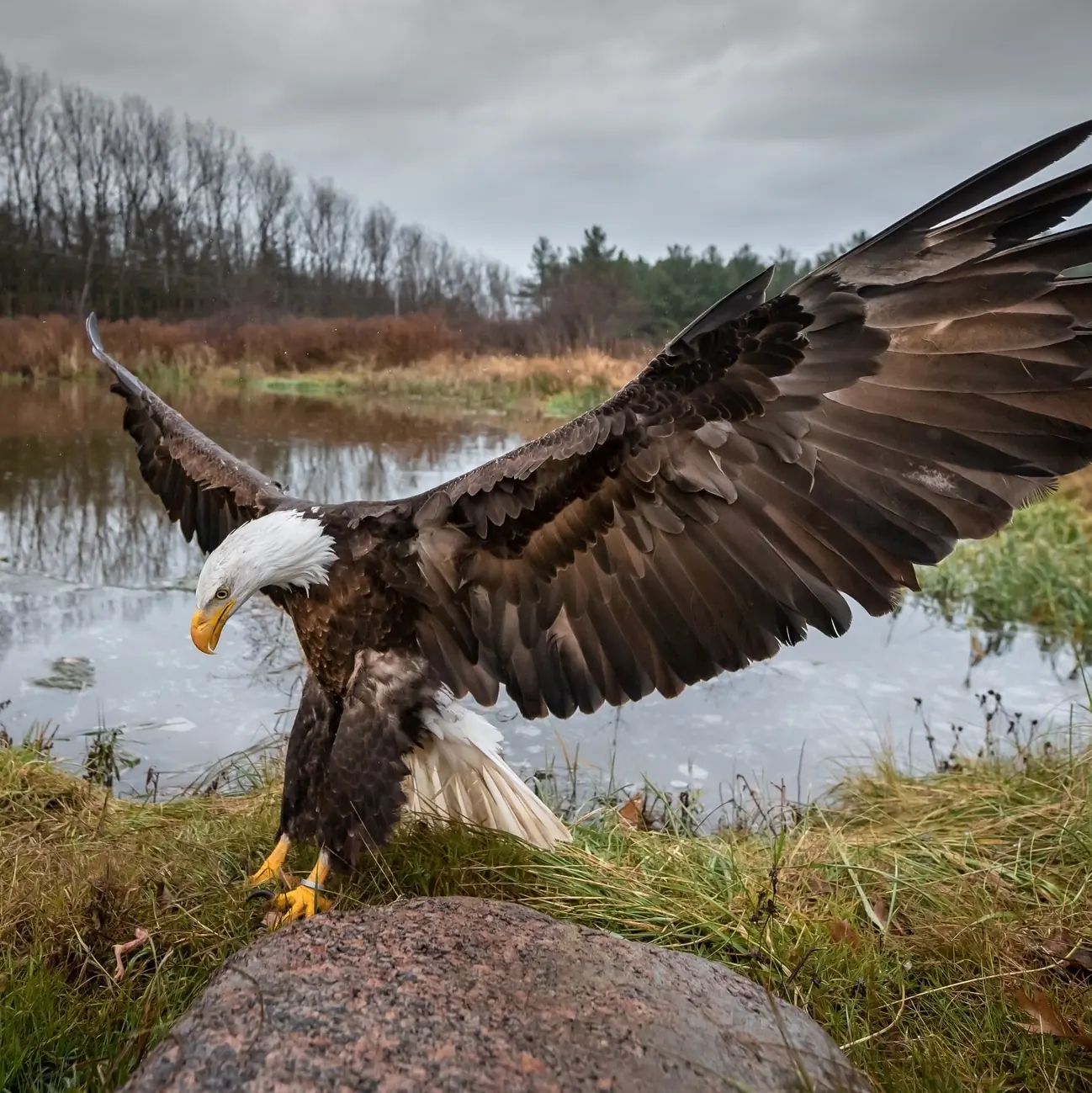
What Would Scientists Do If Such an Eagle Were Really Captured?
If wildlife specialists received a bald eagle with an unusual appearance or unusually large measurements, they would not begin by announcing that a new species had been discovered.
The first priority would be the bird's welfare.
A wild raptor that has been captured may be frightened, stressed or injured. Handling it requires experience and appropriate equipment. The bird's condition would need to be assessed by qualified wildlife professionals, and unnecessary handling should be avoided.
A veterinary examination might include checking the bird's wings, legs, feet, feathers, eyes and bill. The specialists would look for injuries, signs of illness, dehydration or other conditions that might require treatment.
If the bird were healthy, the team would still need to determine why it had been captured and whether it could safely be released. A bird that is simply resting or feeding in a natural area should not be taken into captivity merely because it looks unusual.
If the eagle had been injured, rehabilitation might be appropriate. The goal of wildlife rehabilitation is generally to restore the animal's health and, when possible, return it to the wild.
Texas Parks and Wildlife provides guidance on injured and orphaned wildlife and maintains information about wildlife rehabilitators. The agency also warns that people sometimes pick up young animals unnecessarily, even when those animals are not abandoned or injured.
For a large bird of prey, the process would be especially specialized. The bird's ability to fly, hunt and survive independently would be central to any release decision.
A rehabilitation center would normally keep records of the animal's arrival, condition, treatment and eventual outcome. Those records could help establish whether a particular bird had actually been received.
If the bird's measurements were extraordinary, scientists would also need to document them carefully. A proper measurement record would include the method used, the identity and experience of the people performing the examination, and the bird's condition at the time.
Photographs taken during the examination could provide additional documentation. The images should show the bird and measurement process clearly, without relying on visual estimates from unrelated objects in the background.
If researchers suspected that the animal belonged to an unknown population or represented an unusual genetic lineage, further study might be considered. Genetic testing could help compare the bird with known populations, but DNA results would not automatically prove the existence of a new species.
Species identification is a complex scientific process. It can involve genetics, physical characteristics, behavior, distribution, reproduction and comparisons with existing specimens.
A claim of a previously unknown eagle would therefore require much more than an impressive photograph and an online article.