Why the largest hail may fall in a narrow area
Hail does not necessarily fall evenly across an entire town. One neighborhood may experience large stones while another receives heavy rain and smaller hail.
The strongest part of a thunderstorm may be relatively localized. Wind patterns can also carry hail away from the area where it formed. As a result, damage can vary sharply between streets, even within a short distance.
This uneven distribution is one reason weather officials and insurers often need detailed reports from residents, photographs, and measurements to understand the full impact of a hail event.
Chapter 3: What Large Hail Can Do to Homes and Buildings
A roof is often the first part of a home to receive repeated hail impacts. The damage may be obvious, such as broken tiles or punctured roofing material, but it can also be difficult to see from the ground.
The severity depends on several factors: hailstone size, wind speed, the number of impacts, roofing material, roof age, and the angle at which the hail strikes.
Roof shingles and tiles
Asphalt shingles can lose protective granules when struck by hail. Large or repeated impacts may leave dents, cracks, bruised areas, or exposed underlying material.
Roof tiles can crack or break, while some metal roofing may show dents. Even when the roof appears intact, damage to protective surfaces may shorten its lifespan or create places where water can eventually enter.
A homeowner should not climb onto a roof immediately after a storm to investigate. Wet surfaces, loose tiles, broken branches, and hidden structural damage can make the roof dangerous.
Instead, inspect from the ground if it is safe, take photographs of visible damage, and arrange a professional inspection when there are signs of impact.
Windows and skylights
Large hail can crack or shatter glass, especially when combined with strong winds or when an object is blown against a window.
Skylights may be particularly exposed because they face upward. A damaged skylight can allow rainwater into a home, sometimes before residents notice the break.
If glass has shattered, keep people and pets away from the area. Do not attempt to remove large pieces without appropriate protective equipment.
Temporary coverings may help prevent further water entry, but they should only be installed when the area can be accessed safely.
Siding, gutters, and exterior fixtures
Vinyl siding may crack under repeated impacts. Metal siding can become dented, and wooden surfaces may show chips or broken sections.
Gutters and downspouts can also be damaged. If they become blocked with leaves, branches, or accumulated hail, melting ice and rainwater may overflow near the building.
Outdoor air-conditioning units, heat pumps, solar panels, and other exposed equipment can be affected as well. Damage may not always be immediately visible, so unusual noises, reduced performance, or warning indicators should be checked by a qualified technician.
Garages, sheds, and outbuildings
Smaller structures are sometimes overlooked after a storm. A shed may have a damaged roof, a greenhouse may have broken panels, and a carport may have bent or loosened sections.
These structures can become dangerous if they are unstable. Avoid entering a building that appears to have shifted, partially collapsed, or suffered major roof damage.
The safest approach is to keep clear until it has been inspected.
Chapter 4: Why Cars Can Suffer Extensive Damage in Minutes
Vehicles parked outdoors are especially vulnerable during a hailstorm. Unlike a person inside a building, a car cannot move itself to safety once the storm begins.
Hailstones can dent the hood, roof, trunk, and doors. Large stones may crack windshields or break side and rear windows. Strong winds can also send branches and other debris into vehicles.
The windshield is not the only vulnerable surface
Many people assume that the windshield is the main concern because it is the largest visible piece of glass at the front of a car. In reality, the roof and body panels can also suffer extensive damage.
A vehicle may have dozens or even hundreds of small dents after a prolonged hailstorm. These dents can affect the appearance and resale value of the car, even when the vehicle remains mechanically sound.
Side windows may be more vulnerable to certain impacts than a laminated windshield. If a window breaks, rain and hail can enter the cabin and damage seats, electronics, and interior trim.
What should drivers do when hail begins?
If a severe thunderstorm is approaching and there is still time to move safely, drivers may be able to park inside a garage or covered structure.
But once large hail is already falling, driving around to find shelter can be more dangerous than staying put. Visibility may be poor, roads may be slippery, and falling branches or power lines can create additional hazards.
If caught on the road, drivers should avoid stopping beneath trees or near structures that may collapse. If a safe, substantial shelter is not immediately available, pull over in a location away from trees and power lines, remain inside the vehicle, and protect the head and face from broken glass.
Do not leave the vehicle to cover it with blankets or move it into a garage once the hail is falling heavily.
What to check after the storm
Once the storm has passed and authorities say it is safe to go outside, inspect the vehicle carefully.
Look for:
-
Dents on the roof, hood, trunk, and doors.
-
Cracks or chips in the windshield.
-
Broken side mirrors and lights.
-
Damaged window seals.
-
Water inside the cabin.
-
Loose trim or damaged roof accessories.
Photograph the damage before cleaning or repairing the vehicle. If the car has broken glass, avoid touching it with bare hands.
A qualified repair shop can assess whether paintless dent repair is appropriate or whether more extensive work is required.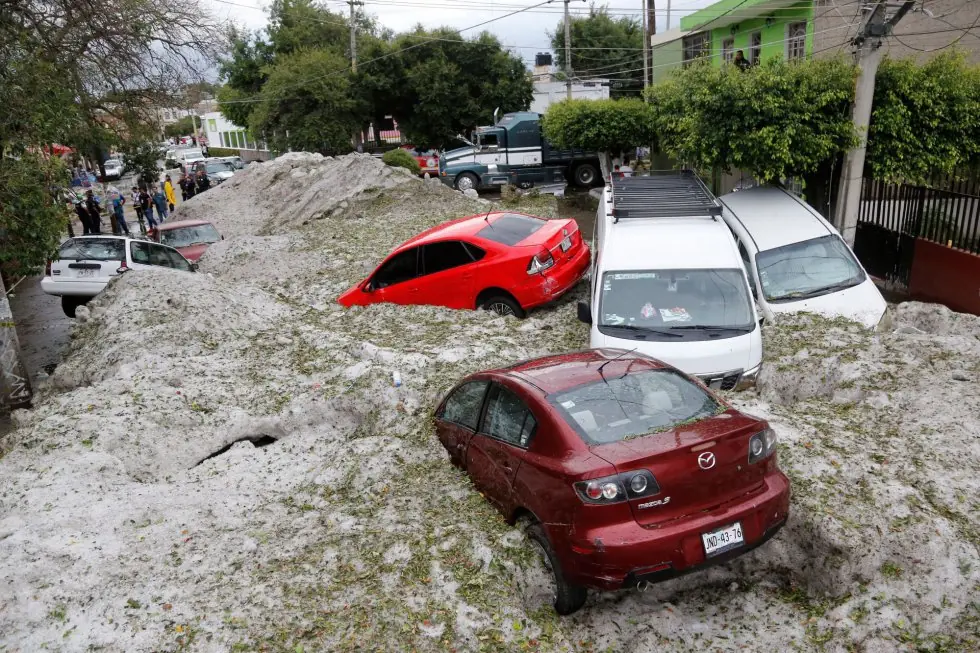
Chapter 5: The Hidden Danger of Hail After the Thunderstorm Ends
When the thunder fades and the sky begins to clear, it is tempting to assume that the danger has passed. But the aftermath of a severe hailstorm can present hazards of its own.
The first concern is the condition of the ground. Hailstones can make roads, steps, and driveways slippery. When mixed with rainwater, leaves, and mud, the surface may become difficult to walk or drive on.
Flooding and blocked drains
Large amounts of hail can collect in low-lying areas and around drainage openings. As the ice melts, the resulting water may add to runoff from the storm.
If drains are blocked by leaves, branches, or debris, water can accumulate quickly. Streets, basements, and garages may be affected.
Residents should avoid walking or driving through floodwater. It may be deeper than it appears, and it can hide open drains, damaged road surfaces, or electrical hazards.